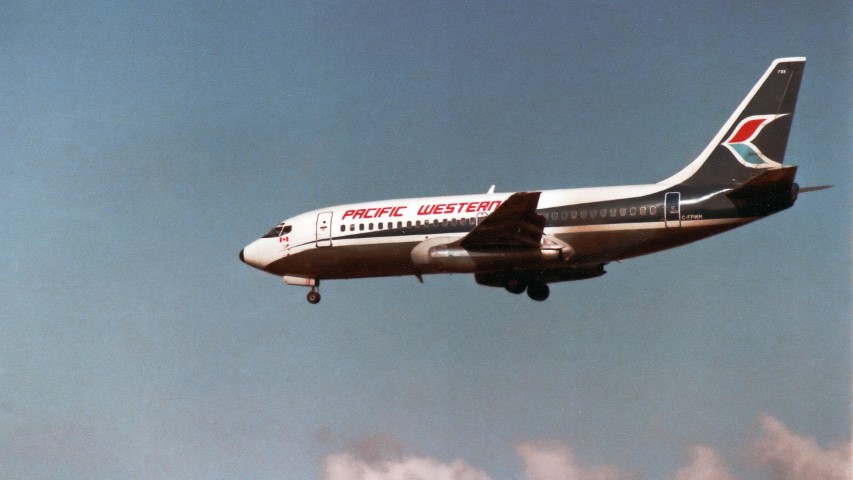
A Website Dedicated to the People and History
of Pacific Western Airlines
This website is created, funded and managed by the former
employees of Pacific Western Airlines. The target audience is that
membership. If you have any contributions or comments, please submit them
to the
Webmaster. We wish to say
thanks to our many generous contributors, supporters and readers. We are
also on
Facebook
This very dynamic group has many involved and interactive members.
While you are visiting, you may want to play the Pacific
Western Airlines Song
May 16, 2024
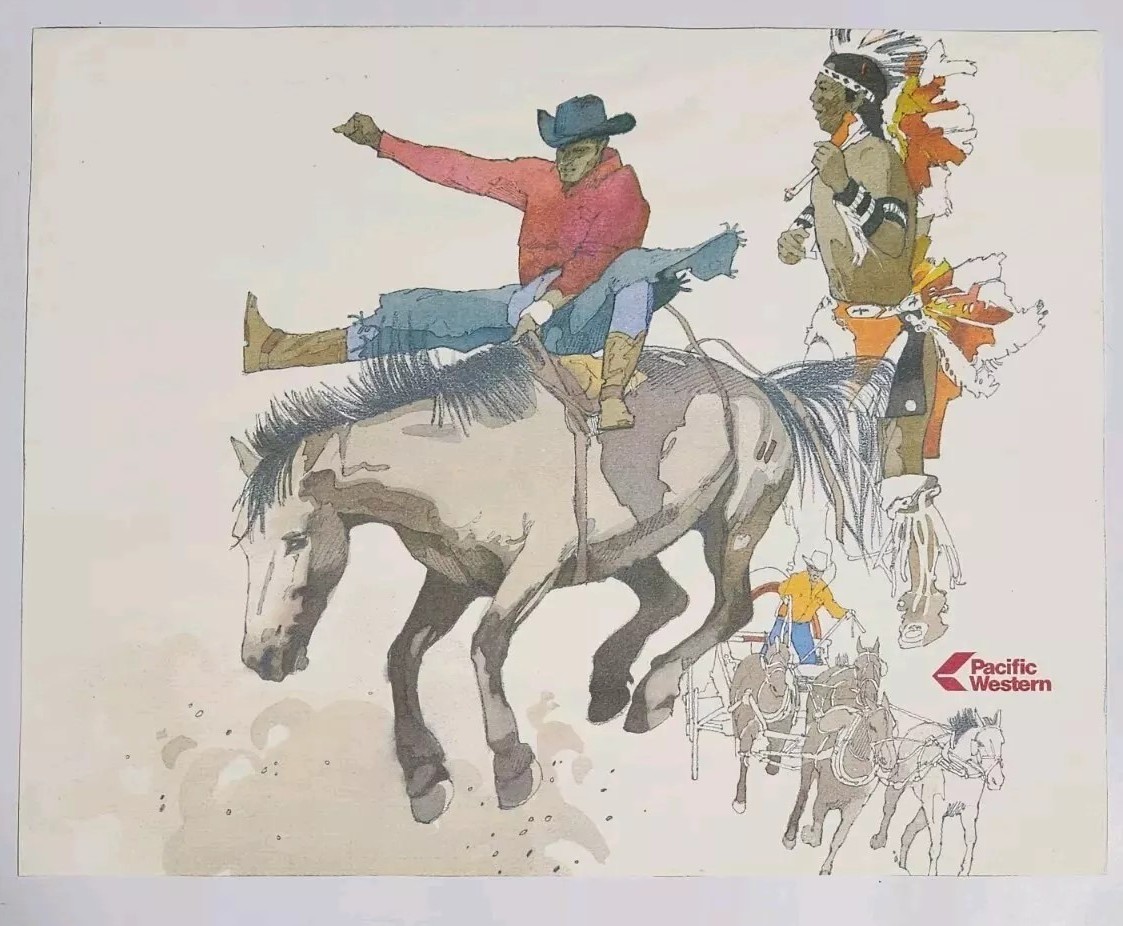
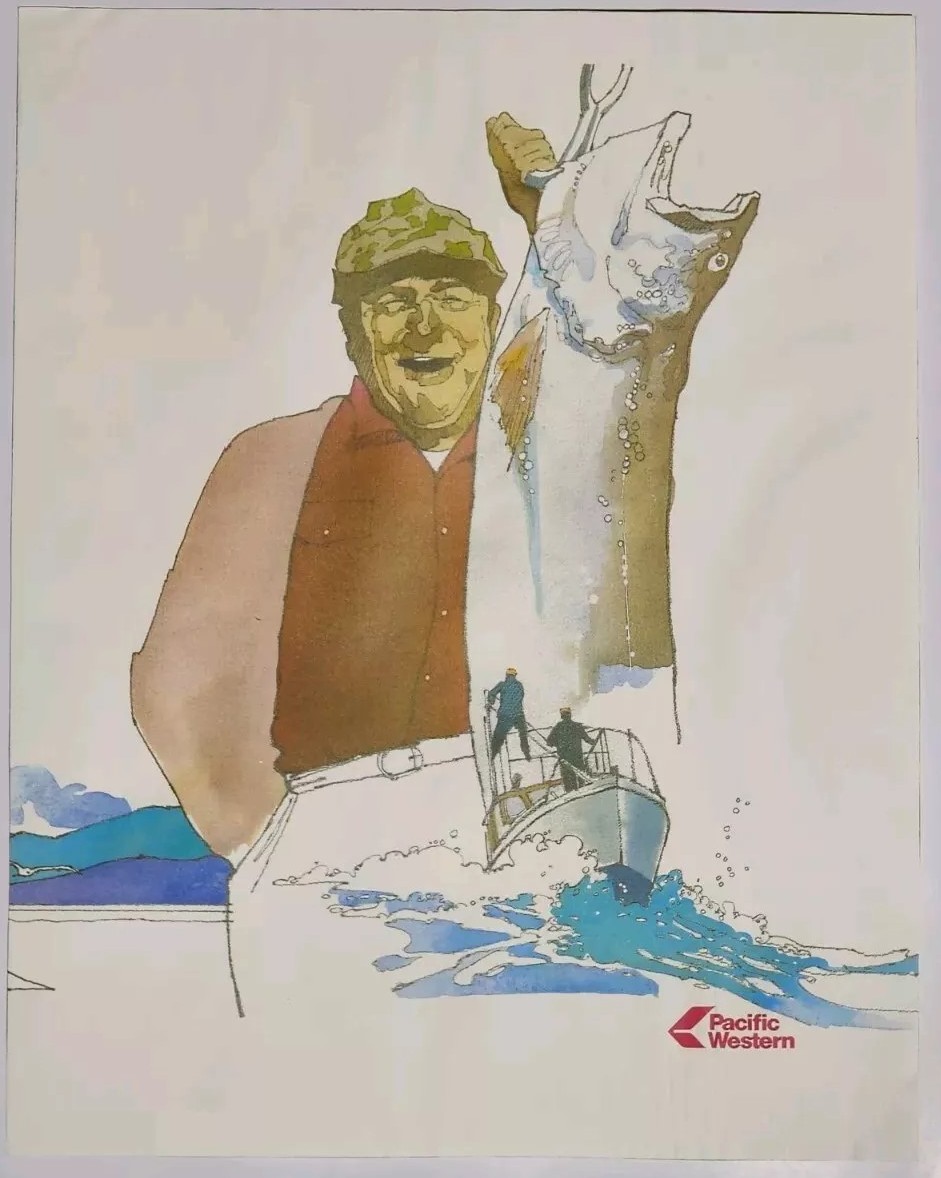
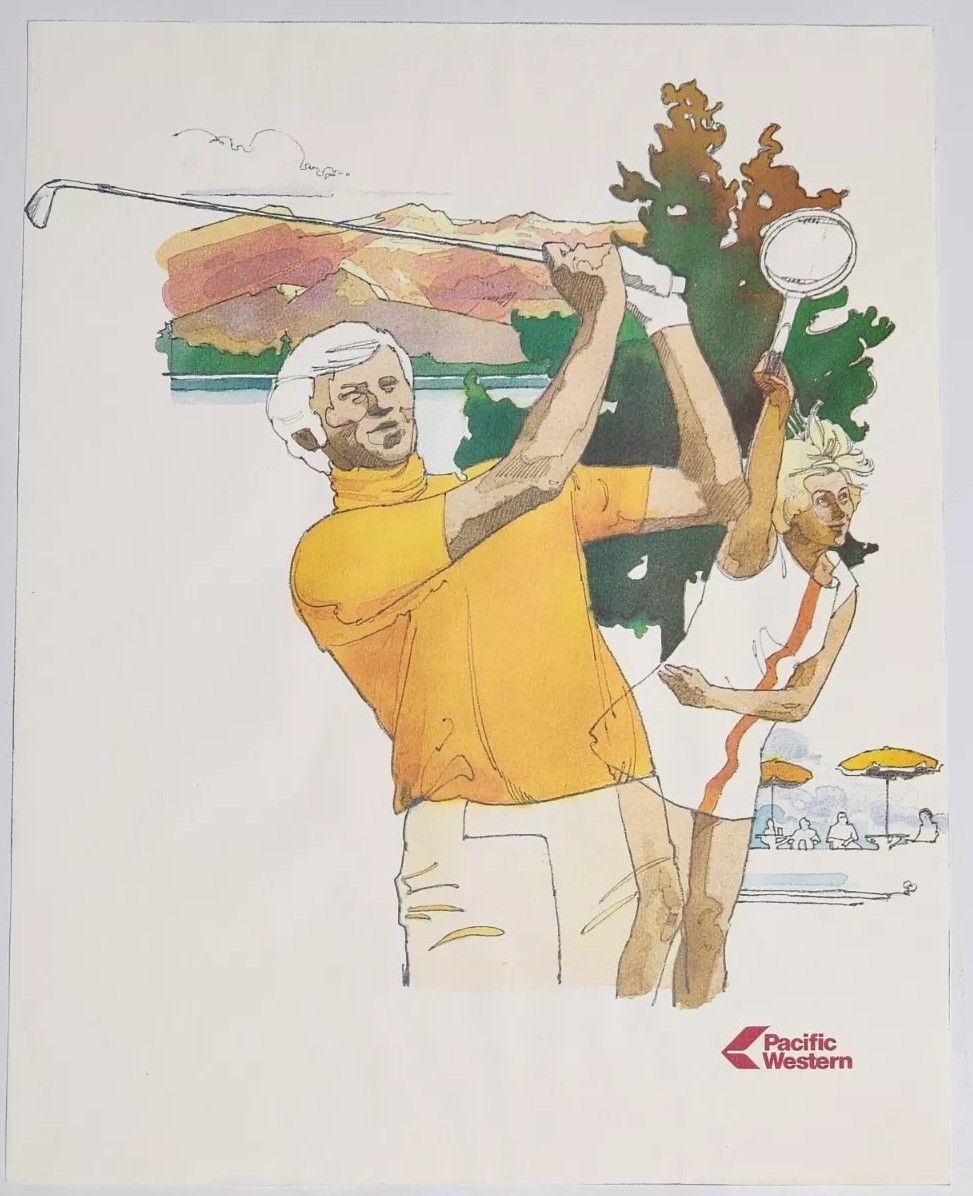
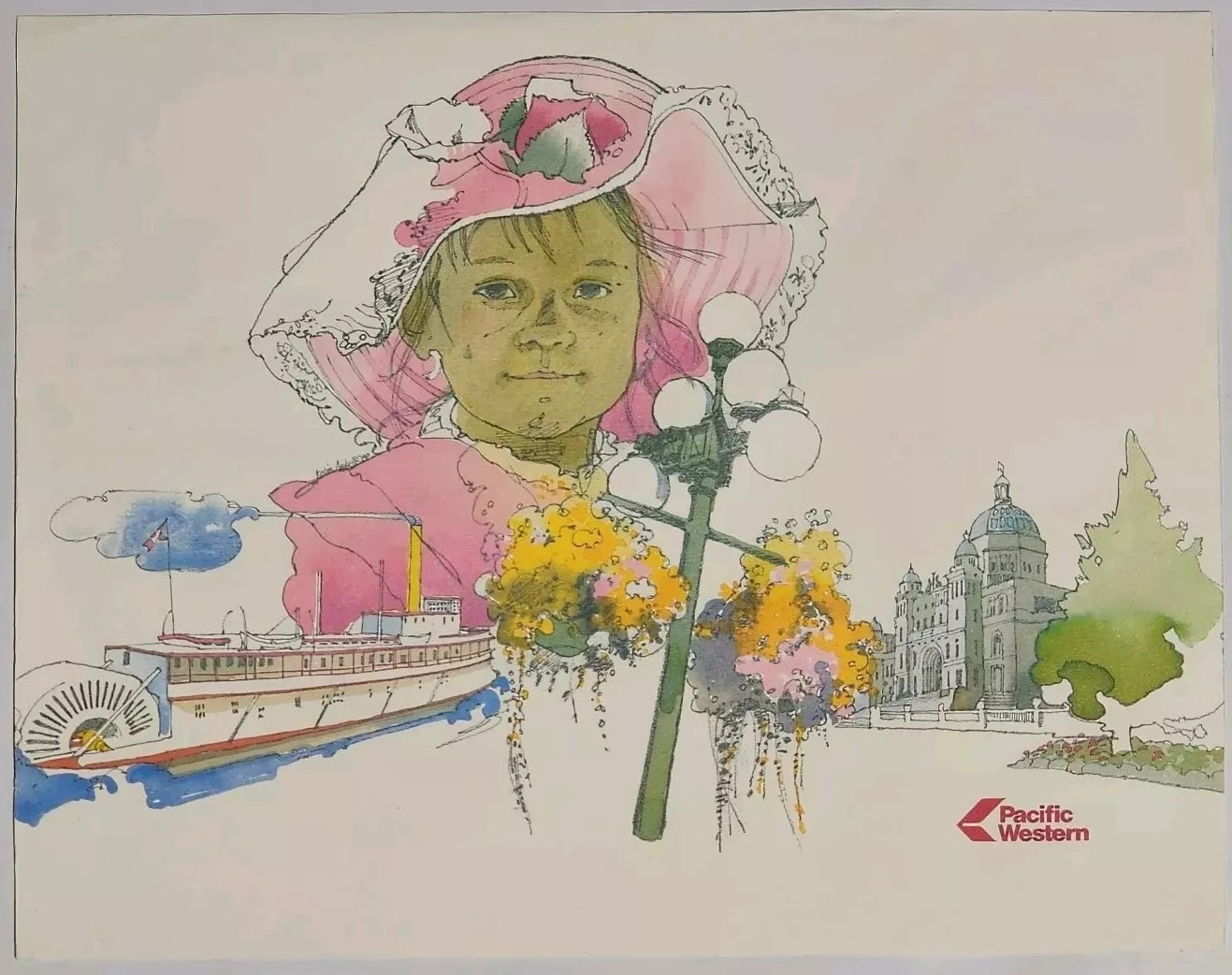
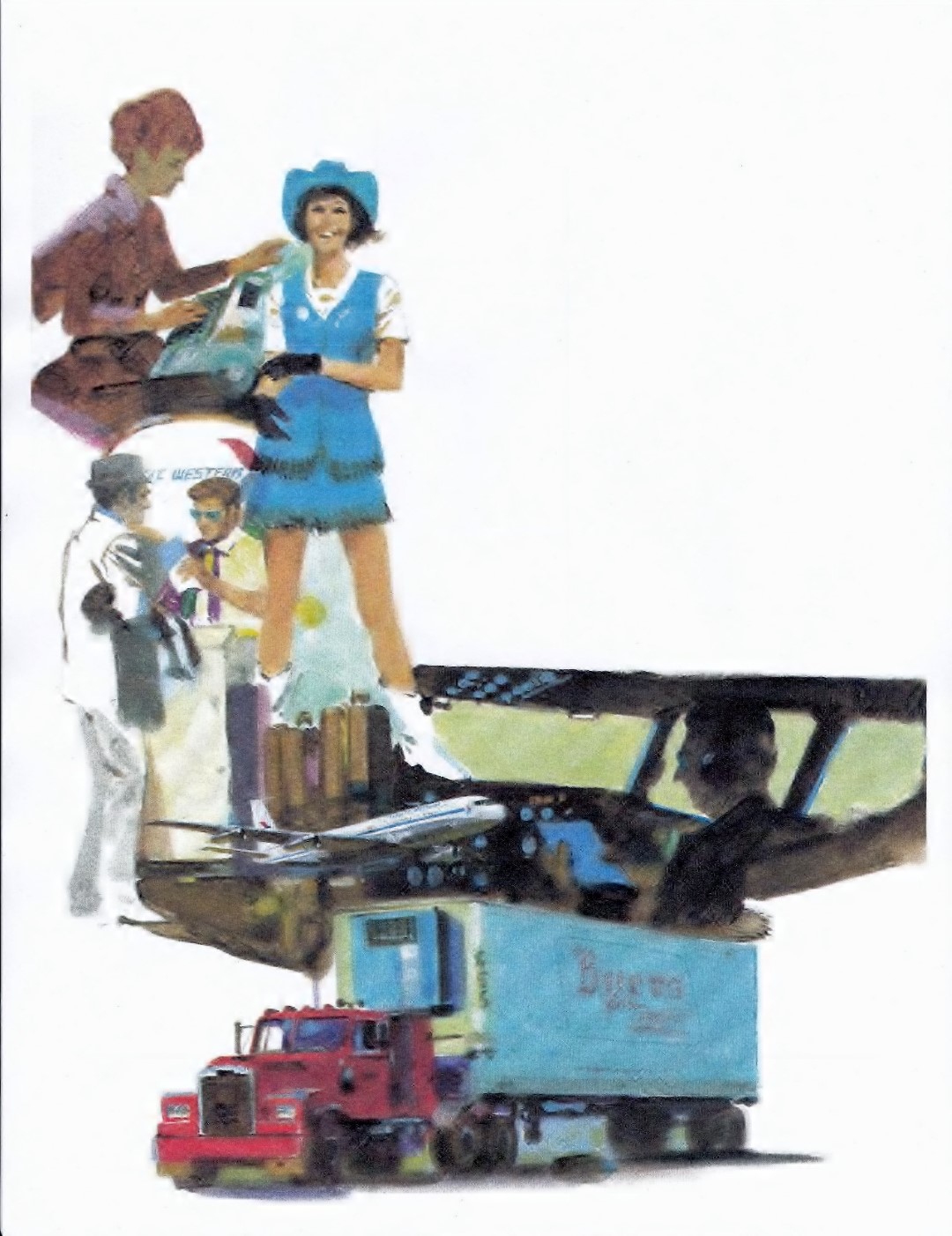
Sales Posters in Watercolors - by GEmptor
February 12,
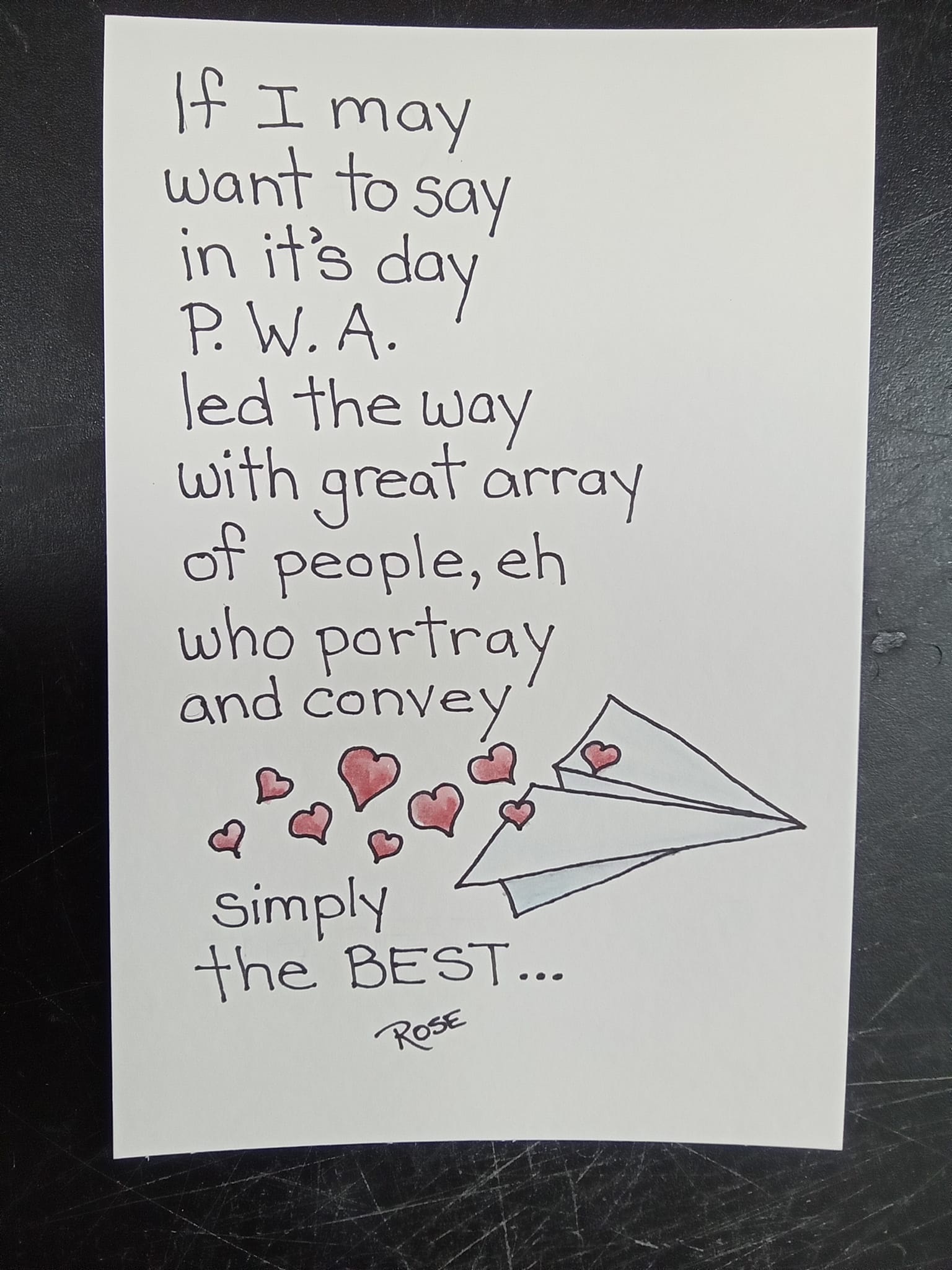
2024 Greetings on Valentines Day
A humble little rhyme for the best people ever ...
January 31,
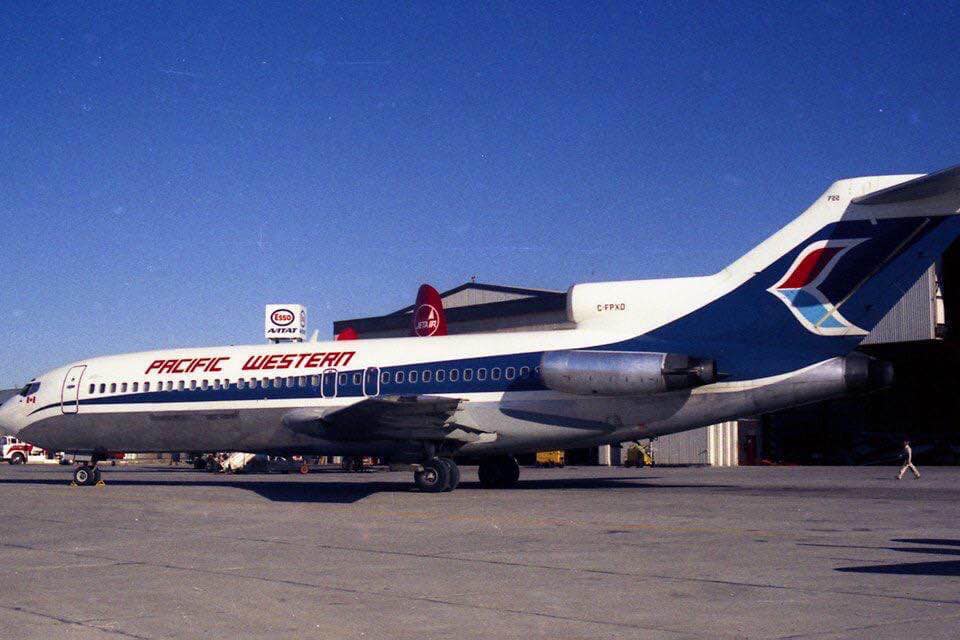
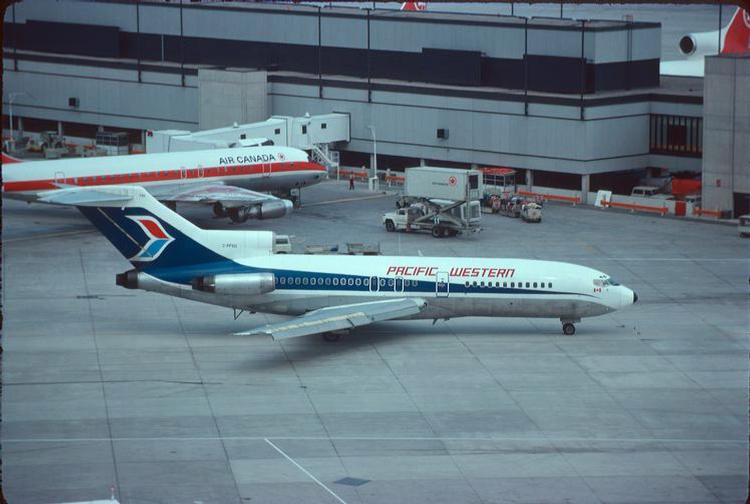
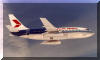
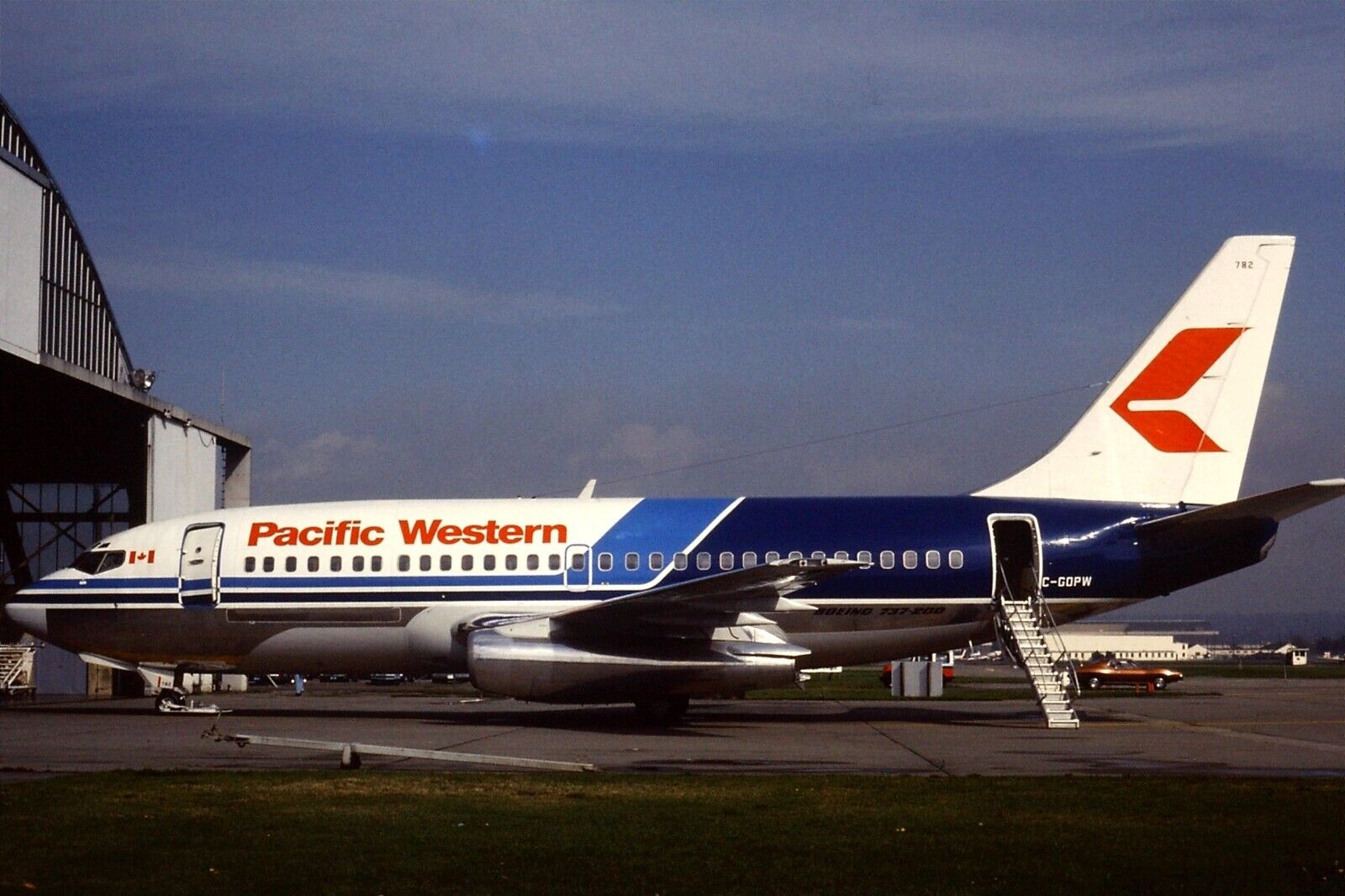
2024 Boeing 727 at Vancouver
August 10, 2023
- Old Friends New Deliveries
From the Kodachrome slide archive. Both aircraft brand new! Shiny
and that "new aircraft smell" by fan GEmptor
May 28, 2023 C-GIPW
at Villeneuve Airport
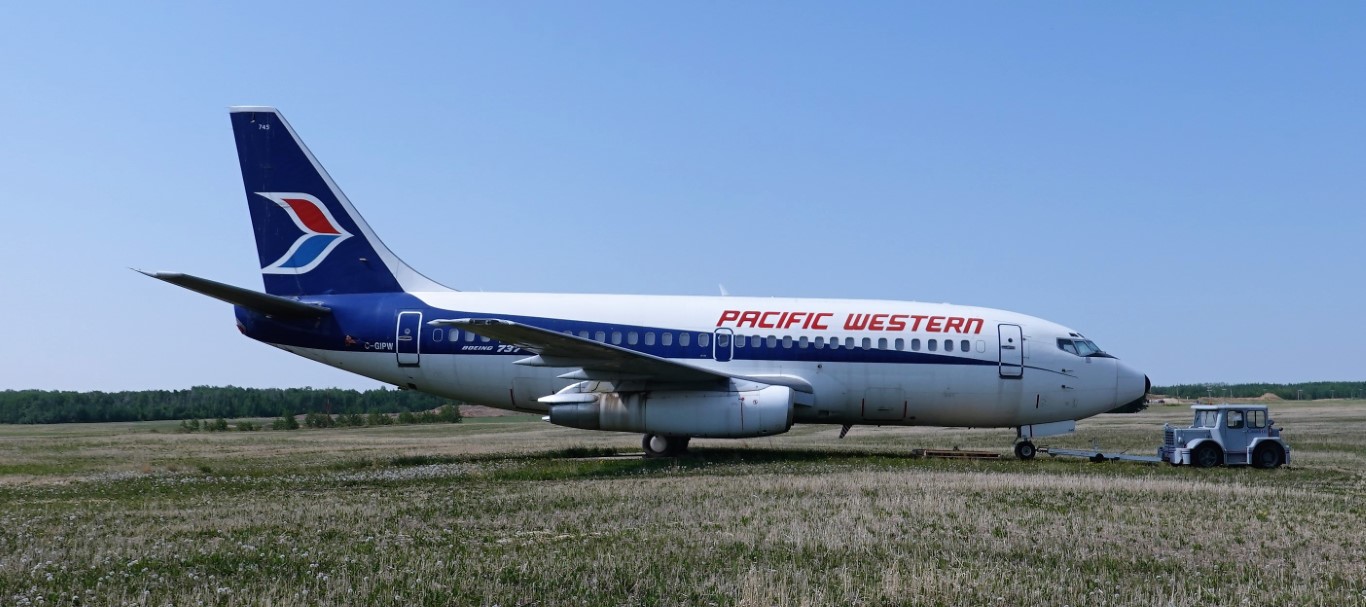
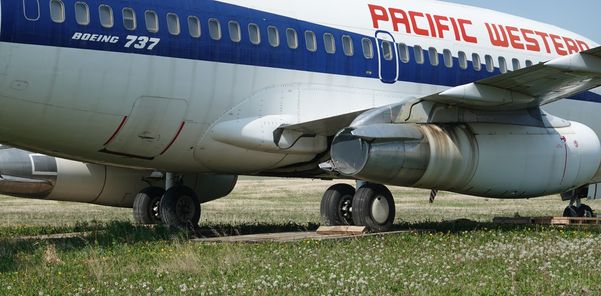
A drive to Villeneuve today to pay a visit to an old friend. Considering
everything, our C-GIPW - fleet 745 is doing OK. The aircraft is now parked on
high ground and the gear is supported. We can hope one day, 745 will be the
museum piece it was destined to be and it is once again enjoyed by many. Thanks
to D. Hyrve for your work over the past week.
Because of you, this 737 is in a better place.
May 14, 2023 -
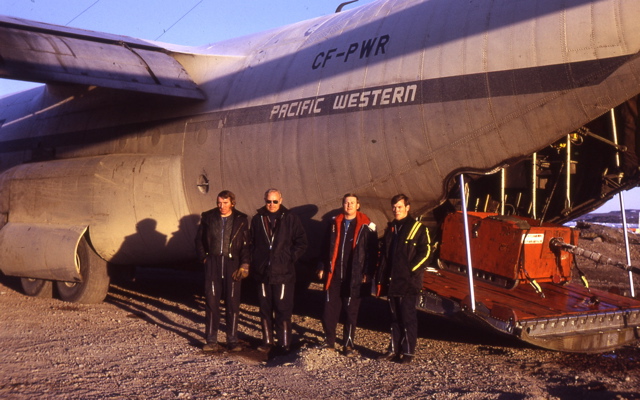
Hercules Crew CF-PWR c1980
Hercules Crew - L-R: LM Jim Bostock, Capt Johan Spronk, FO Harry Russell,
SO Grant Maclean
Photo D. Dertien.
May 7, 2023 The retirement of our C-GDPA - Fleet #784.
Purchased in 1980 by Dome Petroleum then Pacific Western Airlines (1984) and on
to Canadian Airlines and Canadian North.
https://cabinradio.ca/128097/news/yellowknife/canadian-north-to-hold-farewell-ceremony-for-last-gravel-friendly-737/
.jpg)
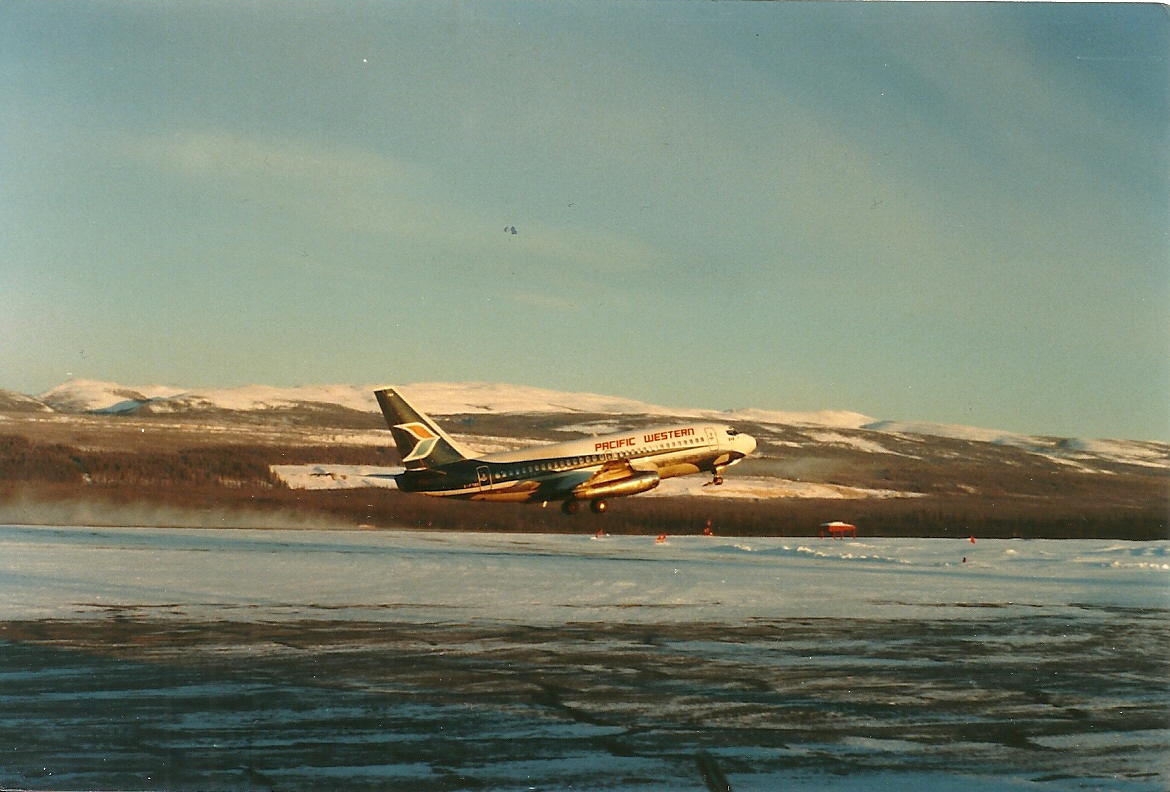
May 05, 2023 B737 Rotate Norman Wells
Picture Credit N. Dargie
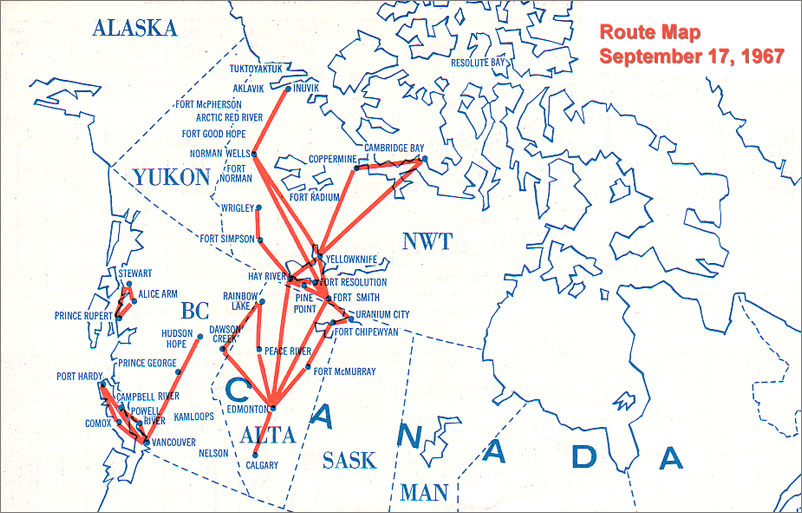
December 10, 2022 Route Map 1967
An interesting moment in time. The year is 1967 and the mining industry has
taken off in NW British Columbia, Oil and Gas has Rainbow Lake's attenion, the
huge WAC Bennett at Hudson Hope is under construction, Uranium City is reaching
an apex in its life cycle, Pine Point was producing lead and zinc and then there
was Wrigley, NWT (pop. 120 people)
Humble beginnings.
September 10, 2022 - Airline Route Maps DepartedFlights
Check out all of the links to several of our route maps from various
years. An excellent part of our history
I run a website named departedflights.com. It pertains to historical airline
information.
My site includes a number of old Pacific Western route maps - many taken from my
personal airline timetable collection.
I just wanted to bring my site to your attention and invite you to use any of
the route maps from my site on yours.
Here is a link to the page with Pacific Western route maps:
Click Below
http://www.departedflights.com/routemaps14d.html
I hope you find this information useful to your site.
Sincerely, Greg Heinrich departedflights.com
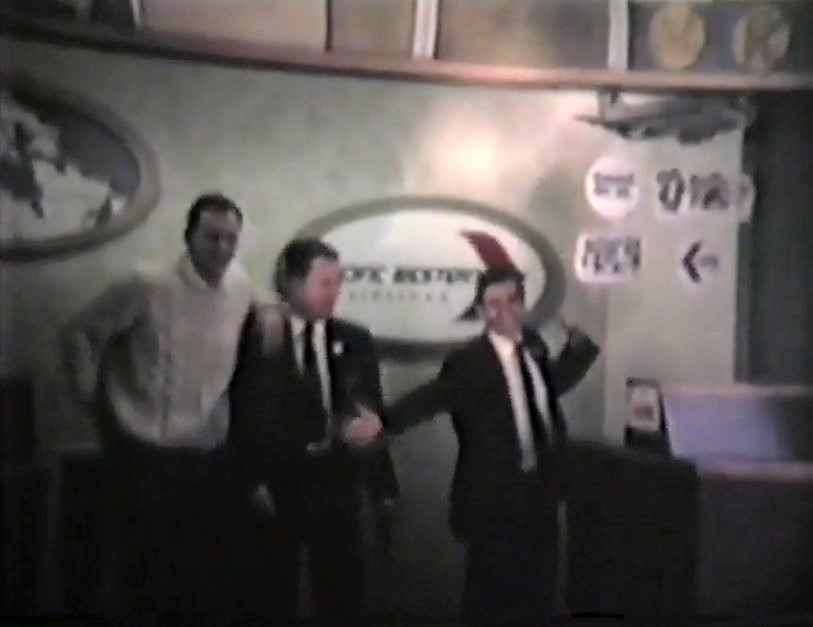
July 19, 2022 - Penticton Operations - Early
70's.
Enjoy this trip to the past with a video by R. Horner and base operations at
Pentiction Airport. This is "The Way we Were"
July 1, 2022 Happy Canada Day
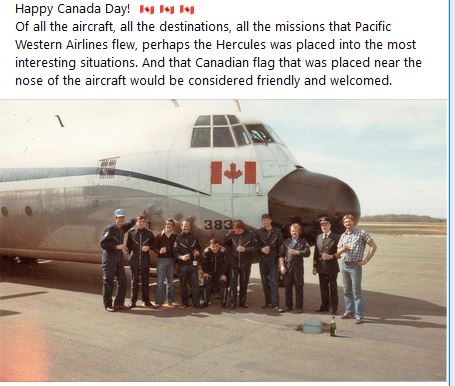
Photo Credit - S. Russell
Edmonton INTL YEG 20APR1984 CF-PWN 383 AND CREW LAST COMMERCIAL FLIGHT ARRIVAL
PM Stu Russell, SO Bill Webster, FE Robin Bergdahl, FO Jim Semeniuk, Capt Roy
Reaville, LM Ron Howe, Mgr Al Philpott, CLM Vern Kuzio, Capt Rick Simons, FE
Brent Kirkpatrick
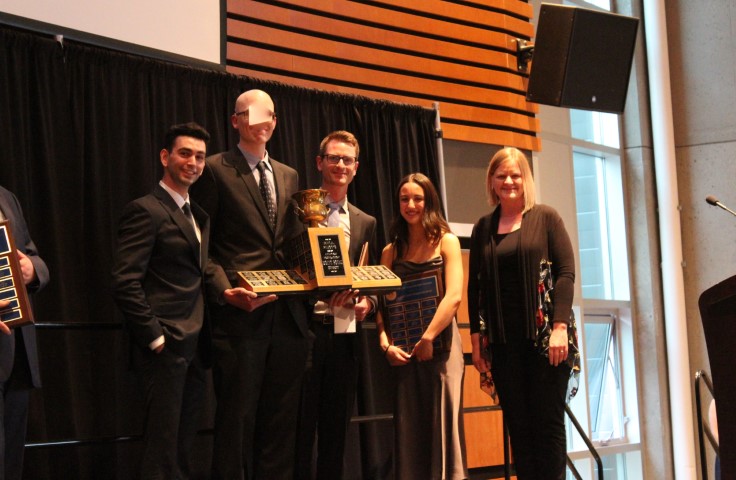
May 14, 2022 - Mount Royal College Award
From the desk of Deanna Wiebe, Chair of Aviation, Associate Professor and Flight
Instructor: Bissett School of Business
I'm not sure if you're all aware of the PWA award at Mount Royal University
Aviation so I'll share what I know. There is a trophy with names of recipients
going back to 1975. The P.W.A. Pilots' Aviation Foundation Scholarship will
continue for many years to come, as funding for the student scholarship has been
secured by the creation of the scholarship bursary endowments. There is enough
money for 3 or 4 students to receive the award every year, for approximately
$4000 each. The amount varies a few hundred or so depending on the year and the
state of the fund, but it's in that ballpark. This is a significant award for
our students!
I've attached a picture of this year's recipients, from left to right is:
Greg Hynes
Alex Praglowski
Ryan Burnham
Alissa Stirling
I'm on the right side, Deanna Wiebe.
Gilbert Cormier and David Graham, both
former PWA, presented the award up until 2017 or so. I just wanted the PWA
community to know that this award is still presented by us at the annual Wings
Ceremony for the MRU grads. It is a significant award, and greatly appreciated
by the program and the students. It's great to see your
website and Facebook group carrying on.
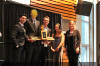
April 15, 2022 - The Company Logo and the Trumpeter Swan
From the desk of Neil Burton - Did you realize Central BC Airways then perhaps
P.W.A. had a trumpeter swan emblem prior to the mustache?
In reading Wings over the West by John Condit – p. 168 – When a streamlined
emblem was being brought up, in the boardroom after Russ Baker’s death, Mrs.
Russ (Madge) Baker was very upset about a new emblem. Might these cap badges
also have the Swan logo.
Would you know of anyone with the trumpeter swan hat emblem that could be
photographed and added to the P.W.A Reunion site?
Happy Easter.
February 27, 2022 Barry Rempel - Retires.
Barry Rempel was an executive at Pacific Western and Canadian Airlines.
Congratulations and enjoy the best chapter of your life.
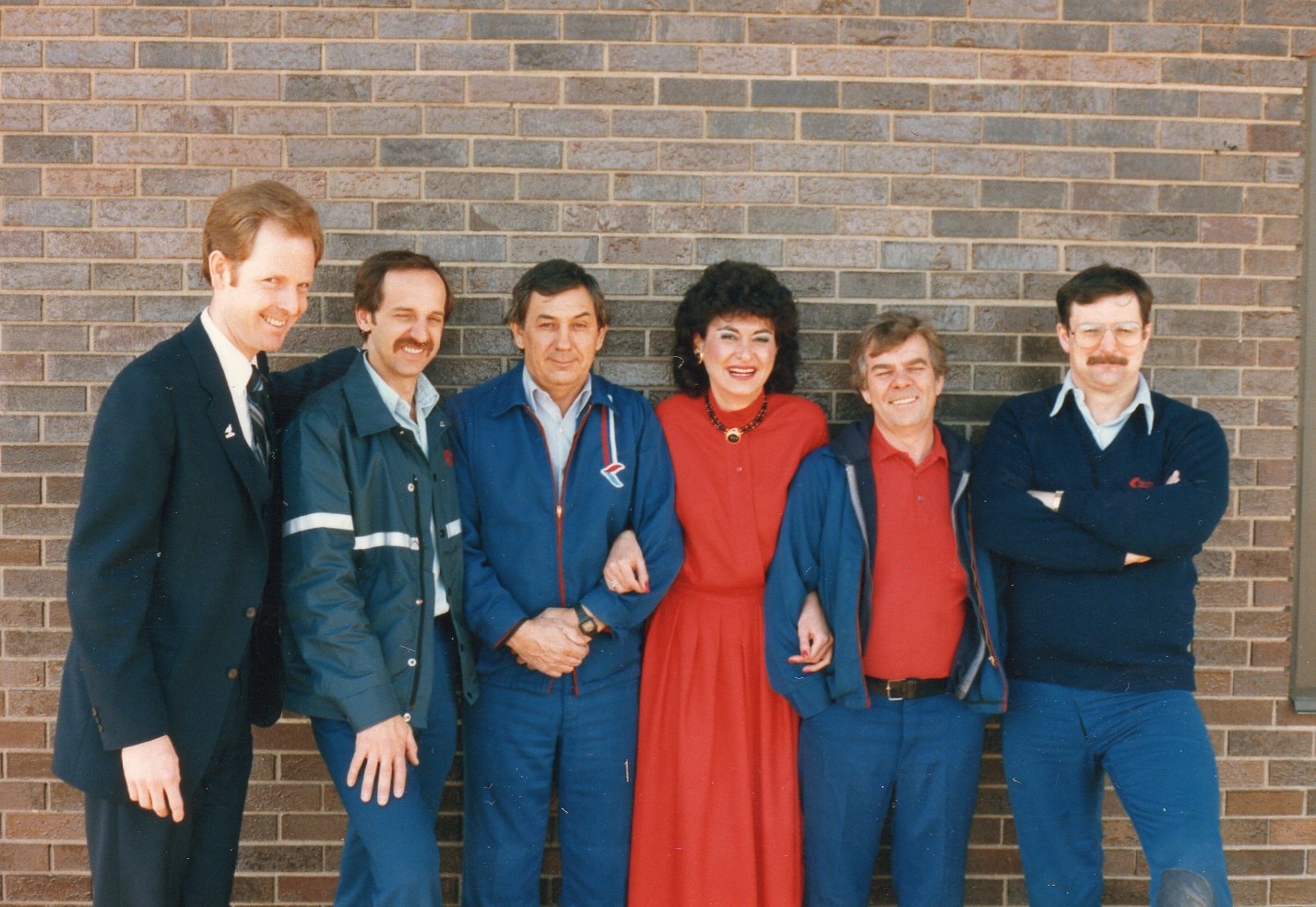
February 9, 2022 YXD Operations 1985
From the desk of S. Russell .. 1985 - Some famous people working
at YXD. At the time I believe we had 25 x 737 flights per day with the Airbus
and Fort McMurray – 122 seats – 20 & 35 min turns.
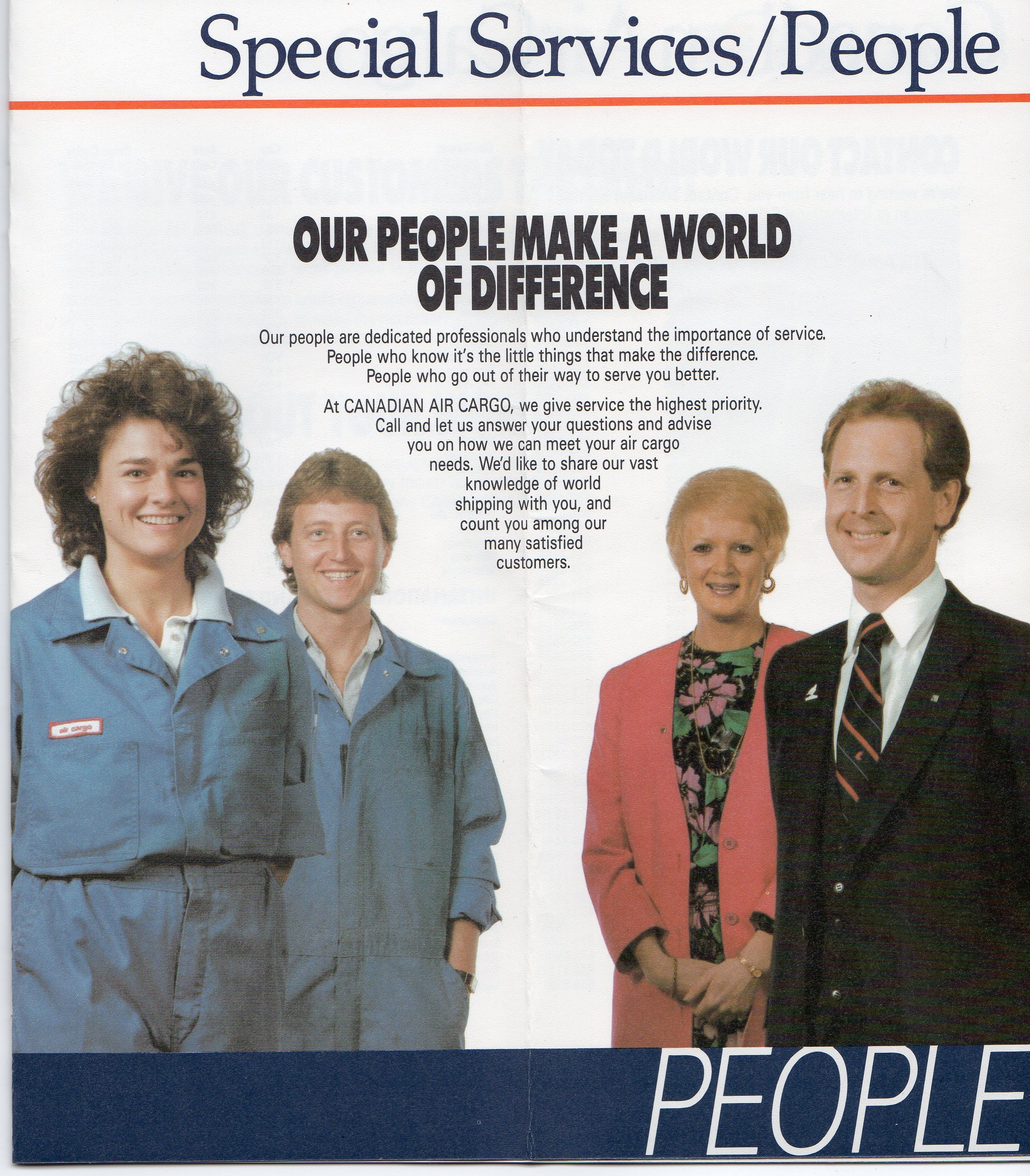
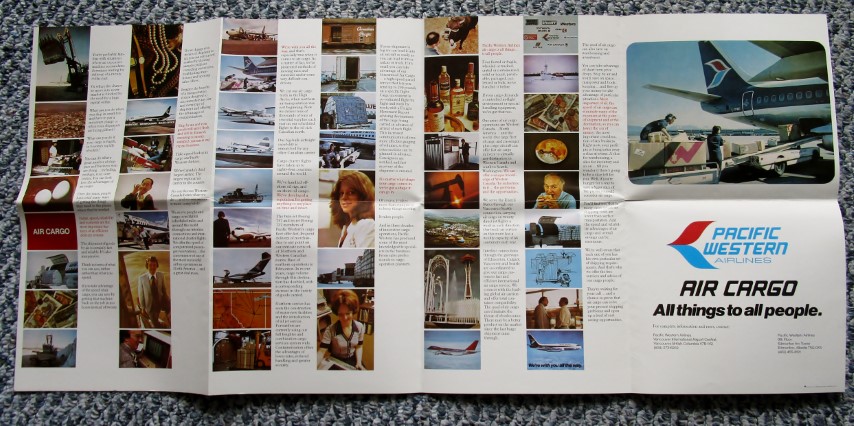
February 8, 2022 Air Cargo Operations
Brochure 1987 (Canadian) at cutover
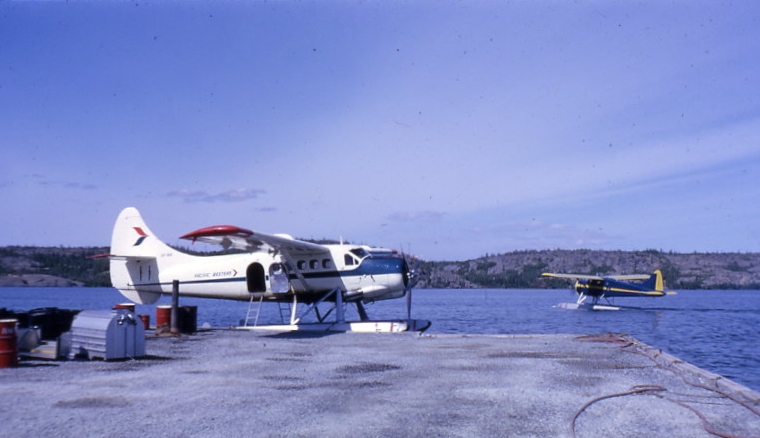
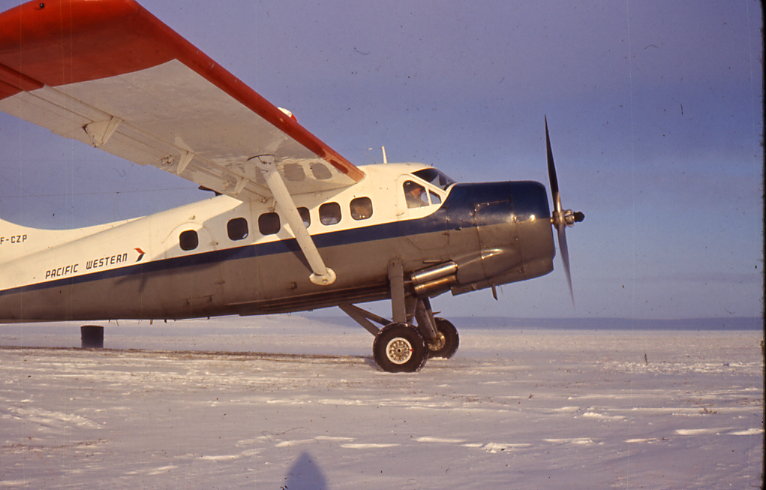
January 10, 2022 Single Otter Arctic
Operations
From the desk of Dallas Hinton
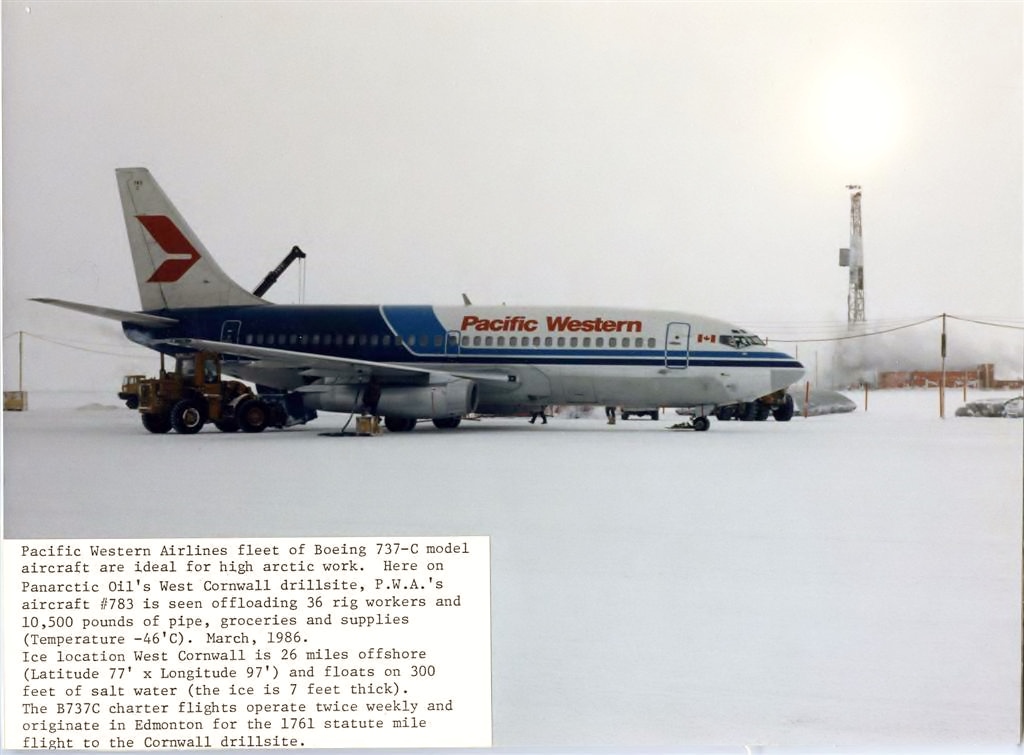
January 10, 2022 Boeing 737-275C Arctic Ice
Operations
From the Desk of D. Johns
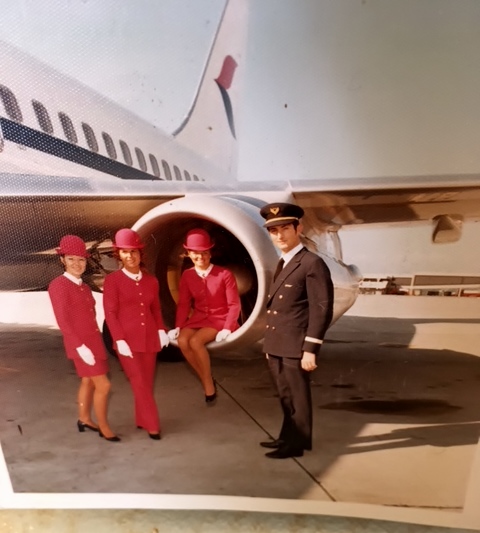
December 25, 2021 Promo Photo B737
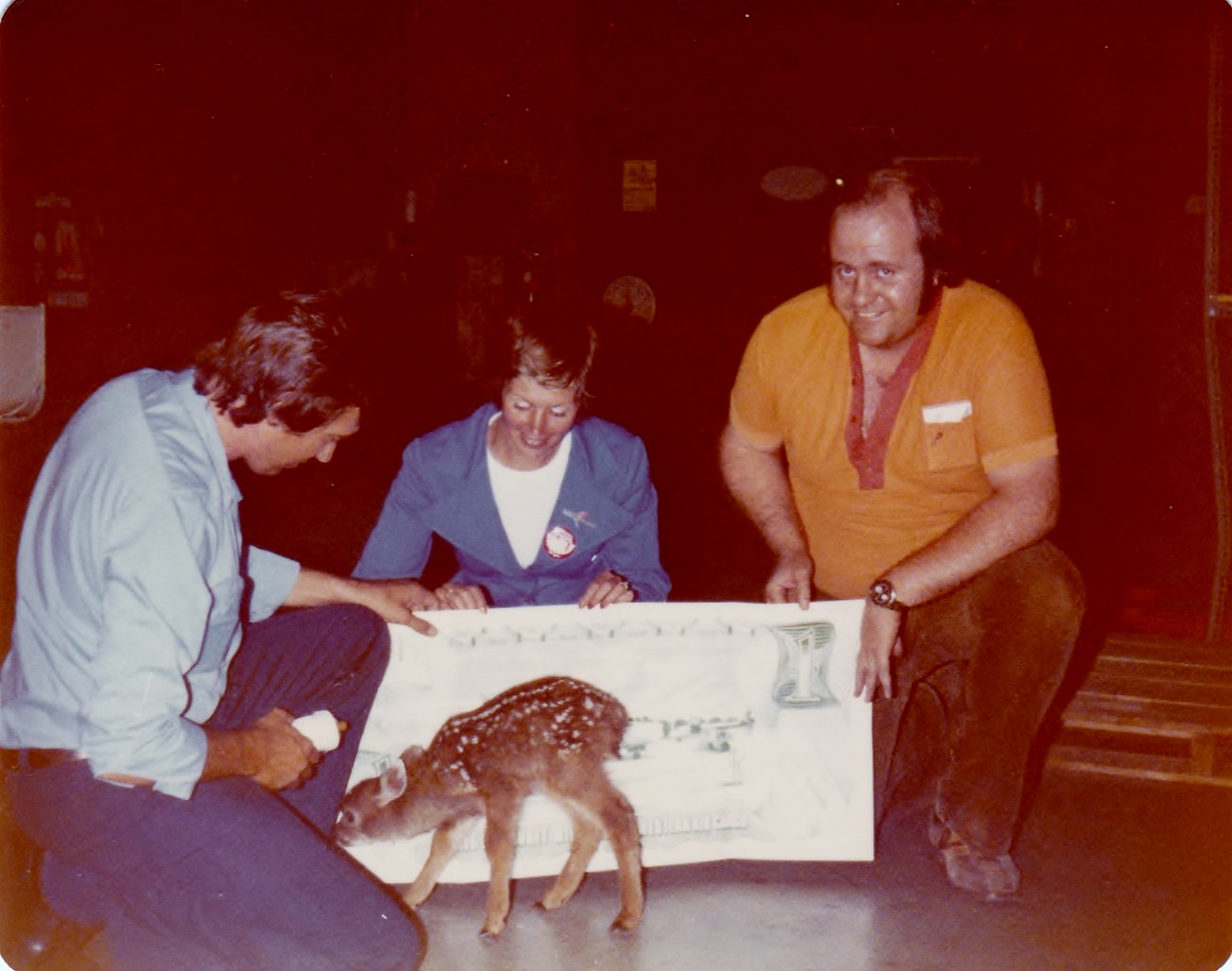
From the desk of Riva Bertram - Pictured left to right is Riva Bertram, Emily
Potts and Ken Merren. c1973 The F/A seated in the cowling is Lois Duffy.
December 21, 2021 Merry Christmas
As the year 2021 comes to an end, we look forward to an exciting and fun Holiday
Season enjoyed with family and friends.
From our house to your house, a very Merry Christmas and a Happy New Year.
Good Fortune and Good Health.
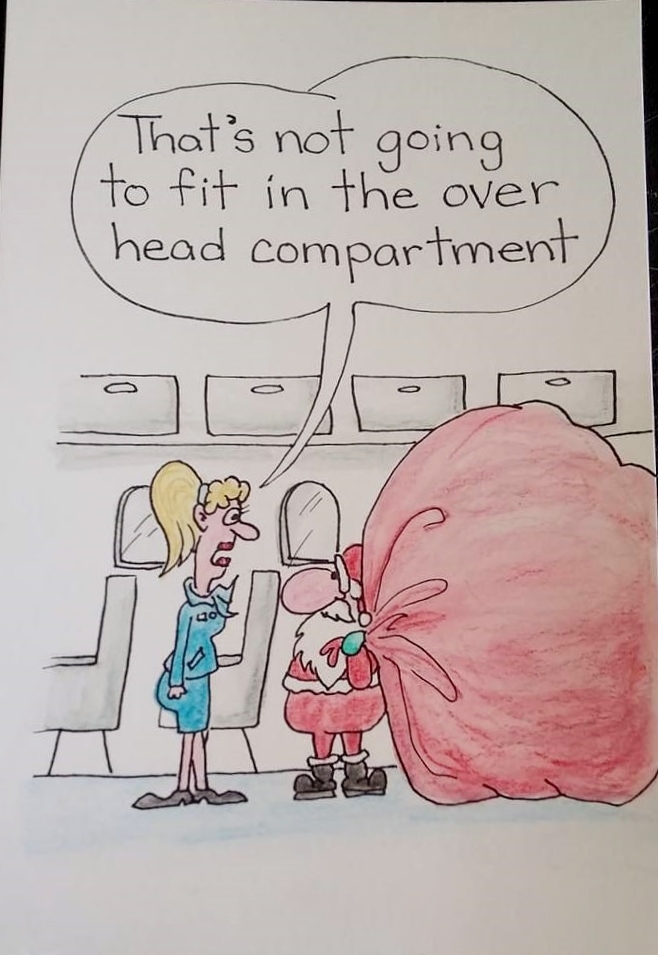
Rose Fleet extends her Christmas Greetings also with her original creation
Festive Cartoon.
December 21, 2021
From the Desk of Neil Burton (YKA)
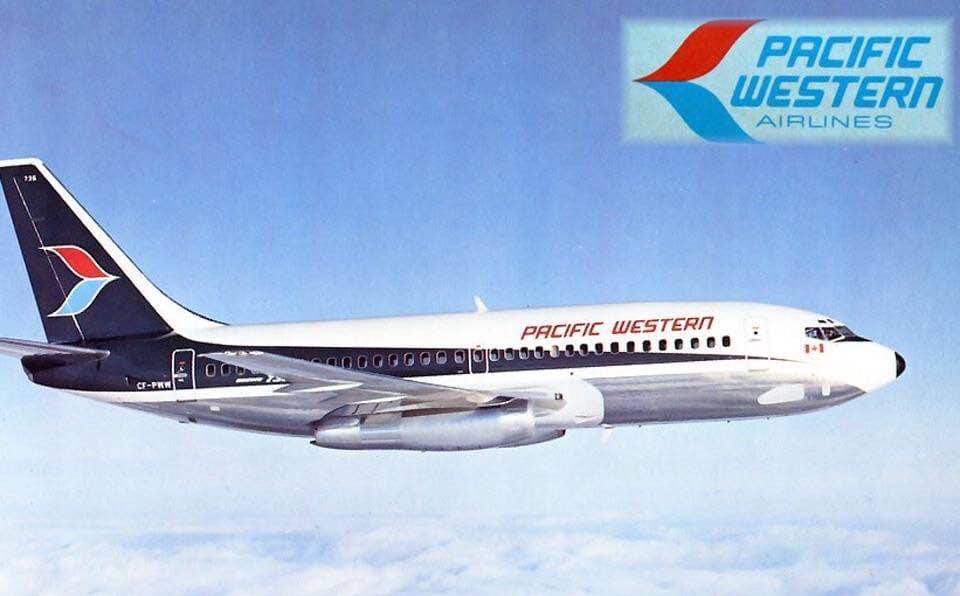
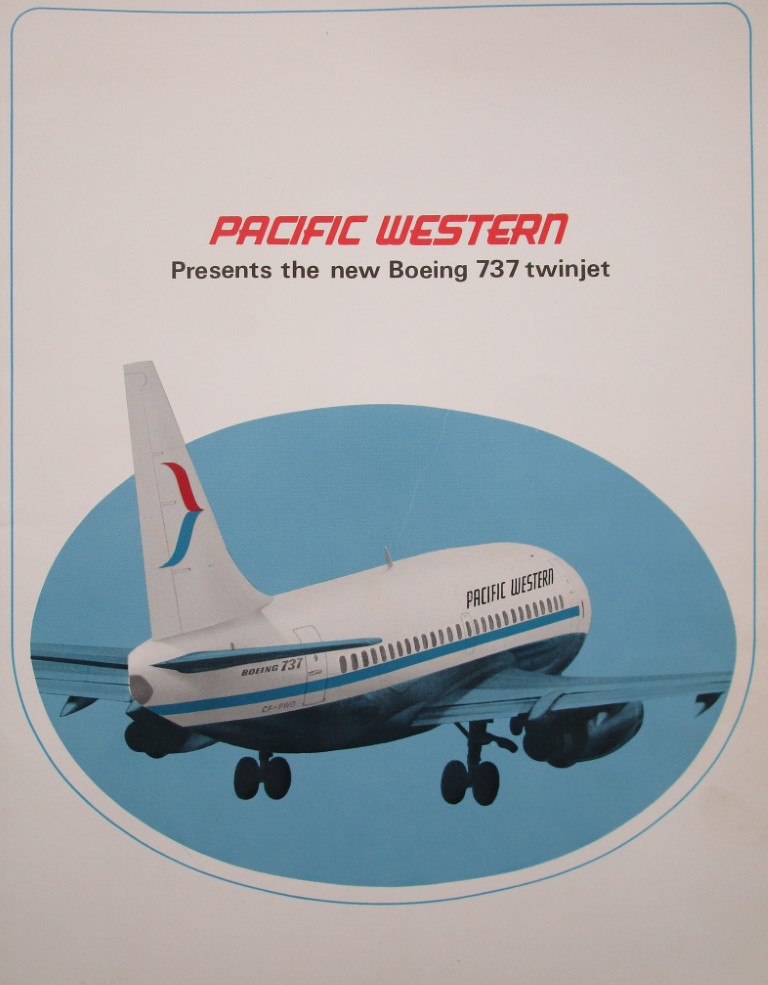
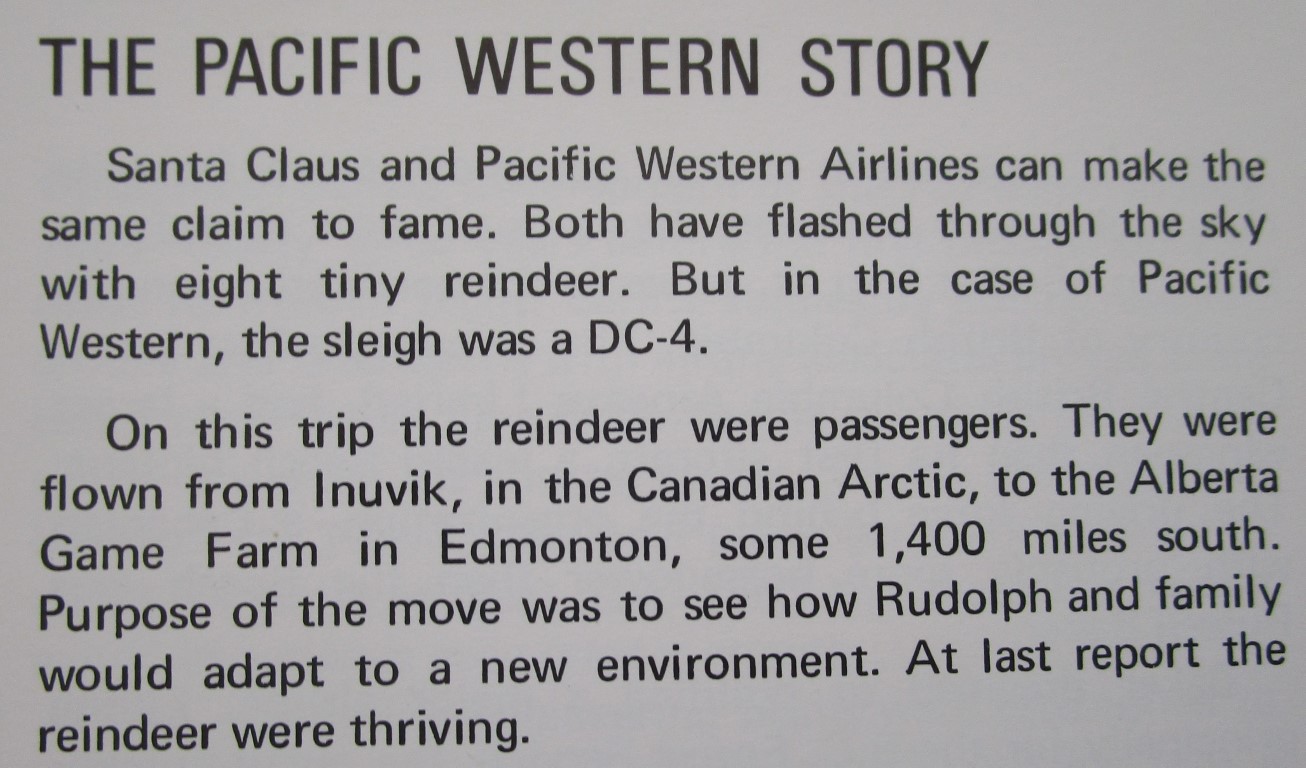
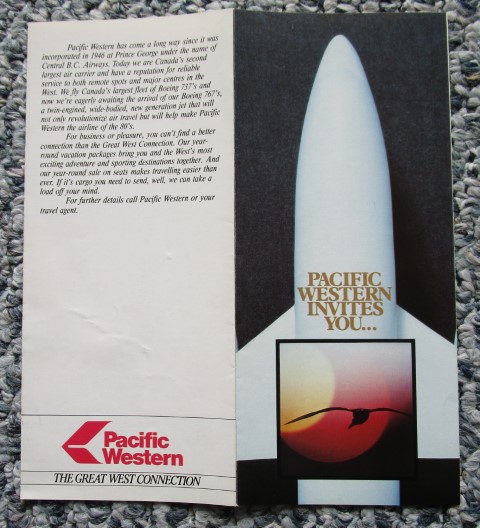
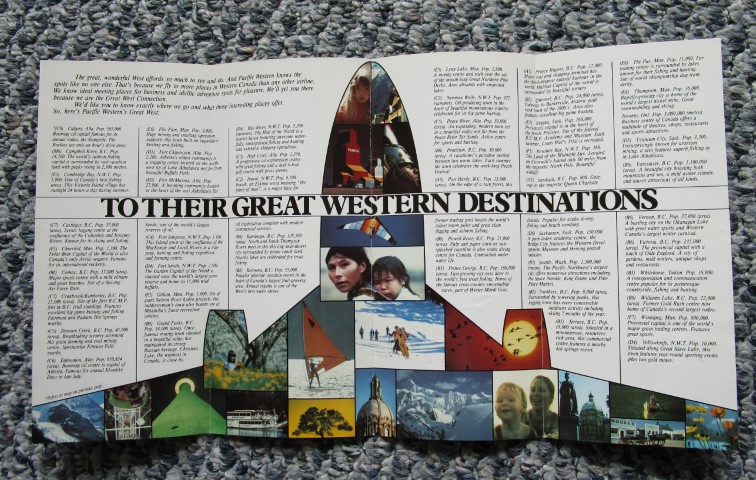
These are from a Pacific Western promotional brochure for the Boeing 737 twinjet
prior to December 1968. R.H. (Dick) Laidman was director and President of
Pacific Western.
Brochure courtesy of Lorraine Marshall.
Hope you have a Merry Christmas and a prosperous year 2022.
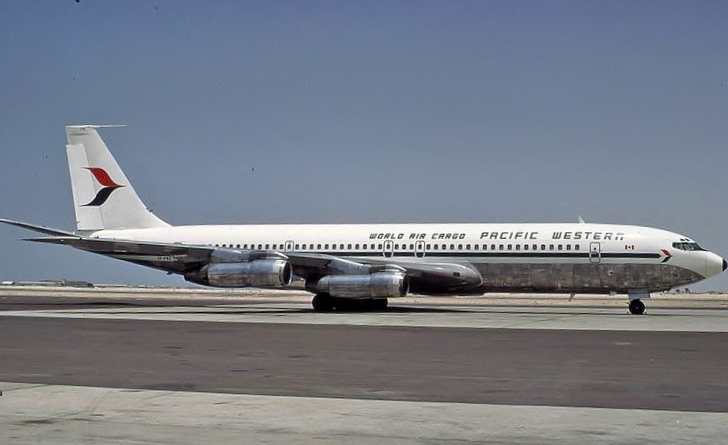
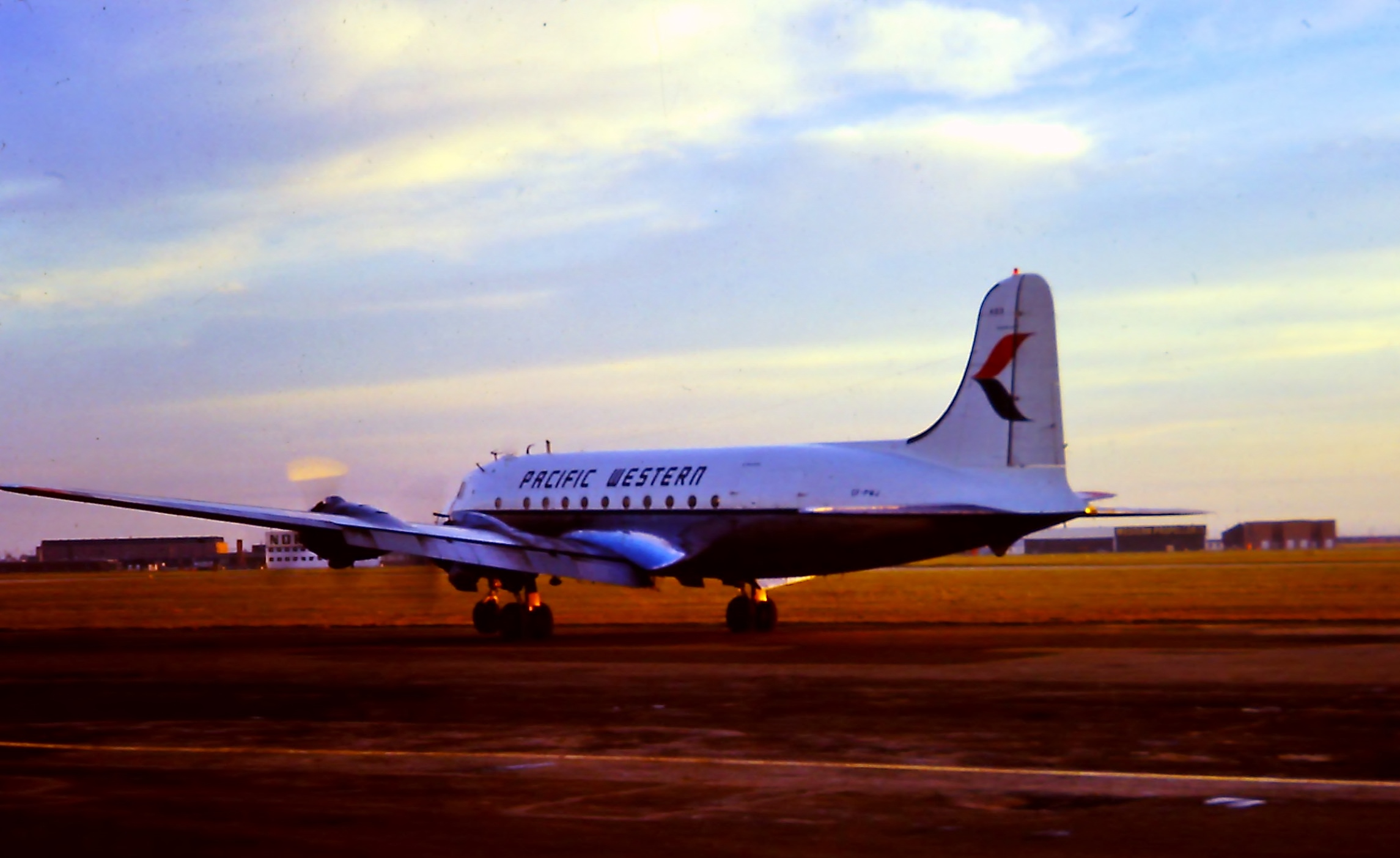
November 20, 2021 Pacific Western Airlines
B707
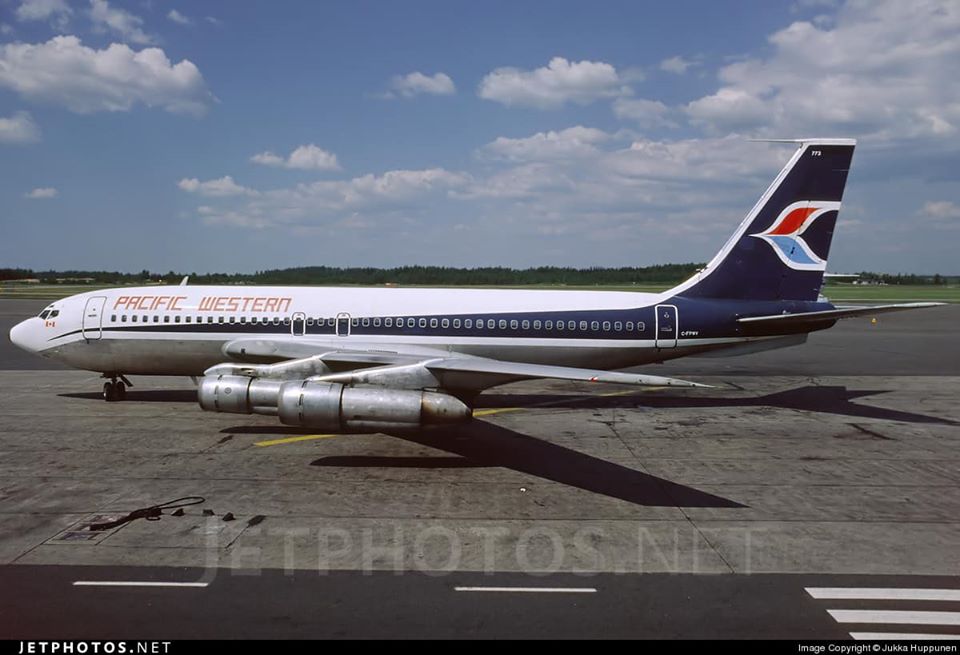
Pacific Western Airlines World Air Cargo Boeing 707-321C CF-PWZ
1970's from contributor GEmptor
November 13, 2021 - Rhys Eyton - Inducted into the Canadian Aviation Hall of
Fame
https://cahf.ca/rhys-eyton/
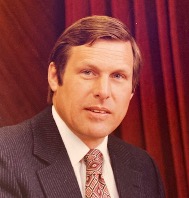
A leader in Canada’s commercial aviation sector, Rhys Eyton joined the Finance
Department of Pacific Western Airlines in 1967. Over the next decade he assumed
positions of increasing responsibility until, in March 1976, he was appointed
President and CEO of the airline. In addition to streamlining the company, Rhys
began to acquire regional carriers and then, in 1987, Canadian Pacific Air
Lines. The new company, Canadian Airlines, expanded again following a merger
with Wardair. In 1989 Rhys was appointed Chairman, President, and CEO of
Canadian Airlines International and served in this capacity until retirement in
1995.
During a transformative era in Canada’s airline industry, which included
deregulation, Rhys’s vision, decency, and leadership played a key part in the
growth of his company into one of the largest private sector employers in
Western Canada; indeed, between 1976 and 1994, revenues rose from approximately
$100 Million to $3 Billion. Having shepherded his airline through regional
mergers and building it into a true national carrier, there is little question
that Rhys Eyton reshaped the nature of the airline industry in Canada.
Widely recognized by his peers, Rhys served as Chairman and Director of the
Conference Board of Canada, the Air Transport Association of Canada, and as
President of the International Air Transport Association, among many other
positions.
For his outstanding contributions to the aviation industry, Canada’s Aviation
Hall of Fame is pleased to induct Rhys Eyton as a member for 2022.
September 27, 2021 - Fleet 732 C-FPWE
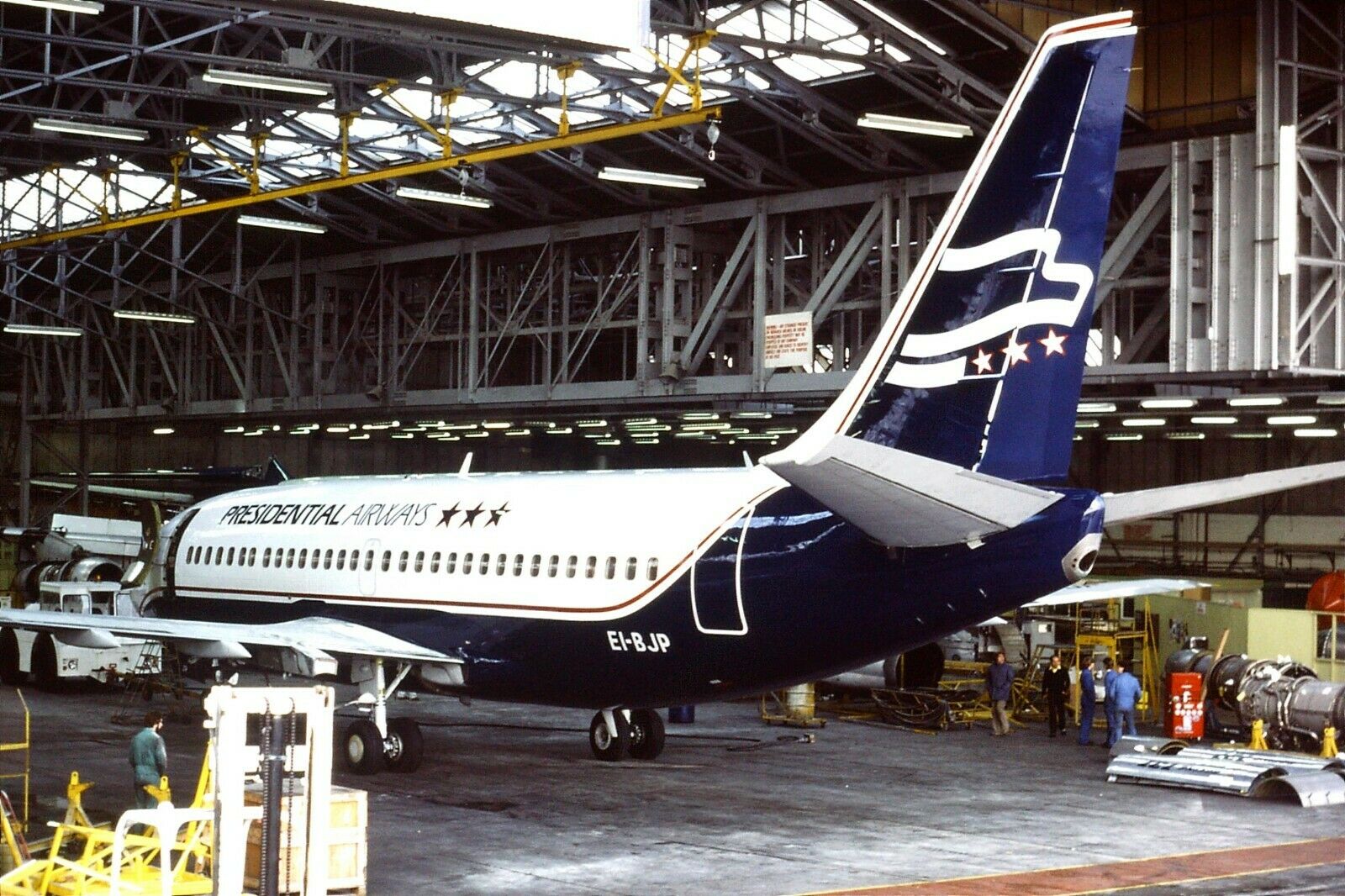
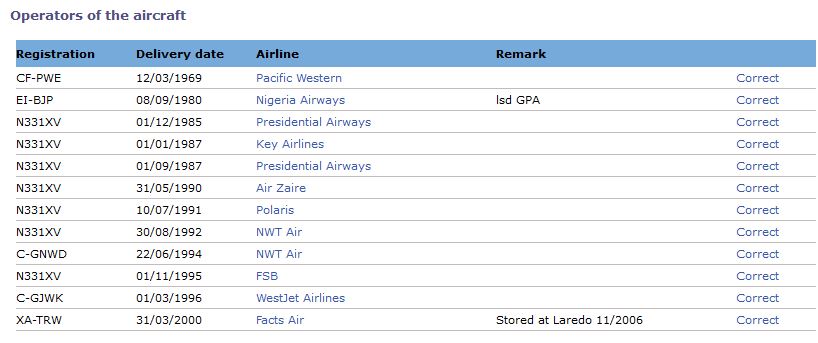
From contributor GEmptor - See attached gem of Presidential Airways Boeing
737-275C EI-BJP in the hangar. Delivered to Pacific Western Airlines as CF-PWE,
this aircraft was re-registered by Presidential Airways as N331XV and would
serve with NWT Air. The plane was brought to Phoenix to get painted in a partial
scheme - no stripes to save on paint costs and NWT Air was only leasing the
aircraft. Aircraft currently stored since 2006!
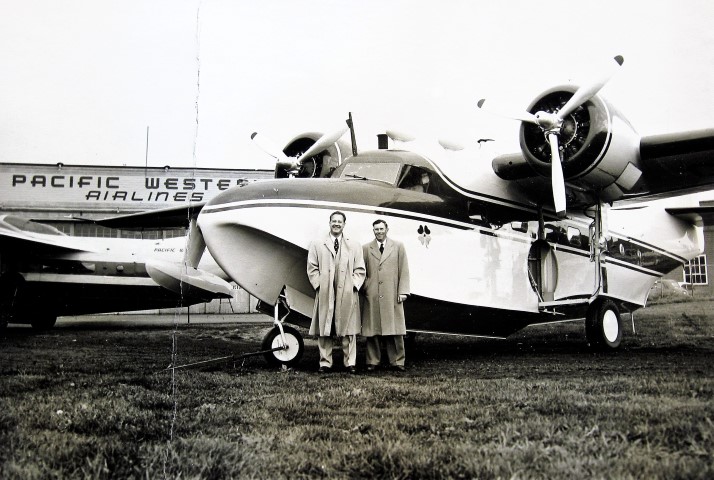
September 27, 2021 Princess Margaret and BC Centennial
During Princess Margaret's visit to British Columbia for the B.C. Centennial in
1958, Pacific Western Airlines played a small part in her transportation.
On Friday, July 18, 1958, a P.W.A. Mallard amphibian carried Princess Margaret
from Penticton airport to Vernon where the aircraft landed on Okanagan Lake.
After her visit to Vernon, she was flown to Kelowna where the Mallard landed on
Okanagan Lake and she deplaned onto a platform at the Aquatic Stadium.
It was here that Russ Baker, president of the airline, was presented to Princess
Margaret by Lieutenant-Governor Frank Ross. Russ Baker and Princess Margaret
spoke for several minutes.
Source: Kamloops Daily Sentinel - July 19, 1958 - p. 1)
Neil B
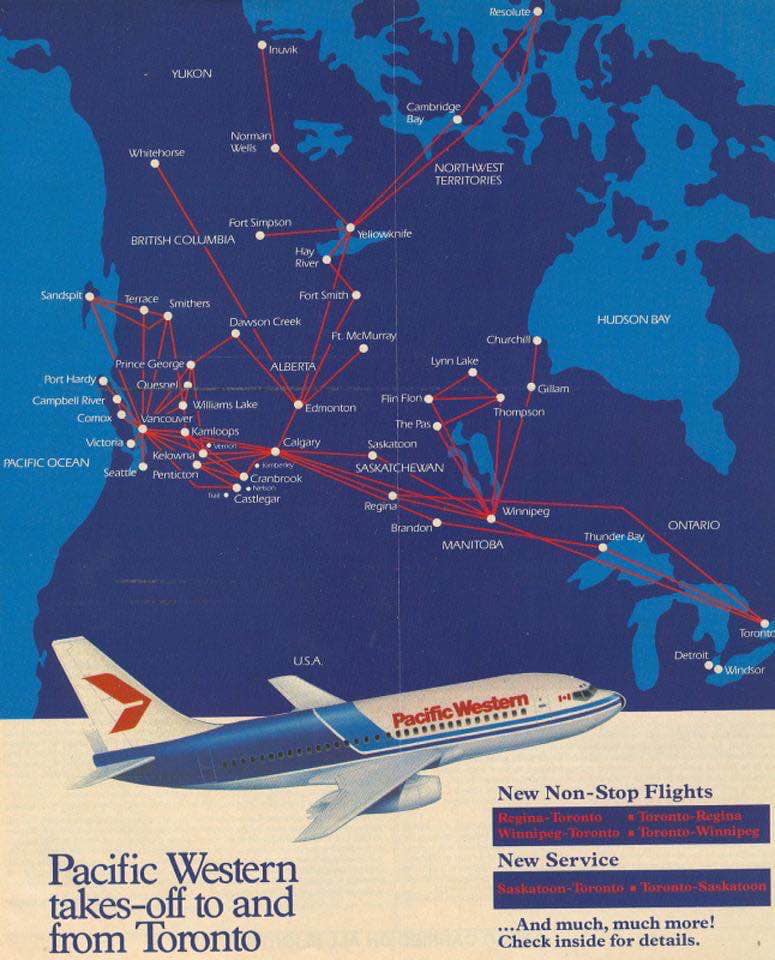
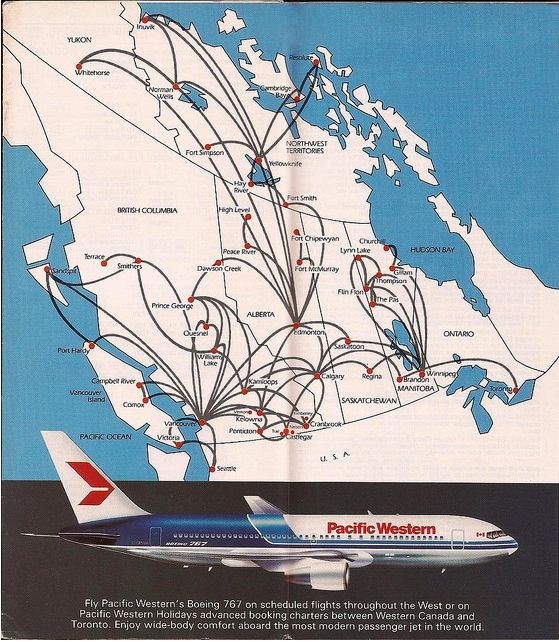
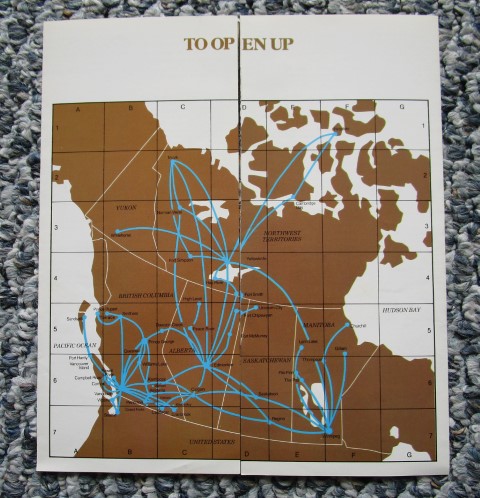
June 19, 2021 Route Map 1985-1986
This route map was current in 1985-1986. A busy airline
that provided jet services to so many western Canada communities.
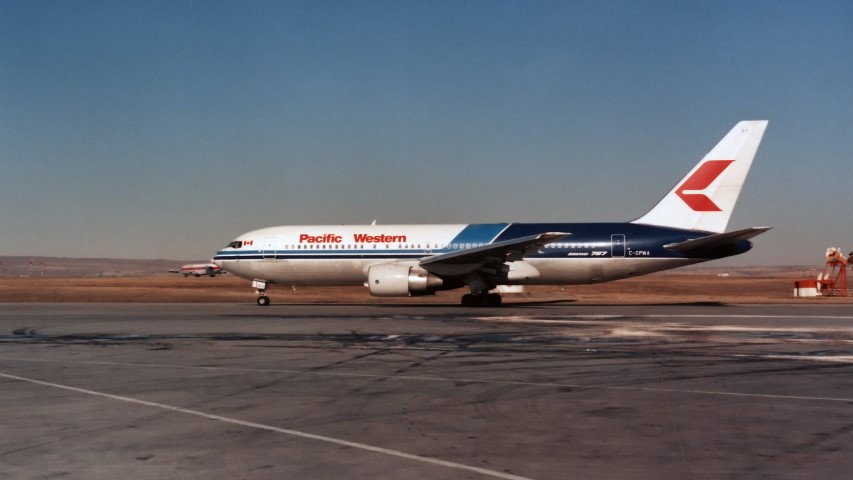
April 29, 2021 - The End of an Era
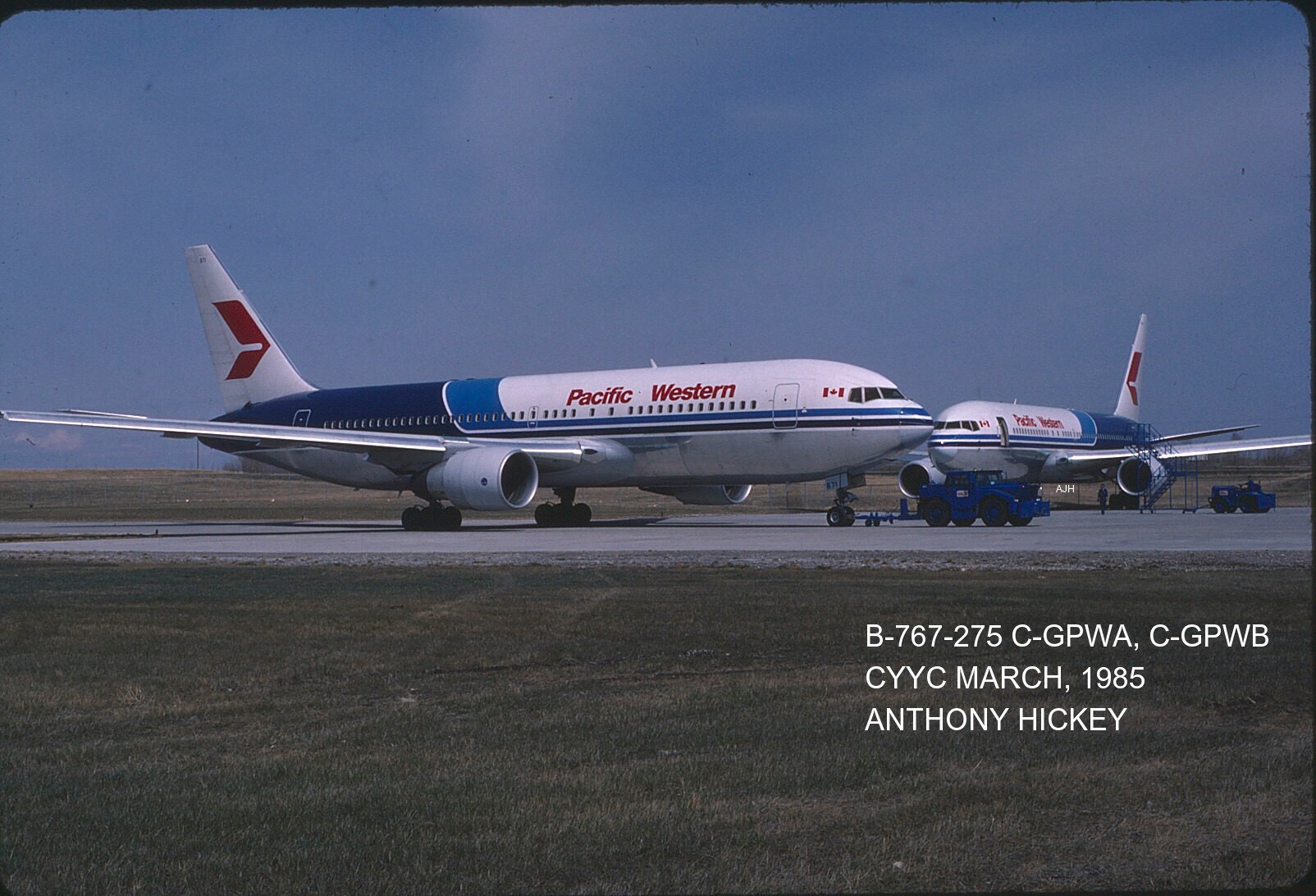
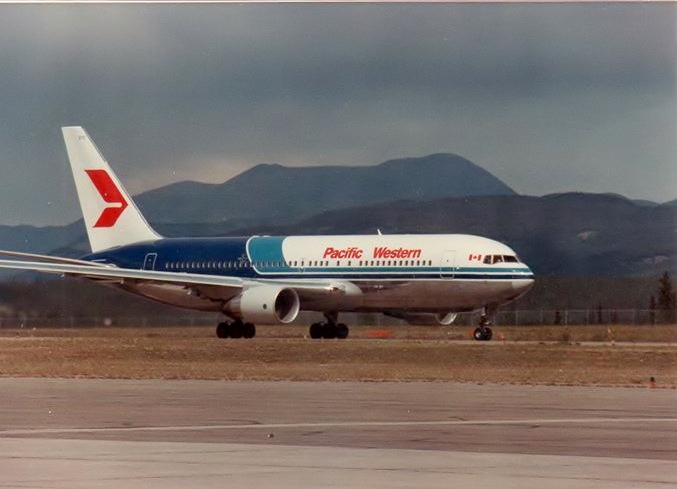
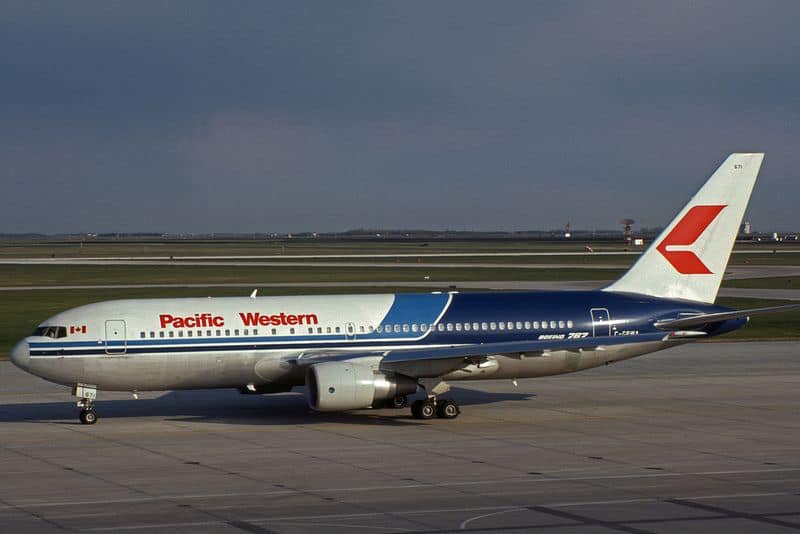
Two Boeing 767-275 aircraft return to Calgary on their last flight for their
eventual disposition to Air Canada. A sad day indeed.
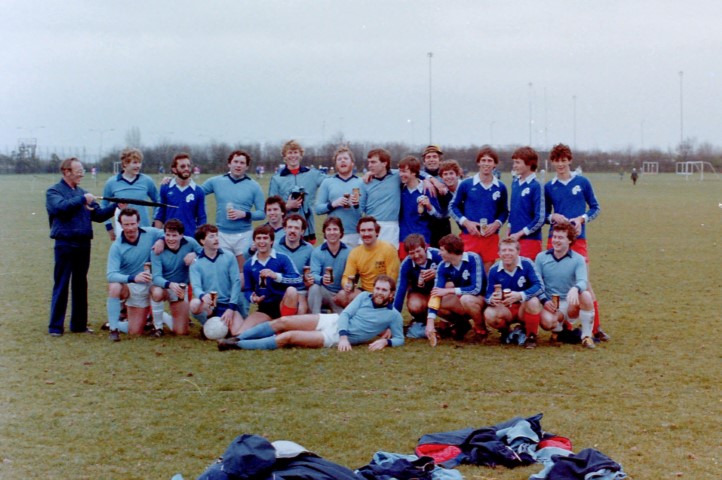
February 16, 2021 PWA Soccer Team vs New Zealand
This is a photo after PWA (YVR) had beaten Air New Zealand at the tournament in
1983, at the British Airways Centre, Heathrow .
A great tournament, with teams from all over the world, and a good time was had
by all. Thank You
Regards R. Dick YVR - Now Happily Retired from the airline, and sports 😉 Names
and faces will jog some memories
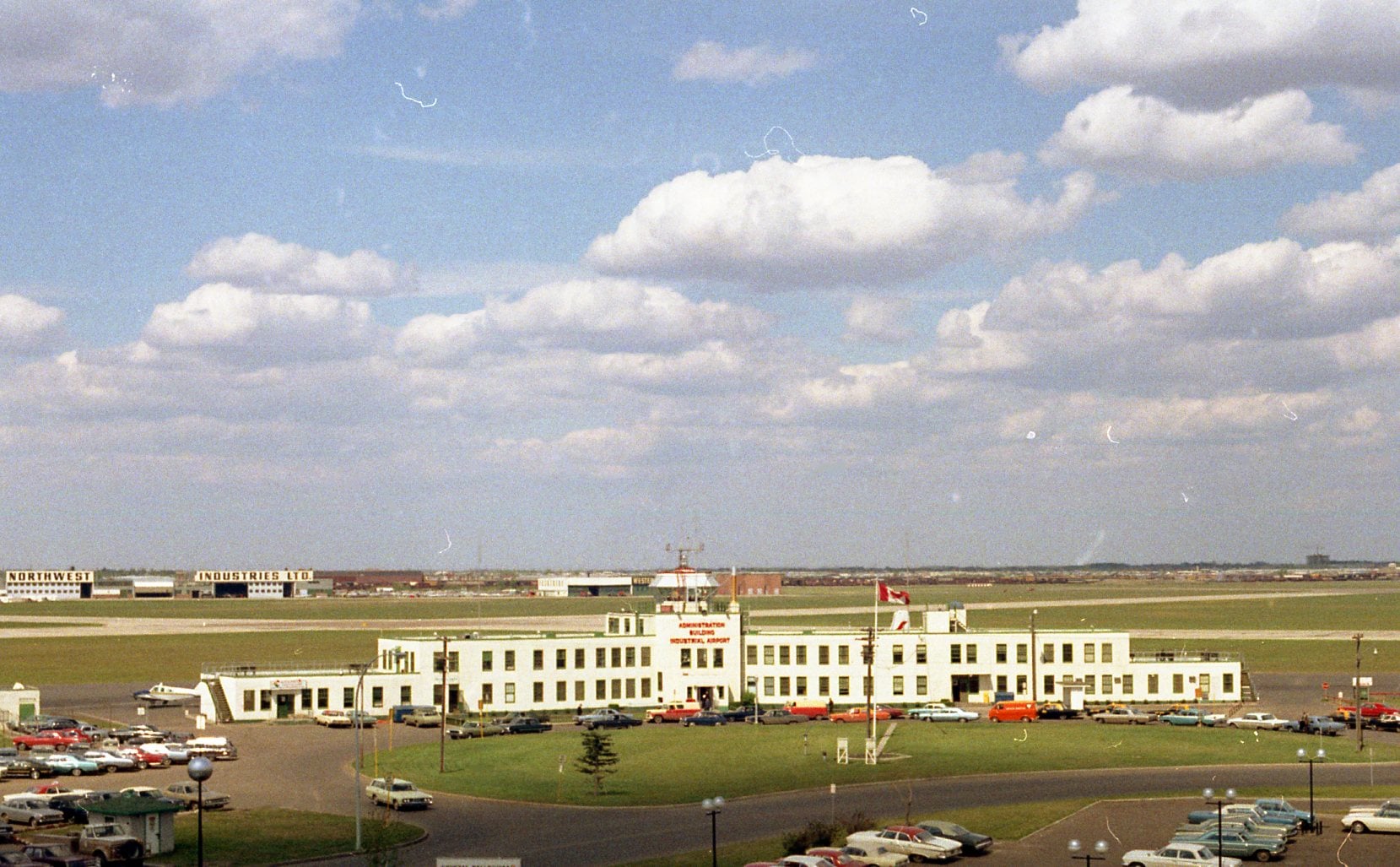
January 20, 2021 An aerial view of a
famous airport
Can you name this famous airport? Picture taken in 1969
E-mail your answers to the
webmaster
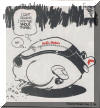
January 12. 2021
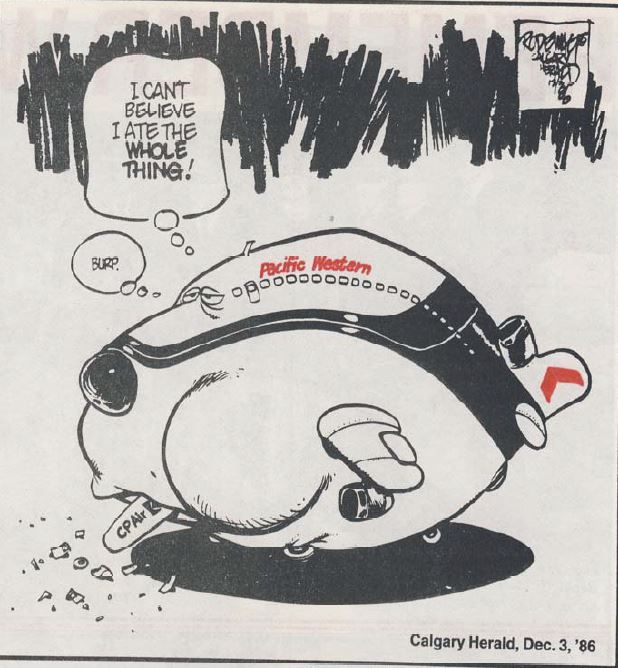
It was 34 years ago on Dec 2, 1986 that PWA bought CP Air on the
TSE. I was reflecting on all this when I saw this cartoon which appeared in the
Calgary Herald the next day. This extraordinary purchase keeps seeming to get
lost.
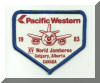
January 10, 2021
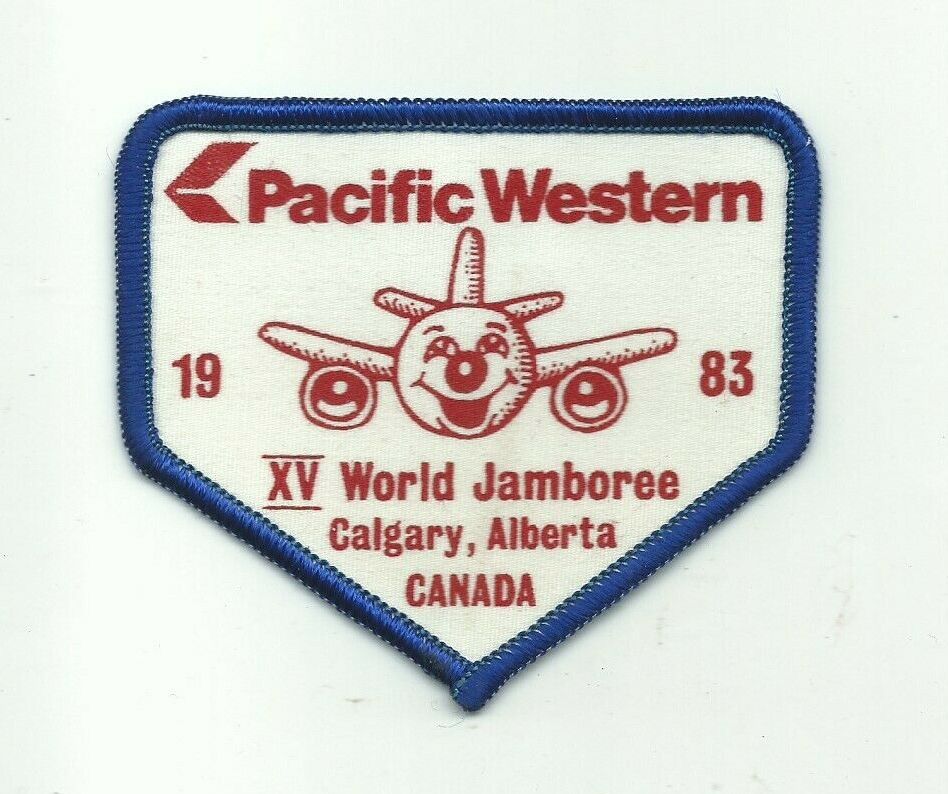
The 15th World Scout Jamboree was held in 1983 and was hosted by
Canada at Kananaskis, Alberta, an area of Provincial Park 4,000 feet in the
foothills
of the Rocky Mountains, 80 miles west of Calgary, Alberta. This patch was
submitted by contributor GEmptor
January 1, 2021 Happy New Year
Best wishes for a fabulous 2021
Dec 20, 2020 Merry Christmas
Merry Christmas to all the PWA Alumni and all of our Facebook members. This has
been quite a year as we dealt with the COVID-19 issues and how to live
safely with that. We are saddened by the loss of some of our best.
We hope you can get together in some way with family and friends and enjoy the
spirit of the season. Keep healthy, keep safe and let's look forward
to an exciting and better 2021. Happy Holidays. From your Admins
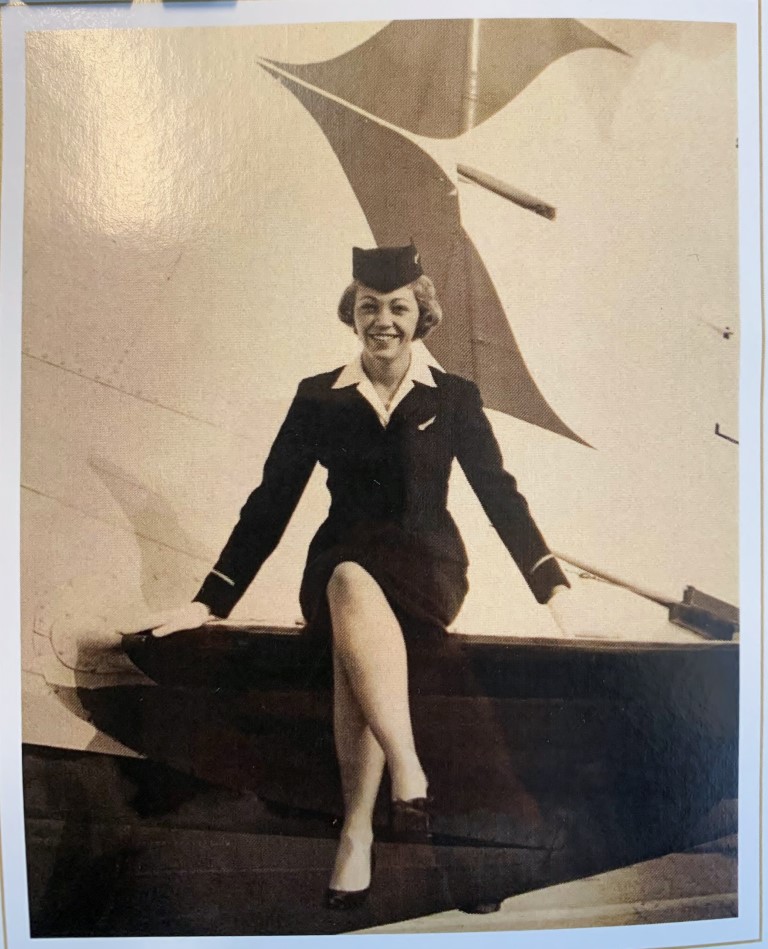
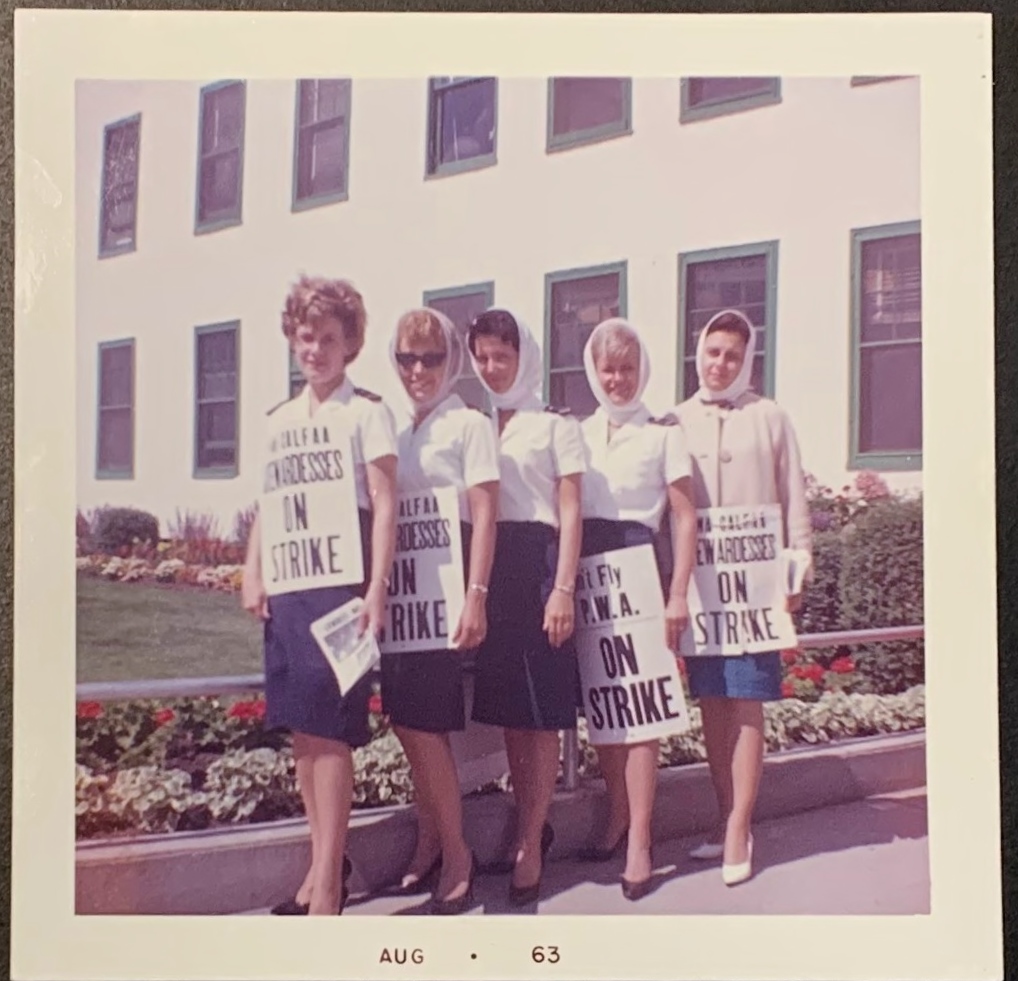
Dec 19, 2020 - Flight crew F/A 1962-1963
 |
 |
|
Nadia Sharun - DC-3 crew 1963
|
This was the strike of 1963. The lovely ladies
are:I. Gagnon, N. Sharun, L. Granger, M. Garbencius, and Nate
Cotton.
Thank you ladies for getting our first collective agreement.
Information by G. Brisseau. Photo By Mark Smigel. |
Dec 13, 2020 - Calgary Golf In 2021
Golfers lets have some fun next year golfing on Wednesdays for
the spring of 2021.
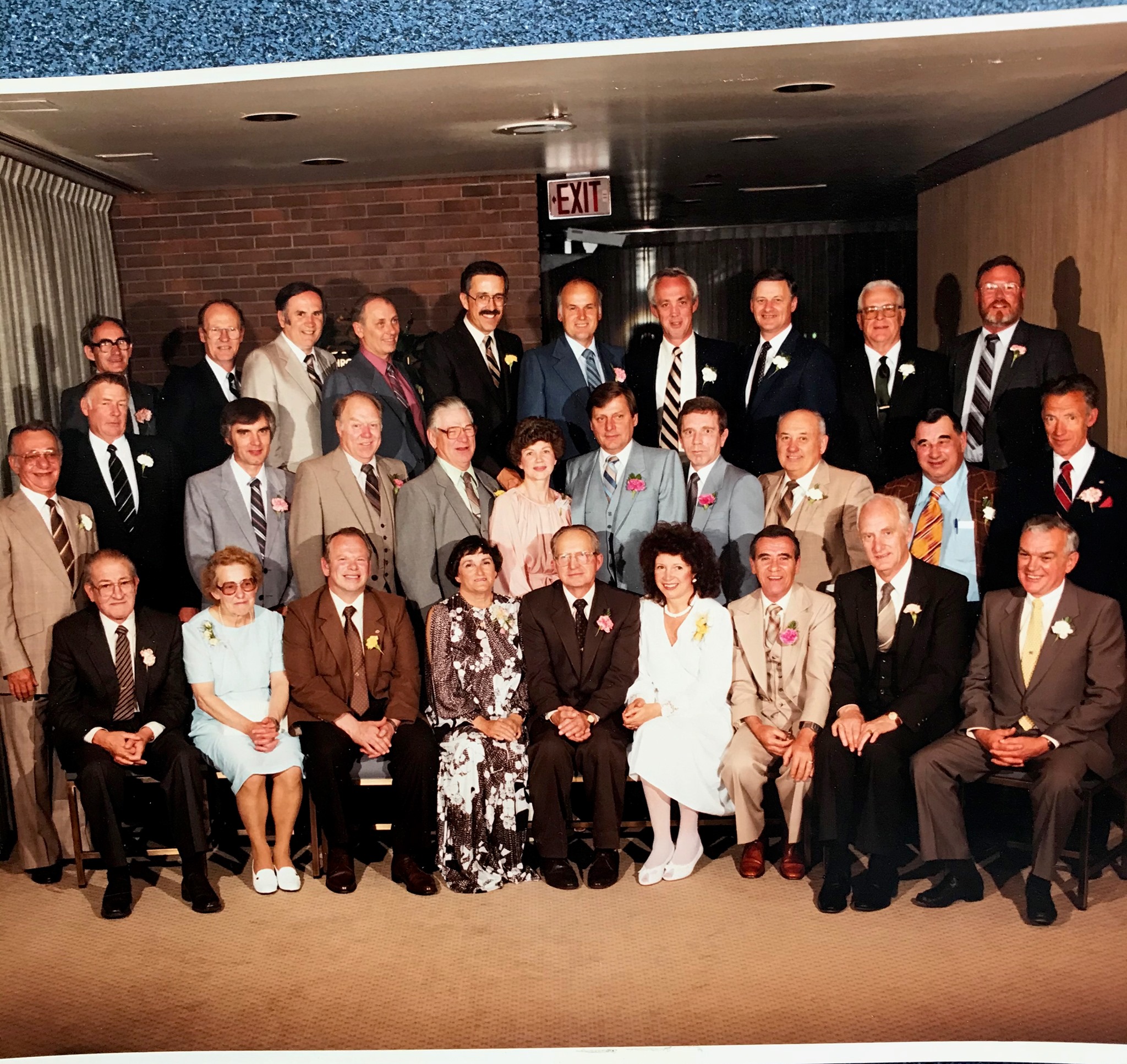
November 23, 2020 - Service Awards at Calgary 1984.
This in from Peter Lema Edmonton: PWA EMPLOYEES CELEBRATE 25 YEARS
of EMPLOYMENT (year: 1984) A Gala dinner/evening was held in Calgary....to mark
this special occasion (for this group of faithful employees and
spouses......from Edmonton, Calgary and Vancouver)
Those being celebrated were greeted at the door by two charming flight
attendants with boutonnieres, champagne, and hugs (in those pre-COVID days!!)
The event was marked with some fine Alberta standing-rib roast, a variety of
British Columbia wines.......tribute speeches, and a sharing of experiences and
memories....it was an evening to remember.
****HELP. I can't remember all of the names ! Let's have a CONTEST .. Can anyone
help?
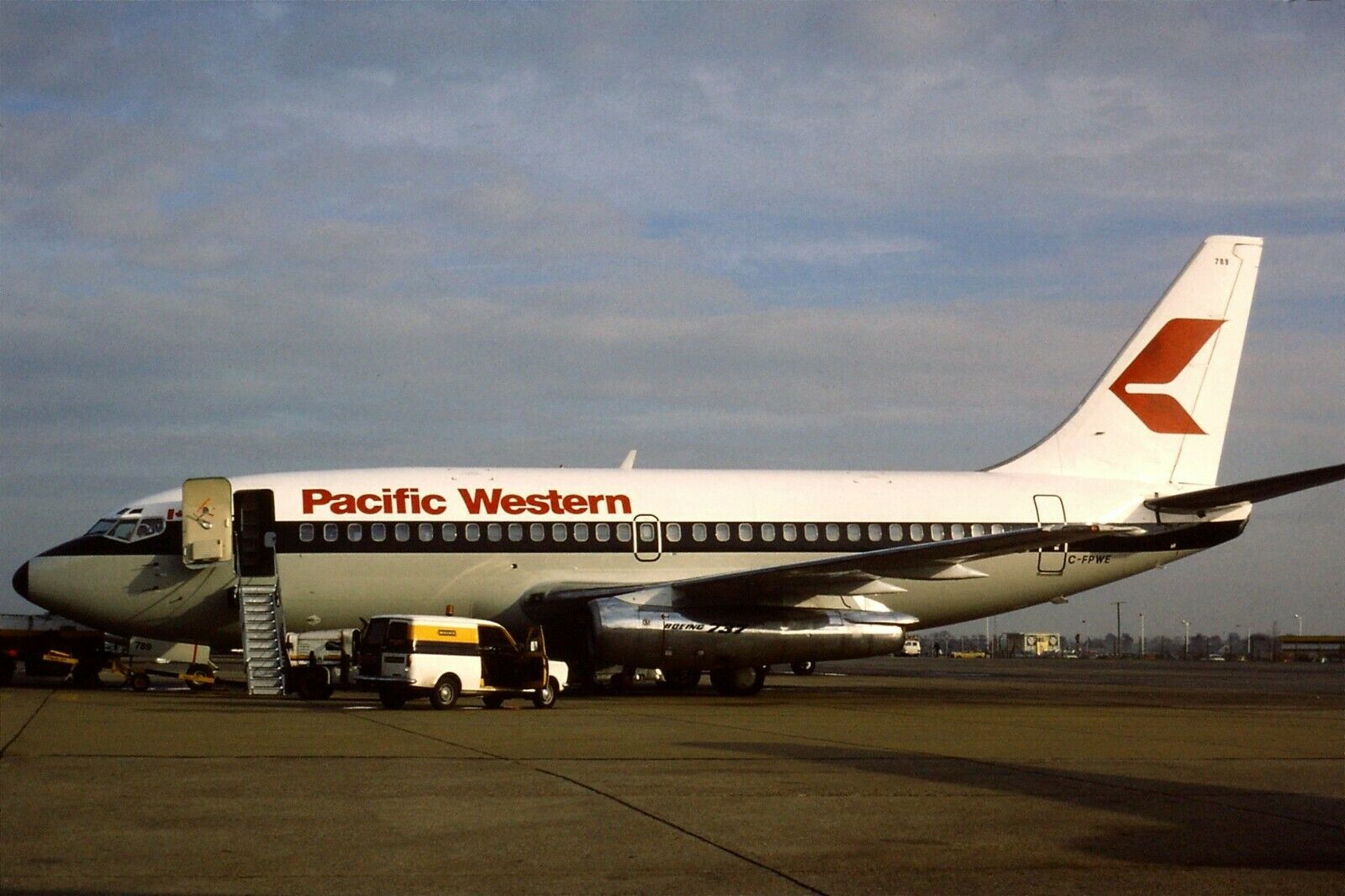
November 8, 2020
Monarch B737-2T7 C-FPWE from November
1984. Credit GEmptor
October 24, 2020 From viewer / contributer GEmptor from
PHX.
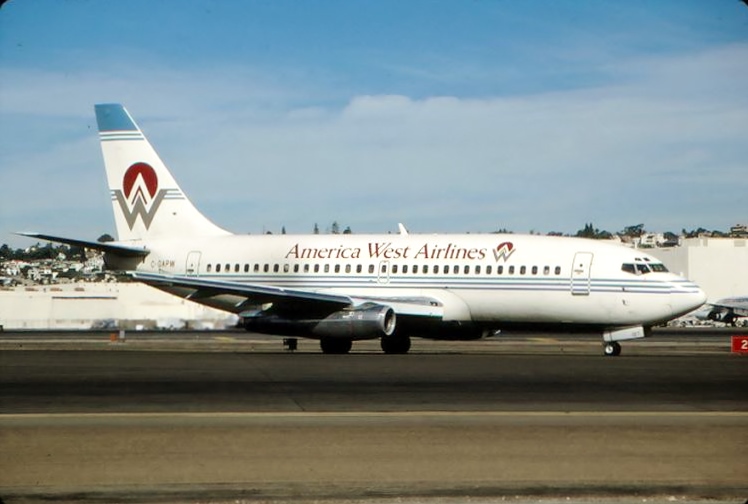
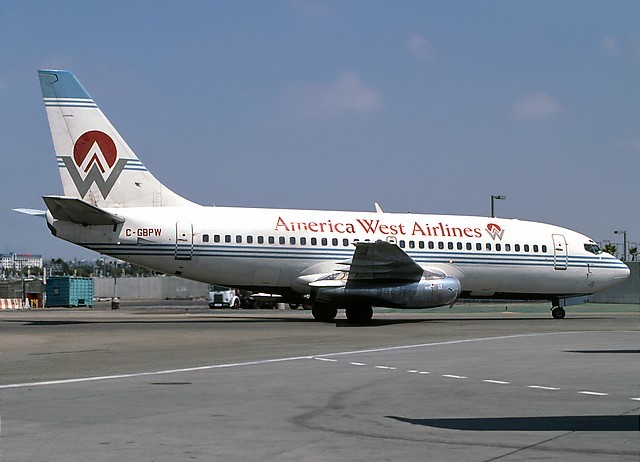
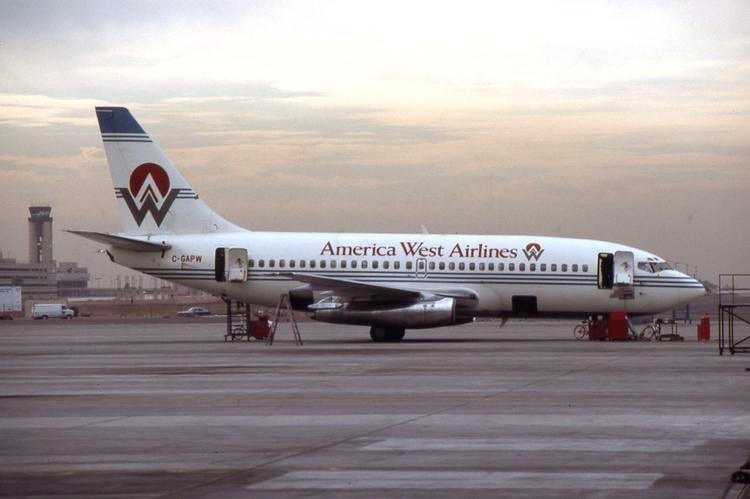
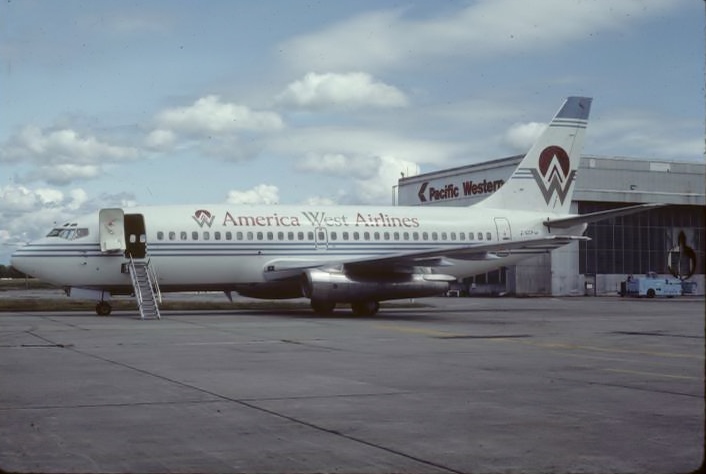
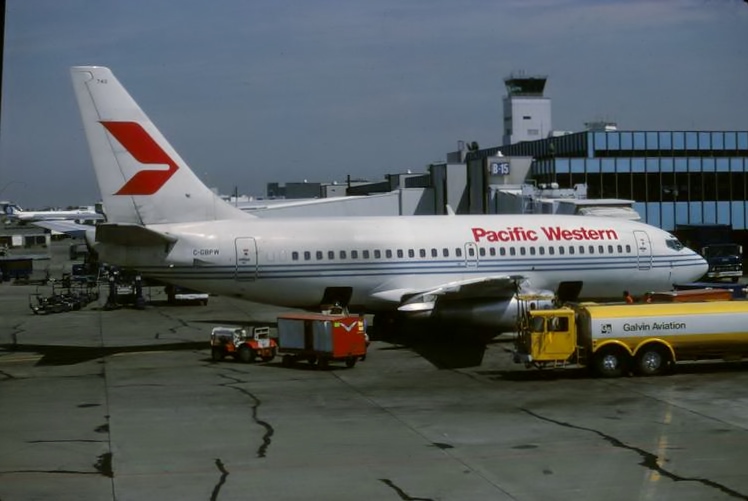
Here is C-GAPW, C-GBPW, and C-GCPW . Plus there C-GEPW (pictured T3 PHX). Oh,
the paint schemes it wore!
September 28, 2020 Model Airliners
Ferd Caron is looking for Pacific Western or Canadian Airlines aircraft models.
If you want to donate or sell any of your collection, let him know at
fjcaron@shaw.ca
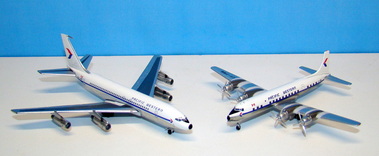
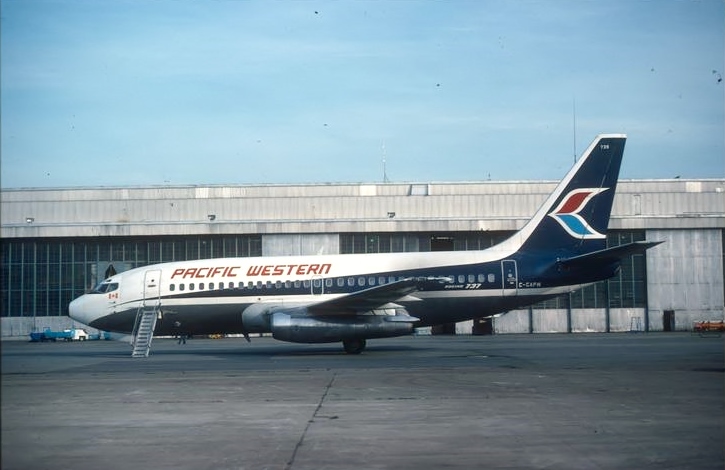
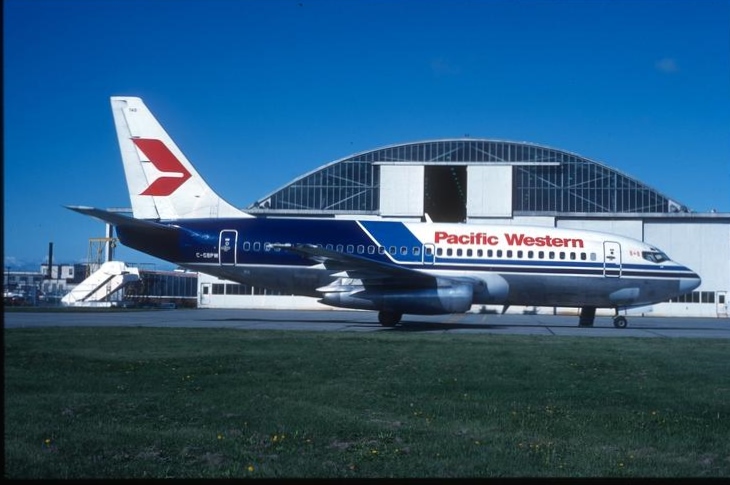
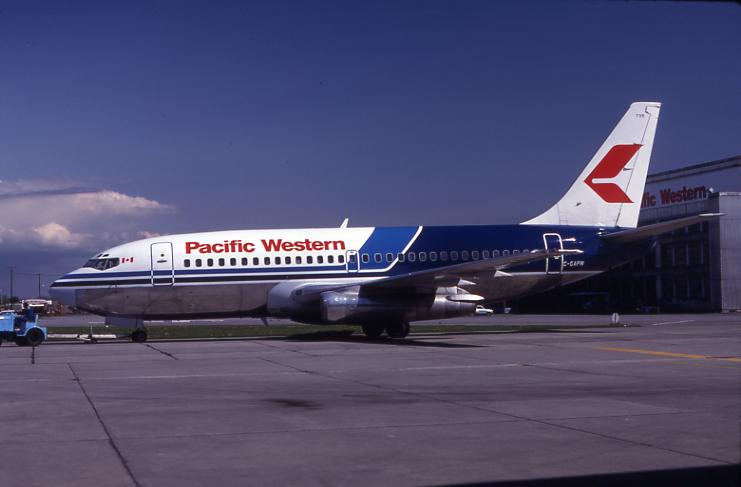
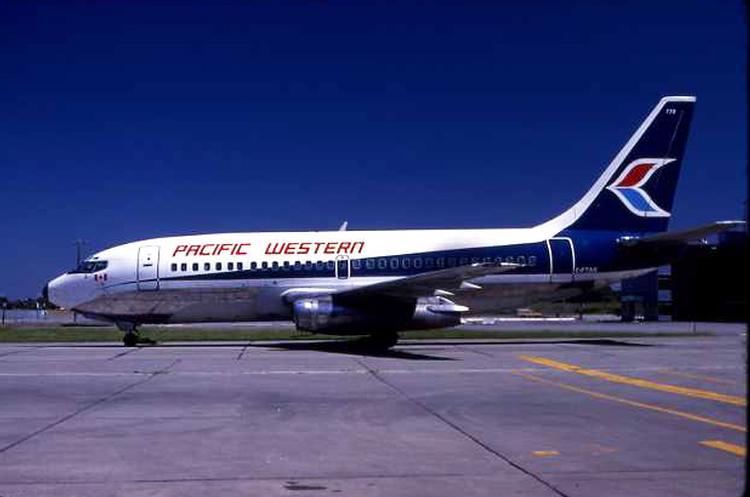
September 27, 2020 Two 737-200's
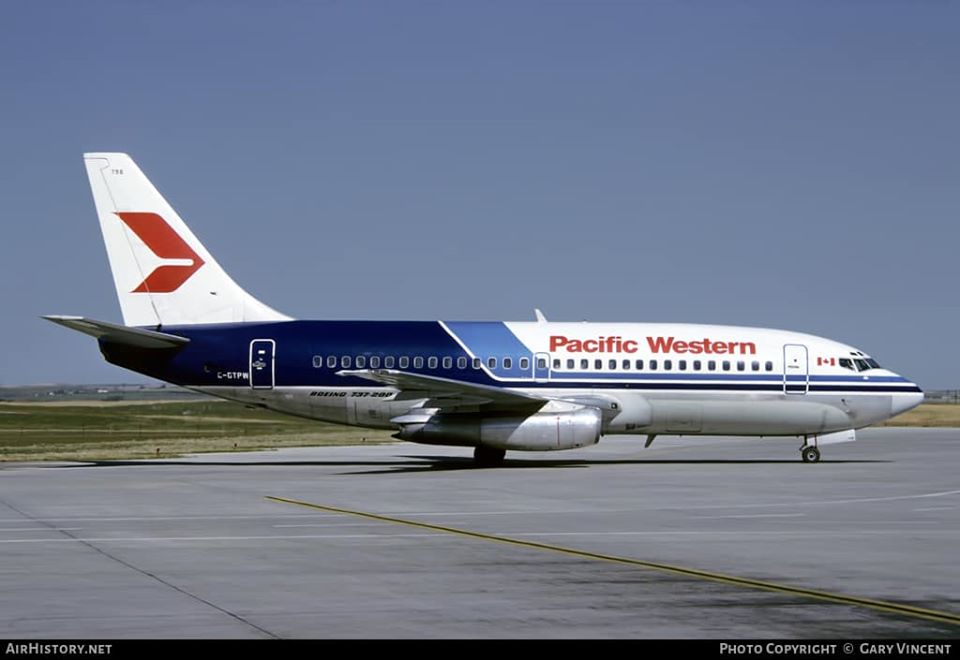
Pacific Western Airlines Boeing 737-2A9C C-FTAN YVR July 1980; former Transair.
Pacific Western Airlines Boeing 737-200 C-GAPW YVR April 1981 delivered to PW in
Aug 1974
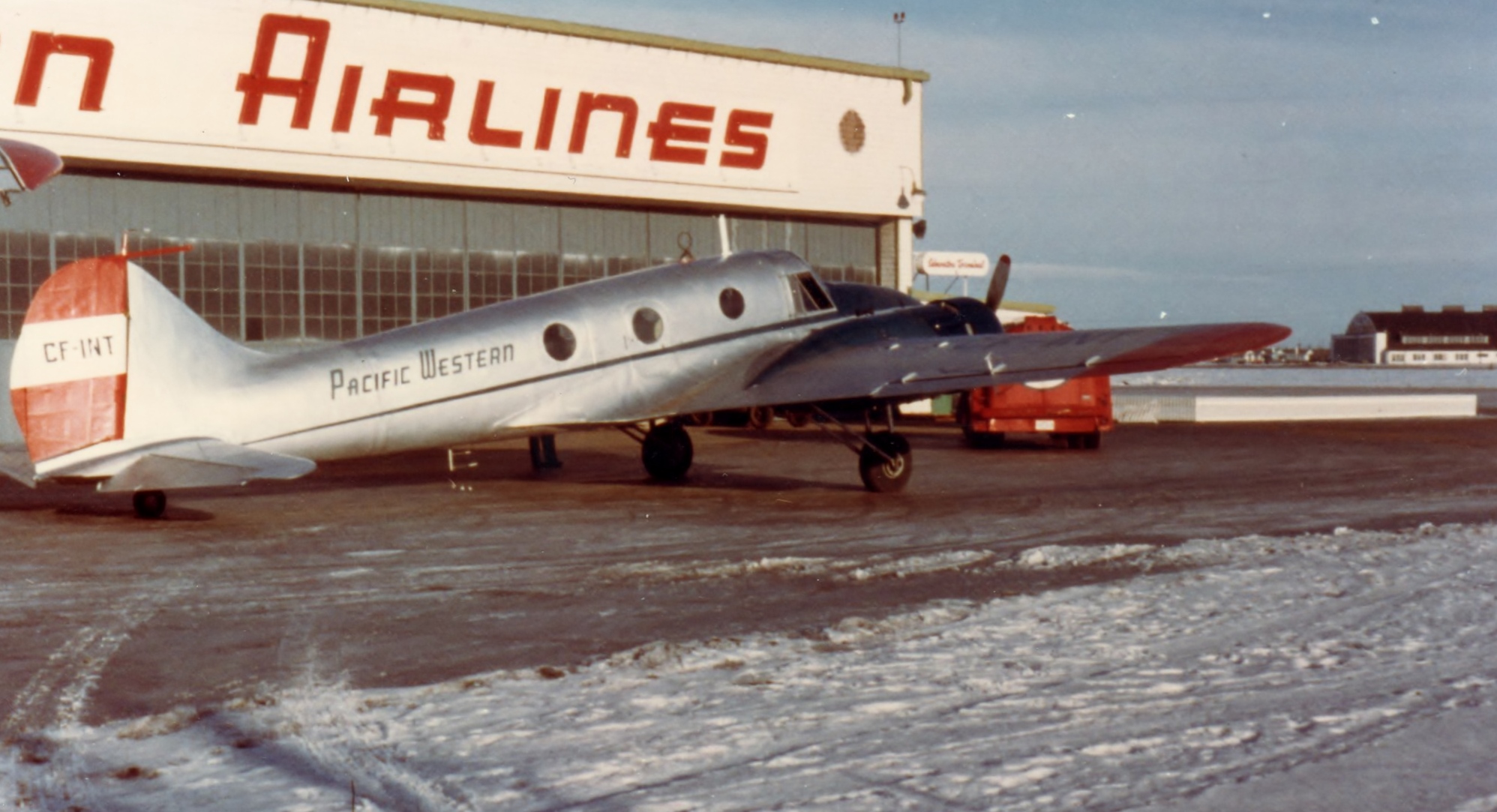
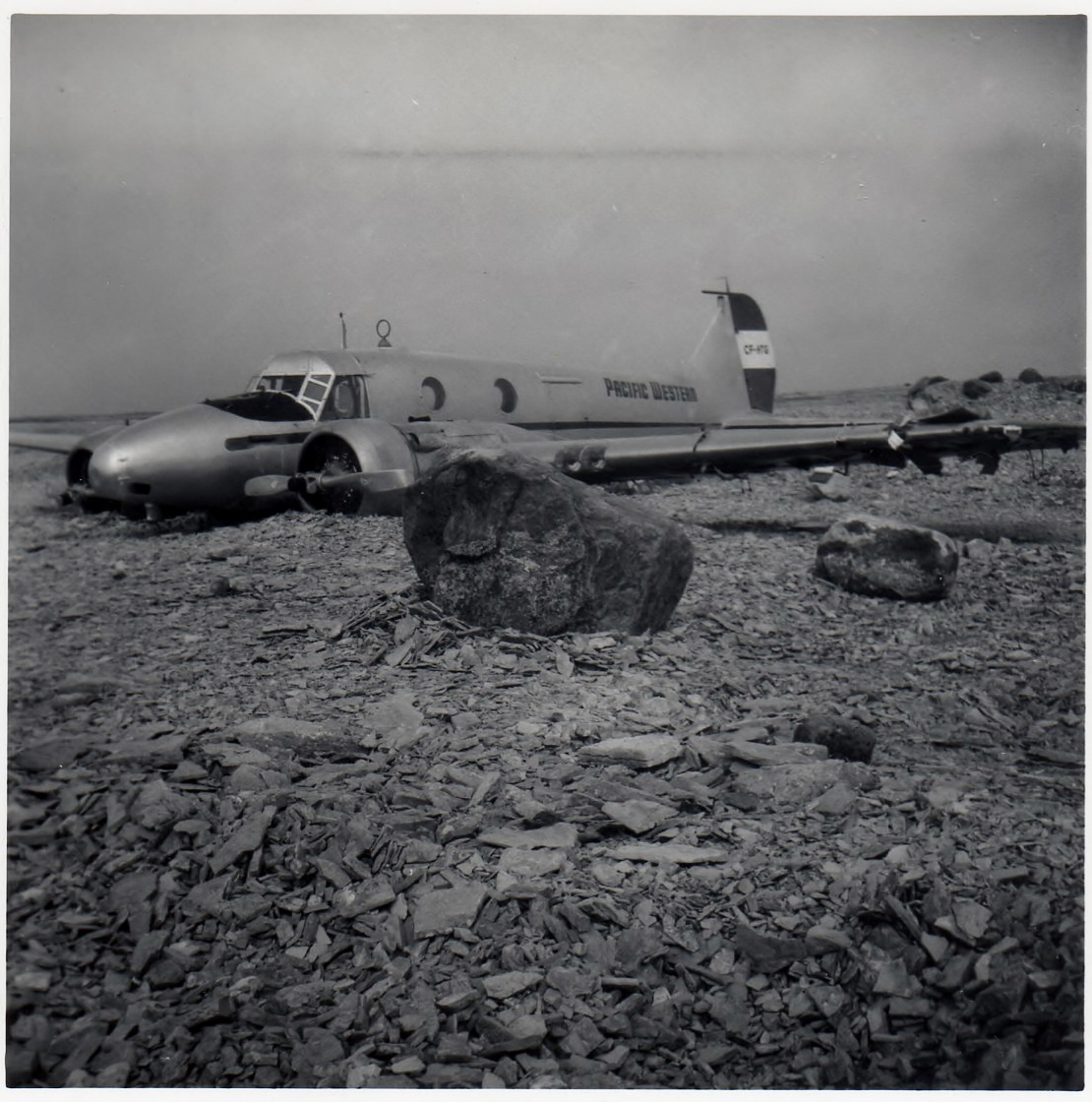
August 14, 2020 - Anson at Work.
Some history sent by S. Russell - ANSON CF-INT YXD 1957 and ANSON CF-HTG YCB
JACK MAGEL had tire issues on take-off 1959
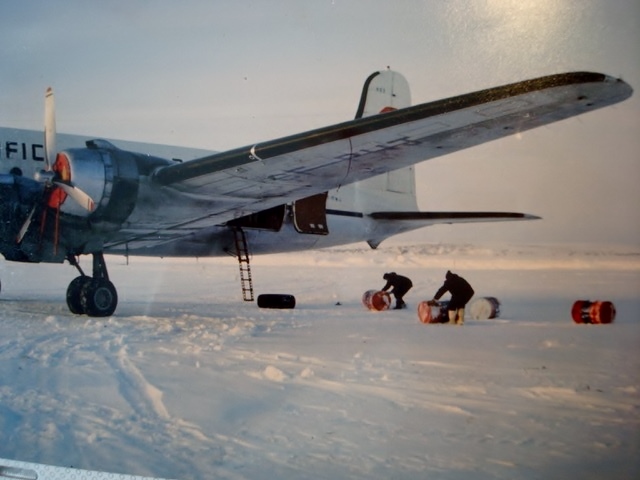
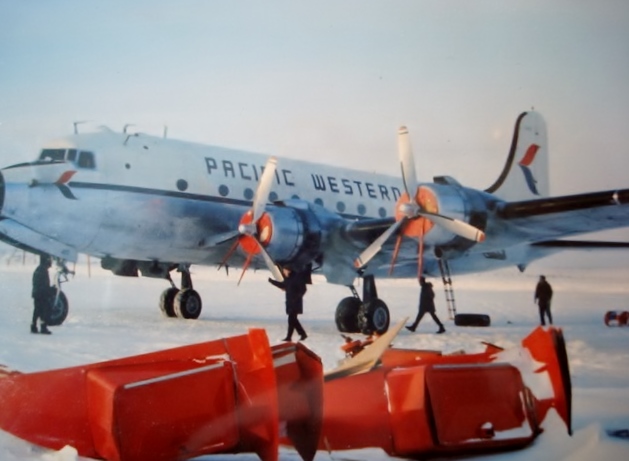
August 7, 2020 - Fuel Lift Resolute to Mackenzie King Island by Peter Lema.
Submitted by Peter Lema. Peter worked at various positions including Terminal
Operations Manager and Public Relations Manager in Edmonton.
My most memorable event (working for a northern PWA operation) took place in
1965/66 up at Resolute Bay.
Shell Oil Company arranged a shipload of about a thousand barrels of fuel(45
gallon size) plus hundreds of bottles of propane; from the port of Montreal, the
St. Lawrence River around Quebec and all the way up to Resolute Bay. The Ship
arrived in mid-August of 1965. The sea-ice navigation window for Resolute Bay,
at that time, was about 2 weeks. The special ship sped onto the beach (for
off-loading, as no regular dock existed at Resolute. The barrels were all
trucked to the airport and lined-up as far as the eye could see.
In March 1966, I was put in charge of the operation to move these goods via air
from Resolute to Mackenzie King Island (2 hours flight time northwest of RB)
(see Google). The lift was done by two DC-4 aircraft that had been chartered by
Compagnie General de Geophysique of Paris, France. (My St. Albert French came in
handy !!) My, Edmonton boss, Ed Pezzot assigned me to this adventure of a life
time !!!
Now, before we were able to start this huge air-lift (Resolute to Mackenzie King
Island), a DC-4 airstrip had to be built.
A Wardair Bristol aircraft landed amid the snowdrift of MKO and brought in a D-4
caterpillar. The "cat" would be used to build a crude airstrip and to smooth out
the snow. After a days' operation on the new airstrip construction, the D-4 cat
driver (cat-skinner) fell sick. The operation had hit a major hurdle!!
The following day, a small plane was able to land MKI, with a very special
passenger: namely PWA pilot Jack Magel. Jack soon took over the controls of the
D-4, and within a couple days, he managed to complete the make-shift runway
(Jack was indeed a hero!!)
BTW: This operation made history...as we were the first humans to arrive on MKI
since 1936 (when the Army had had a winter survival camp there).
It was C.C.G. who had chartered the two PWA DC-4's for this air-lift. The first
loads consisted of camp housing and propane.....soon followed with barrels and
barrels of fuel (44 per load/19000 pounds of payload) from Resolute Bay to MKI.
The lift was completed in two months.
It proved to be a very successful operation. At the time, it was the largest
operation of it's kind in the Arctic
Some of the PWA crews included:
Captains Gene Gauthier
Art Catrano
Cy Page
Dean MacLagan
Doug Hannay
Wally Crosson (among others)
Some of the PWA Engineers included:
Bob Robertson
Jim Brown
Joe Smith
Bob Haudenschild
Shorty Juengal (among others)
We did not use a Loadmaster....but I took several flights over to supervise
the off-loading operation.
In March 1966, the daylight hours were getting longer....a benefit to our
daytime flying (all flights being VFR...Visual Flight Rules) with no "nav-aids"
or instrument landings.
**In those days, PWA was given the authority to approve its' own airstrips
anywhere in Northern Canada.
We were held-up for three days (no flying) when Resolute was hit by a particular
bad snow storm at -30*C with a 20 MPH wind. After the storm, the DC-4's had to
be dug out of "concrete like" snow....using picks and shovels. *Now, I
discovered how Eskimos are able to use this hard snow to build "igloos"
Even though the aircraft engine crankcases were diluted with aviation fuel at
the flip of a switch before shut-down......when it was time to resume flight
operations. Our PWA engineers still had to hook up "Herman Nelson" gas heaters,
blowing hot air for several hours to thaw the engines so they would start.
BTW....the Resolute Bay camp food was on par with a New York eaterie because the
base was serviced by RCAF C-119 aircraft with twice-weekly re-supply flights
from Edmonton.
So, if you are in need of empty 45 gallon barrels, there are thousands upon
thousands abandoned…. all over the Arctic Islands. And these barrels may be
there for years to come.
Also, crude oil was eventually discovered in the arctic islands but it is not
yet economically feasible to ship it south.
Memories. Peter Lema, Edmonton
From S. Russell: Wildcat wells were drilled in 1962/63/64 then
seismic companies like CGG started exploring between 1965 and the first serious
well drilling at Drake Point in 1969. Before the Herc CF-PWO came along in 1967
with the ability to carry 5000 gallons of bulk fuel, all fuel was in drums and
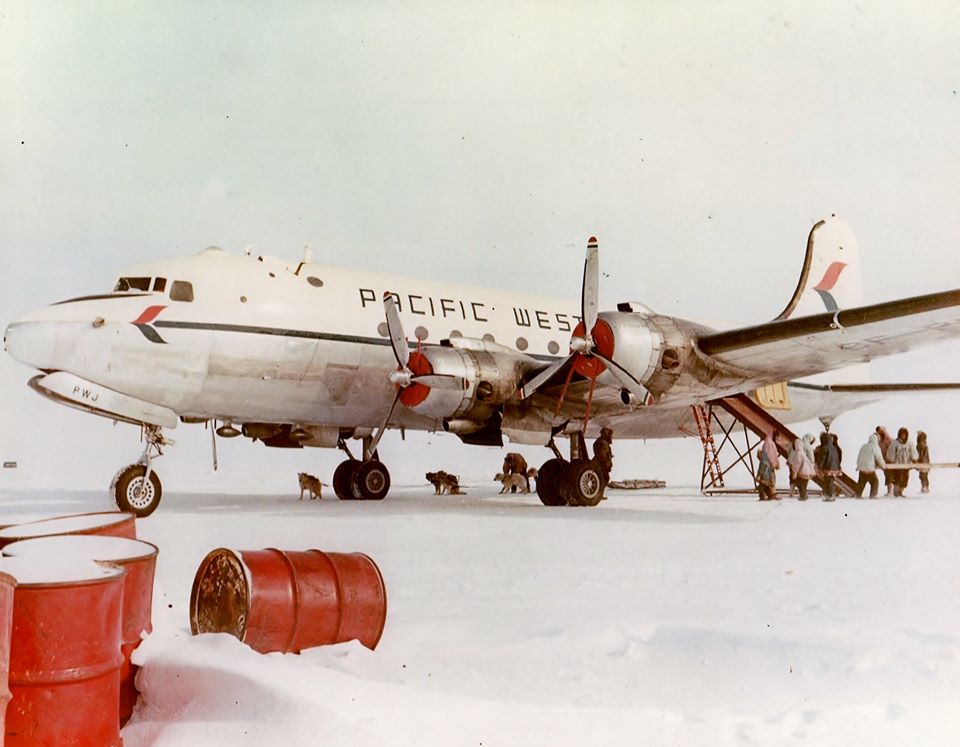
hauling drums in the DC4 in the cold must have been challenging. This 1964
YCO Coppermine Kugluktuk photo has a metal slide for offloading drums and the
like so it had regular service vs charters.
August 2, 2020 Boeing at Bent Horn, Cameron
Island
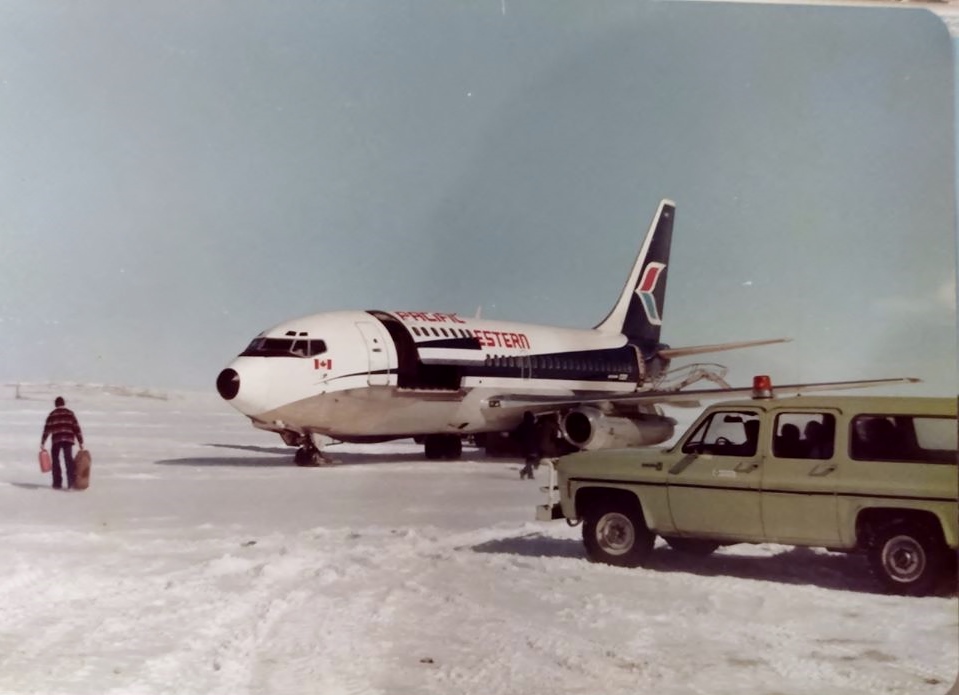
E. Shaffer sent this picture of our Boeing 737C on a crew
change at Bent Horn, Cameron Island.
From S. Russell: Bent Horn is on Cameron Island in the high arctic. Panarctic
Oils land strip. N76' 19" W104' 06". North East of Rea Point base camp. PWA
supplied 737 / 727 crew changes into this site. Hercs moved rigs and drilling
mud, pipe, fuel, camp, trucks, cats to/fm regularly.
Bent Horn was the only producing oil well in the islands. Huge tank farm built
to fill over the winter and ice strengthened tanker came in during late Aug /
early Sept and filled up. The oil was the colour of honey - light and sweet. The
tanker would bring in Jet A1 for Resolute or Rea Point and then ferry to Bent
horn to load. First load went to the power plant in YRB ( where it was burned in
their generators right out of the ground without refining ) and the second load
to Petrocan refinery in Montreal. I believe 3 million barrels of oil were
extracted before the liability and operating concerns shut it down.
https://goo.gl/maps/ua7giXDdmJp535D39
June 10, 2020 Boeing 767 - Onboard
Ticketing
It was a tough challenge for a western
domestic regional airline to make the Boeing 767 work for them. Innovative ideas
such as onboard ticketing, blue, red and black fares and other marketing
initiatives were put into place to fill seats. In the long run, it was not
sustainable and sadly on May 1, 1985 the two 767 wide bodies were sold. It was
less than 3 years later when on Apr 15, 1988 the first Boeing 767-300ER entered
the fleet under Canadian Airlines. Photo (pending approval) by S. Pieschel
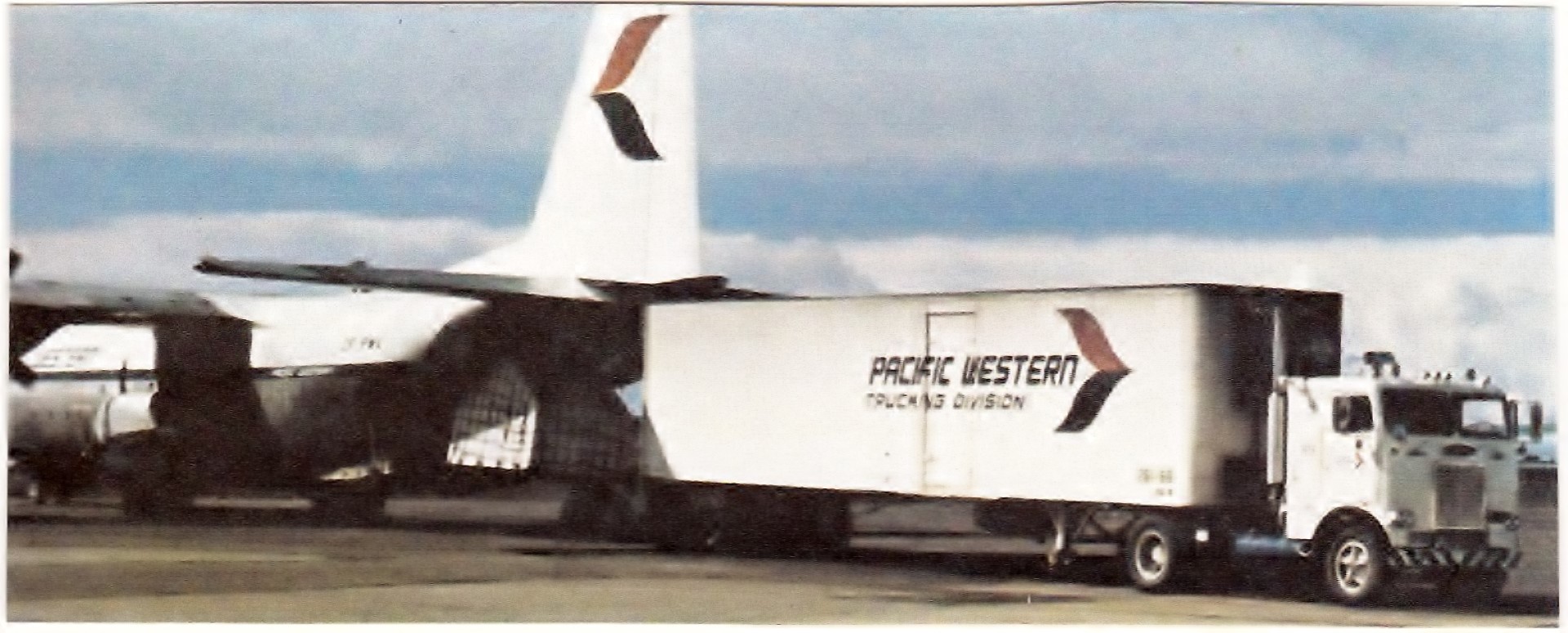
May 30, 2020 Pacific Western
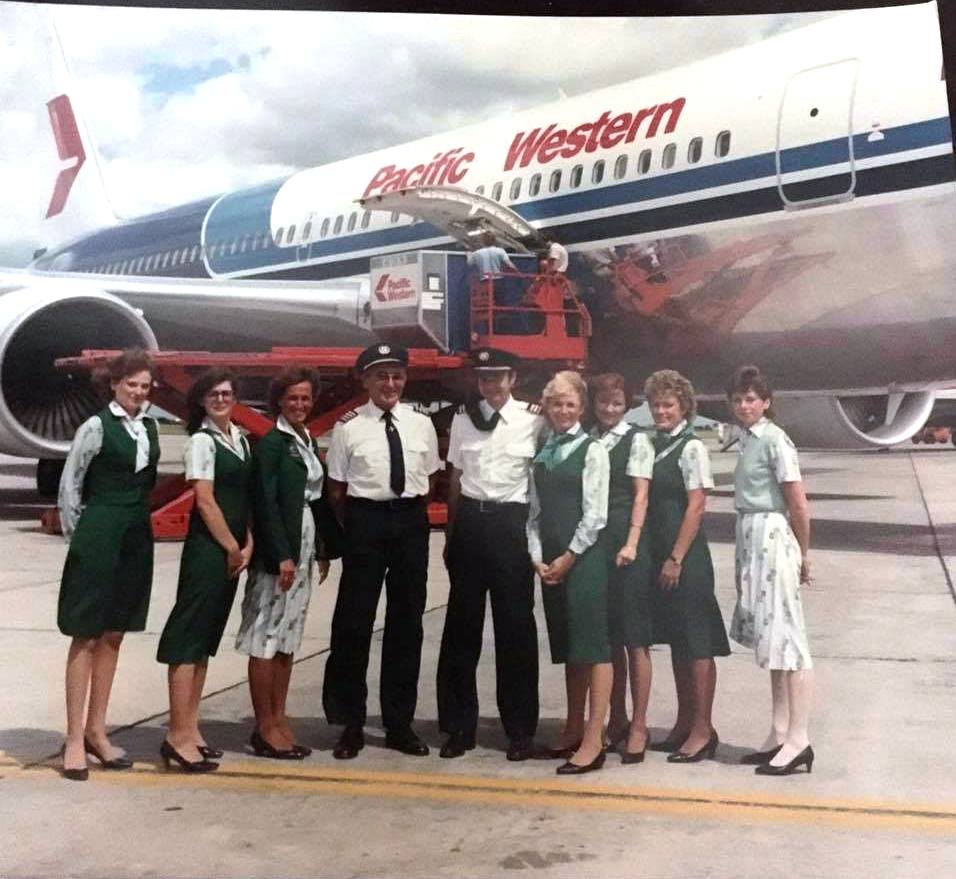
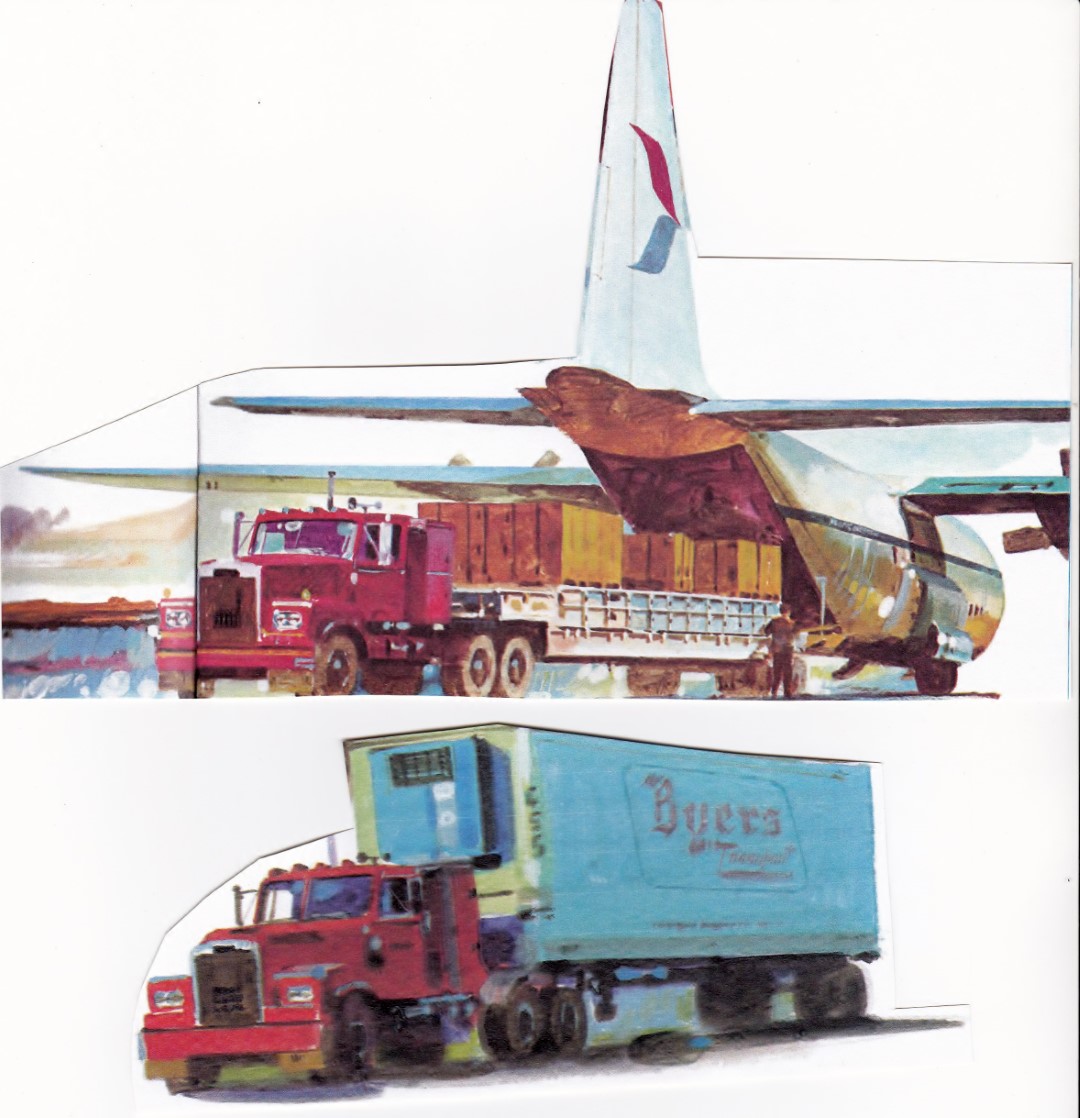
Airlines and its associated Trucking Operations - Research By Neil Burton.
Maurice Byers founded Byers Transport in 1942, hauling
goods on a route of about 125 miles from Edmonton to Wainwright. Later,
routes expanded to northern Alberta and the Northwest Territories.Over the
years this firm would be an "ice roads" trucker freighting to Yellowknife
and as far north to as close as 60 - miles of the Arctic Circle.
Byers Transport Limited, operating a scheduled highway
freight service between Edmonton to Hay River and Yellowknife, in the
Northwest Territories, and Truckers Terminal were bought by Pacific Western
Airlines in April 1969. (Vancouver Sun - Aug. 4, 1969 - Mon. - p. 19)
B.C. Samis was Chairman of the Board and R.H. (Dick) Laidman, President of
Pacific Western Airlines Ltd., when the six-month report of the airline was
issued, in August 1969.
This Byers Transport subsidiary of P.W.A. was handling
highway transport services for other businesses as well as the
ground-handling services for P.W.A.'s airline operations at Hay River and
Yellowknife. 1970 operations were level with 1969 but a cash gain from the
subsidiary doubled to $136,000, compared to 1969. Trucking revenue was: 1969
- $2,500,000; 1970 - $2,847,000. However, freight volume in 1970 was down
11% from 1969, affected by general conditions.
Rhys T. Eyton, formerly Manager of Northern Operations, for P.W.A. in
Edmonton, was appointed Vice President of Northern Operations, in October
1970.
Pacific Western Airlines Shareholders Report - 1970 was signed by B.C.
Samis, Chairman of the Board and D.N. Watson, President.
Truck-air rates between Edmonton and the Northern
communities helped to cut costs of all-air cargo rates.
The shipping of "Igloos" by truck from Edmonton didn't fit in to the truck's
load of way-freight.
Management and policy changes within the Trucking
subsidiary were small, but the airline was changing the trucking operation's
policy to be "Count On Us".
A change was made for one billing process, instead of two, thus a saving in
operating costs.
P.W.A. saw that its purchase of Byers Transport was not satisfactory and in
a survey during 1971, a trucking company consultant recommended the purchase
of another highway operation. Monarch Transport, of Edmonton, another
highway operator on routes overlapping with Byers was purchased. The two
companies were brought together to form Byers Transport Ltd. and operated as
Pacific Western Trucking Division. Realignment was undertaken and a closer
relationship with the airline was made by the trucking division taking on
corporate colours and insignia of the airline. The equipment carried the
name Pacific Western Trucking Division. Results were very favourable.
Revenue from Trucking Operations - 1971 - $2,945,000.
During 1972, "Operation 100" the Truck-air operation was introduced. It was
to offer guaranteed delivery of cargo, in minimum 200 pound shipments, to
high Arctic destinations, within 100 hours of receipt, from Calgary and
Edmonton. The result, the movement of 5,321,774 pounds of cargo in addition
to that carried by regular air service.
This same year P.W.A. entered into a contract with Trimac
Ltd., of Calgary, to provide general management services to the Trucking
Division. Revenues from Trucking Operations - 1972 - $4,291,000.
Pacific Western Trucking went through a complete re-organization during
1973. Operations, accounting and management procedure changes were made. The
airline's 27th Shareholder's Report - 1973, showed M. Fox, as general
manager of Pacific Western Trucking Ltd. This 1973 report still showed Byers
Transport Ltd. and P.W. Trucking Ltd as subsidiaries of the airline.
Pacific Western Airlines and Trimac Limited have announced
that Trimac assumed management of Byers Transport Ltd. -- the Trucking
Division of Pacific Western Airlines Ltd. Mr. M.H. Fox of Trimac will direct
Trimac's management services as general manager of the Trucking Division of
P.W.A. (Materials Management and Distribution, March 1973)
The up-grading of the truck terminals and 200 unit fleet cost more than $1
million.
(No - 1974 Shareholders Report was located in preparing
this paper.)
In May 1975, Pacific Western Trucking (Byers Transport) was sold to 120
employees of the trucking division.
Pacific Western Airlines bought back the land and
buildings of the former subsidiary for $1,382,977 and leased them to the new
Byers Transport Ltd.
The airline advanced $600,000 to Byers Transport Limited during the years
1974 and 1975, secured by 9% second secured debenture.
Pacific Western Airlines sold all its shares in its
wholly-owned subsidiaries, Byers Transport Limited and P.W.A. Trucking Ltd.
during 1975.
R.T. Eyton was President and C.E.O. of Pacific Western Airlines, while
Chairman of the Board was R.R. McDaniel in the Shareholders Report - 1975.
According to a newspaper account, when the Alberta
government bought Pacific Western Airlines, in 1974, it was a conflict to
own both the interest of highway and air transport. (Kamloops Daily Sentinel
- April 30, 1983 - Sat. - p. 9p.)
Vancouver - Seattle Operation
On September 28, 1970, Pacific Western Airlines was
granted approval by the U.S. and Canadian governments to assume the
Victoria, B.C. - Seattle route formerly operated by Air Canada. It was
initially operated by Convair 640 jet-prop equipment. Inauguration of direct
service between Vancouver and Seattle was inaugurated by P.W.A. on July 17,
1975.
To augment the movement of air cargo between Seattle and
Vancouver, Pacific Western Airlines contracted a highway "bonded" carrier
Vancouver Airline Cartage Limited to transport the goods, from
Seattle-Tacoma International Airport, in roller-equipped units to the new
Air Cargo Terminal on Miller Road, at Vancouver International Airport, which
opened in 1974. The trucks would contain loads on or in aircraft pallets or
containers. The greatest items might be auto parts from Japan or garments
from Southeast Asia carried from that area of the globe by Flying Tigers
Lines for destination Vancouver, or to be interlined mainly with Air Canada
to eastern destinations. Another carrier, operating as Emery Worldwide,
which had an office and warehouse in the Miller Road complex might also
receive "bonded" shipments. Other brokerages in the complex would receive
International consignments. There were too, shipments interlined from Alaska
Airlines of rock samples to be assayed in a lab, in Vancouver. Then there
were the small or out-sized Boeing parts for the Canadian airlines flying
Boeing equipment.
Vancouver Airline Cartage semi behind Miller Road Cargo Terminal - late
1970s.
Sources: P.W.A. Annual Reports - 1970, 1971, 1972, 1973 and 1975; Vancouver
Sun - Aug. 4, 1969 - p. 19; Vancouver Sun - Oct. 30, 1970 - p. 20; Canadian
Transportation & Distribution - Feb. 1971; Materials Management &
Distribution - Dec. 1972; Materials Management & Distribution - March 1973;
Materials Management & Distribution - July 1973; Kamloops Daily Sentinel -
Apr. 30, 1983 - p. 9p. Research: Neil Burton - May 21, 2020.
The Convair Story - 1967 - 1978 - by
Ruth Cowan
(From - Pacific Western Airlines Ltd. - "Speedbird" - Vol. 6; No. 2; August
1978)
It was in October 1966 that the Board of Directors held a meeting in Calgary and
made what was to be a most significant decision for Pacific Western Airlines.
They decided to enter the Jet-Age. At that time, our Company's net worth was
approximately $12,000,000 and the Board accepted Management's recommendation and
made a decision to purchase $30,000,000 worth of aircraft which included four
Convairs modified to the 640 type; two 737's; one 707 - 138B and one Hercules
aircraft, a total of eight aircraft in all.
Just to keep the archivists happy, here are some facts of historical note: early
in 1967, we acquired aircraft #641, 642 and 643 from General Dynamics Convair
Division in San Diego. In 1969 we acquired Convair 644 from Hawaiian Airlines
and later in the same year we acquired aircraft 645 from General Dynamics. For
those of you who are interested in facts and statistics, aircraft #641, 642 and
644 were the last three to be sold, Gateway Aviation in Edmonton bought 641, and
Worldways in Toronto bought 642 and 643, aircraft #644 was sold to Aero Trades
Western in Winnipeg. The total Convair fleet flying hours over Pacific Western's
routes was 75,538 hours with 122,263 landings.
The Senior Corporate staff had taken about two years of study to settle on the
best aircraft type suited for our routes and operation, and then, there was four
months of intensive preparation to make the final preparation to the Board of
Directors as mentioned in the Fall of 1966. Based on that submission, it was
calculated then that we could expect six to eight years useful service from the
Convairs, anything over that would put us well ahead of the game. It should be
borne to mind that the Board we committing approximately 2 1/2 times its net
worth to purchase equipment -- a pretty courageous gamble. It was after the
decision had been made and ratified by the Board of Directors, by co-incidence
that the same day, the Federal Government announced a regional air policy for
the first time.
It was then with some degree of nostalgia that June 10th, 1978, saw the final
scheduled Convair flight leaving Vancouver at 3:30, aircraft #642, C-FPWU for
stops in Powell River and Campbell then back to Vancouver. The flight crew who
did such a memorable job, was headed up by Captain Vic Bentley, First Officer
John Chittick, Purser Maureen Griffin, Flight Attendants Annie Staub and Norman
Hole. We had a full load out of Vancouver and after take-off each lady passenger
was presented with a red rose followed by complimentary champagne and hors
d'oeuvres served to all passengers. By the time we were airborne the weather
decided to cooperate beautifully. Prior to boarding in Vancouver, your intrepid
editor wondered we were going to head into what had been forecast as monsoon
type rains, however, our fears were groundless the weather was almost perfect.
We had Seyer Hansen on board acting as official photographer and we were to be
met in Powell River by the Mayor, Jim Court. Unfortunately, Mr. & Mrs. Court
were not available and we were met instead by Alderman Gerry Gray and his wife.
His wife was presented with a bouquet of flowers in company colours, red, white
and blue. Question: Have you ever tried to find blue carnations? Answer: There's
no such an animal, you have them tinted. Alderman Gray was presented with a
small Pacific Western pin as a memento, and although the station stop was
relatively brief, it was much appreciated by all those travelling, and by the
Station Manager, Gunnard Radford and his staff, who, our spies informed us, was
having a private staff celebration later in the evening!
We were now airborne again with more champagne for everyone enroute to Campbell
River where we were met by Mayor Barnett and Mrs. Barnett. Once again, we lined
everyone up for more picture taking, then presented Mrs. Barnett with a bouquet
and the Mayor with a pin as a memento. The Station Manager, Larry Filipek had
arranged for the Campbell River Courier "fotog". Since the load was quite light
out of Campbell River, we took a few extra minutes to take more pictures of crew
and ground personnel, then once again we were "flying" and last time, Seyer took
some pictures of ground personnel in Vancouver, and a historic day in our
Company's operation was officially over.
Yours truly, would like to express sincere appreciation to everyone concerned
with the planning of the last Convair flight, and the group actually working the
flight who did such an outstanding job. Also, one name that cannot go
unmentioned is Seyer Hansen from Vancouver Ramp, our most capable photographer,
who is credited with all the Convair photos shown here. Without pictures it
would only be half a story. I'm sure it's a day that most of us will recall with
fond memories for a long, long time.
Re-created: Neil Burton - 25 May 2020.
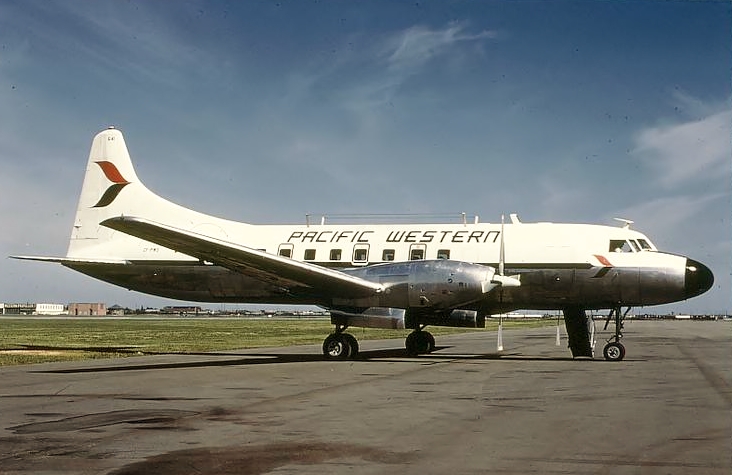
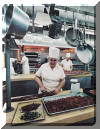
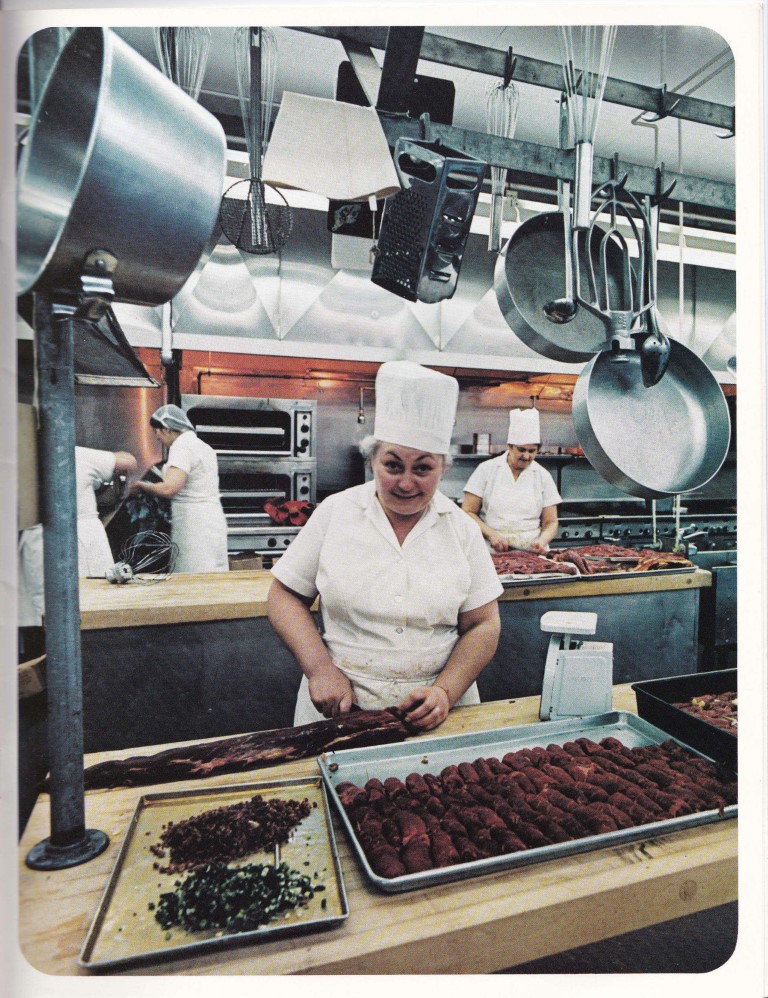
May 27, 2020 Catering Facilities
Purchased by Golden Arrow (PWA Update – Vol. 4 – No. 3 – February 26, 1981)
Research by Neil Burton.
Last week, Pacific Western Airlines announced the sale of its catering
facilities in Edmonton and Vancouver to Golden Arrow Inflight Catering Services
Ltd.
The sale, which will be effective May 15, 1981, involves our flight kitchen and
equipment at Edmonton International Airport, and equipment only in Vancouver,
where Golden Arrow will lease the existing kitchen from Pacific Western.
A total of 90 employees, located in Edmonton and Vancouver, have been offered
employment by Golden Arrow.
As you know, the decision to sell the catering facilities was based on a review
of industry practices, as well as expenditures required to upgrade and operate
the facilities over the long term.
Golden Arrow is a privately owned Canadian company now based in Vancouver and
prior to the purchase from Pacific Western, its only flight kitchen was in
Toronto where it catered to airlines such as Laker, British Airtours, Sterling
and others. Golden Arrow is affiliated with Gatwick Flight Catering Ltd. of
London, England.
May 27, 2020 New Route to Terrace BC
From research by: Neil Burton.
New Terrace Route Inaugurated June 15 – (PWA Update – Vol. 3, No. 15, June 25,
1980)
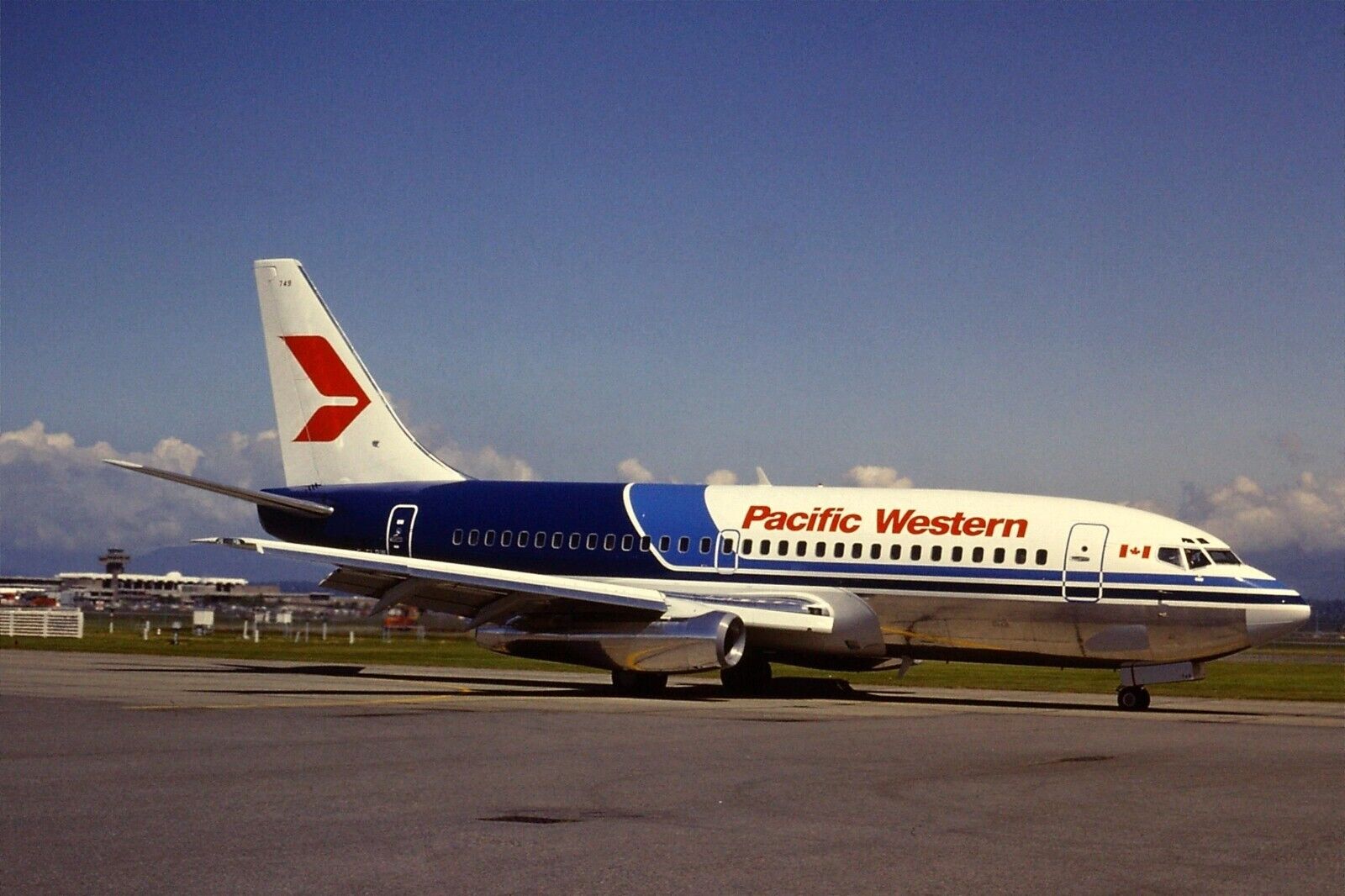
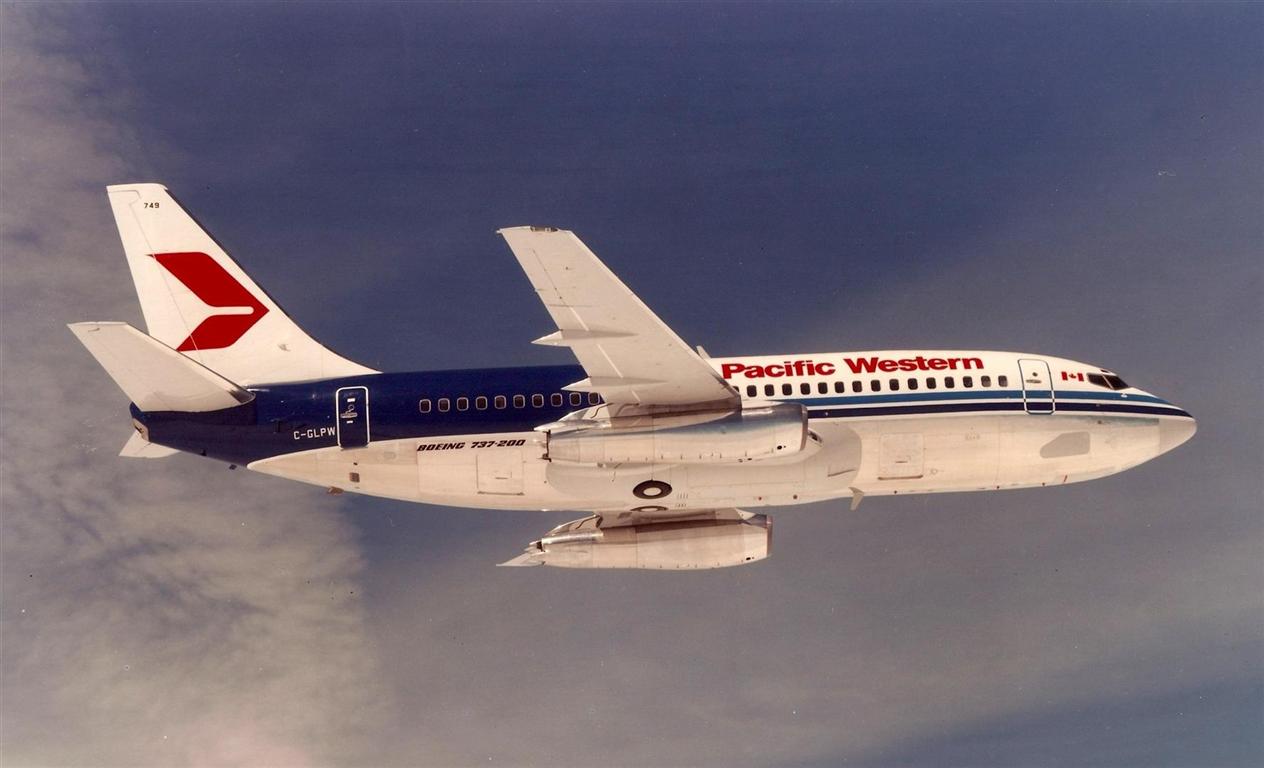
Our new corporate colours were displayed by aircraft 749 on our first scheduled
flight from Vancouver to Terrace (via Smithers) on Sunday, June 15th.)
Jack Cooke, V.P. Western Region and Graham Mann, V.P. of Sales and Service,
together with a small group of Company group, met with the local Chamber of
Commerce and local media at the Chamber dinner June 10th to discuss Pacific
Western’s newest service.
Terrace Manager, Mr. Terry Morris and agents Mrs. Rose Fleet, Miss Linda Nelson,
and Mr. Ian Currie are comfortably in place at our newest City Ticket Office at
4623 Park Avenue, Terrace, B.C.
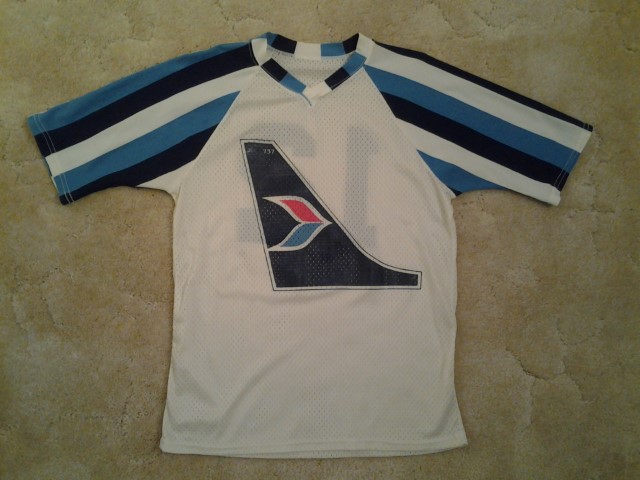
May 12, 2020 PWA Ramp Baseball YVR - A
Giolma
Station Attendants,as we were officially known,didn't make headlines,generally
speaking. We were never front and centre at company reunions,rarely photographed
unless loading an aircraft at -40 up north,but we did work hard and played hard
too.
I started the team with the blessing of Don Hardy who managed to get us a few
dollars for equipment.Photo of our jersey is attached.We played pick up games
with AC,our own company pilots,the staff at YBL (@YBL) and anybody else who
wanted to take us on.Names I can remember include,Craig Mayo,Brian Moore,Rick
Sedola,Dave Moir,Mike Brown,Dan? from cargo and Hugh Sherwood.We traveled to
Kansas City,Mo. to take on the Frontier Airlines group (we ground handled them
in YVR) and they showed us a good time.When our baggage came over the carousel
in KC,it was adorned with Playboy centerfolds courtesy of? There were a few
snickers heard in the fortunately small passenger group awaiting their
bags!Sadly,there are no pictures of our team that I am aware of. Those were
great times to be in our industry. Alan Giolma
April 12, 2020 Vancouver Air Cargo Visitor
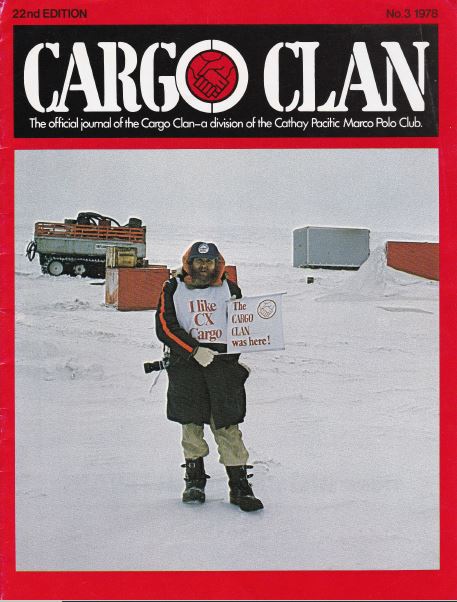
May 10, 2020 Cargo Clan Magazine Published by
Cathay Pacific
Hercules news from the past in Cargo Clan – 22nd Edition – No. 3 – Year 1978.
Cargo Clan was an official journal of " The Cargo Clan" – a division of the
Cathay Pacific Marco Polo Club of Hong Kong.
Writer/photographer Saul Lockhart journeyed to Hay River, N.W.T., in April 1978,
to see and cover the operation of a Pacific Western Airline’s Hercules
Operation. He joined the crew on Hercules No. 385, making 3 trips to Banks and
Melville Islands. Captain of this Hercules aircraft was Richard (Rick) S. Soley,
“the Midnight Cowboy”; First Officer Chris Knight, “the Slug”; Second Officer
Henry Pasemko, “Super Uke”; and Loadmaster Norman Geiger, “The Dangerman”.
Project managers, in Hay River, during Lockhart’s stay were Al Philpott and
Garry Mathewson.
Neil Burton – 06 May 2020.
Editor Note - S. Russell recalled the media coverage
and mentioned the writer's light hearted take on using nicknames.
May 1, 2020 From the desk of Neil
Burton.
Photo taken during a shift change, at the P.W.A. warehouse on Miller Rd,
Vancouver Airport. We have Dennis, Lead (in uniform), Sandy, from (YVR counter,
in uniform), and Lead, Len Taylor (in street clothes). Photo was taken in July
1976. Neil/12 April 2020
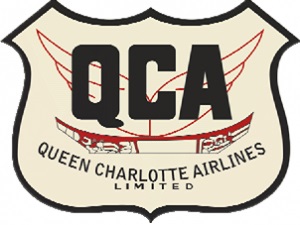
April 8, 2020 Queen Charlotte
Airlines - Sourced and Scanned by N. Burton
QCA was purchased by Pacific Western Airlines in 1955.
April 7, 2020. Pacific Western Airlines -
Transair After Amalgamation 1978. Credit N. Burton.
More new Transair articles here
April
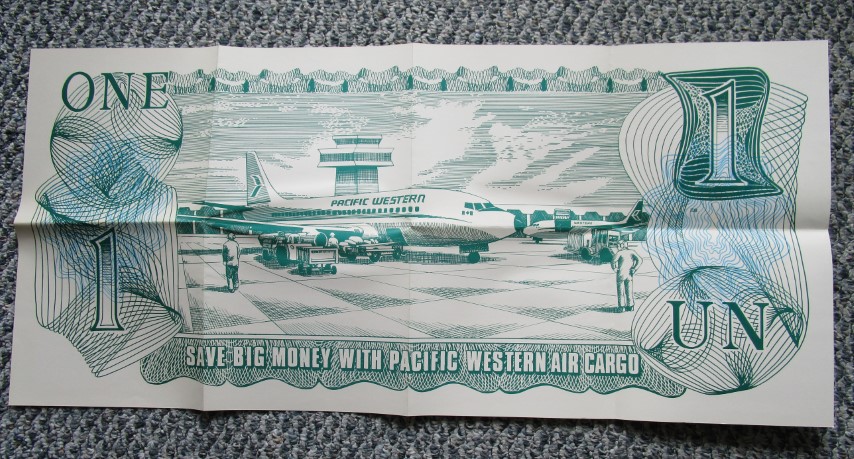
6, 2020 1970's Air Cargo
Mid 70's Pacific Western Cargo Promotion includes currency. Does anyone recall
this program? credit N. Burton.
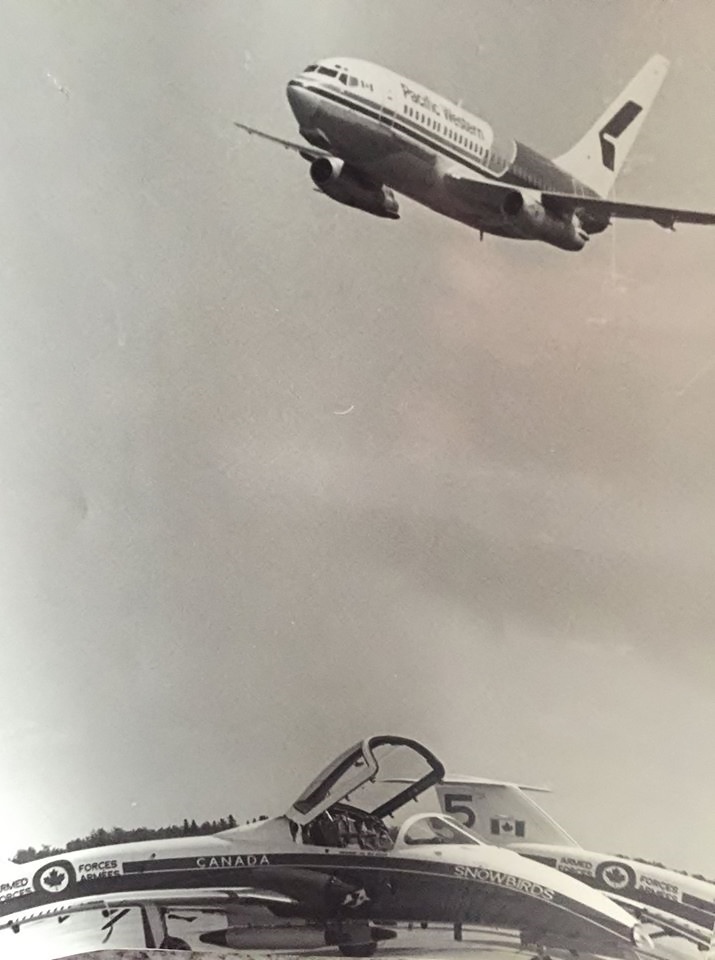
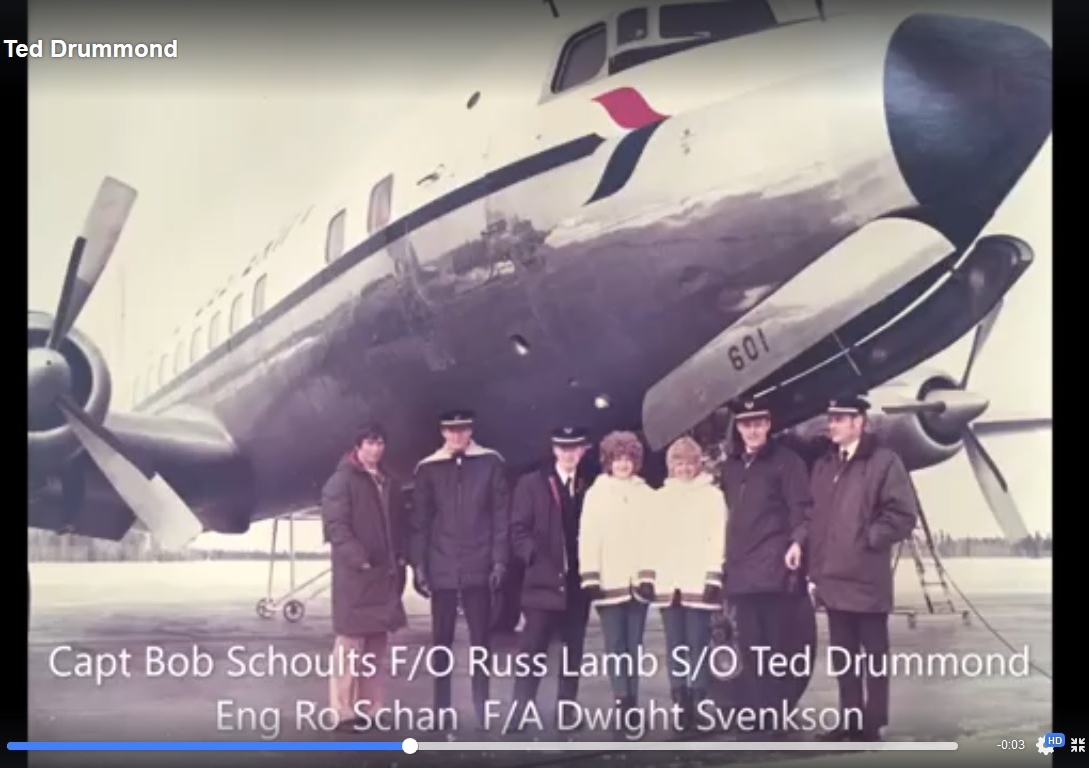
April 5, 2020 Boeing 737 Fly-By Namao & DC6 Charter credit T. Drummond
1972 DC-6 charter New Westminster Band 14-23 years old Vancouver, Prince George,
Fort St John, White Horse, Resolute Bay, Cambridge Bay, Yellow Knife, Hay River
Vancouver. Who are the flight attendants. Namao Jun 1982 Static
display, 737 on departure Max climb 25 flap high speed pass over Snow Birds.
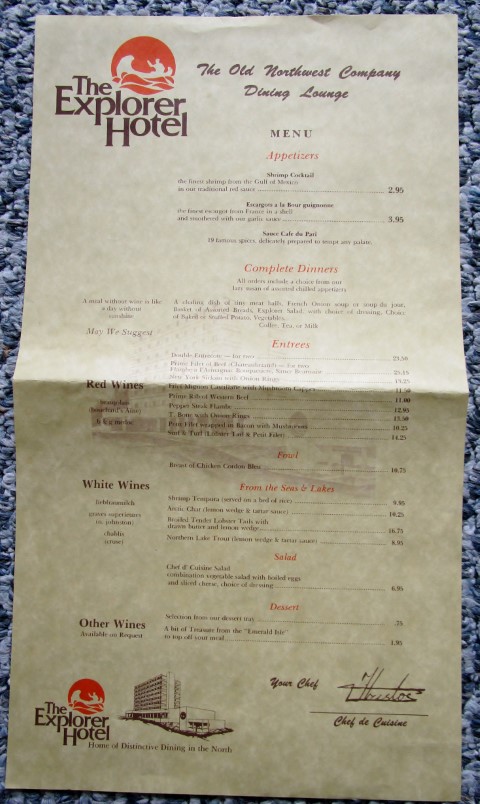
April 4, 2020 - The Explorer Hotel - Yellowknife
Pacific Western Airlines – 27th Annual Report – 1973, indicated – The Explorer
Hotel in Yellowknife, N.W.T., a new 150-room hotel now being built on land owned
by your company, is planned to open in the spring of 1974 and will provide much
needed space that should stimulate more travel, particularly during the tourist
season. There will be a Pacific Western ticket office in the lobby of the hotel.
In an undated note, H.D. Herbert, district manager, Public Relations &
Advertising, Northern Region, indicated the Company purchased 7 acres in
Yellowknife, the location being the “rock” on airport road, at an elevation with
views of Frame Lake, Great Slave Lake and the near countryside.
The 8-storey hotel was built in a 3-way agreement between Solar Construction
Ltd., Glenmore Investments Ltd., (hotel owners & operator) and P.W.A.. P.W.A.
would retain land title and lease the land to the hotel owners for a percentage
of room rentals.
Engaged as manager was Mr. Alan Phillips. (attached menu c1974)
Contributed by Neil Burton/04 April 2020.
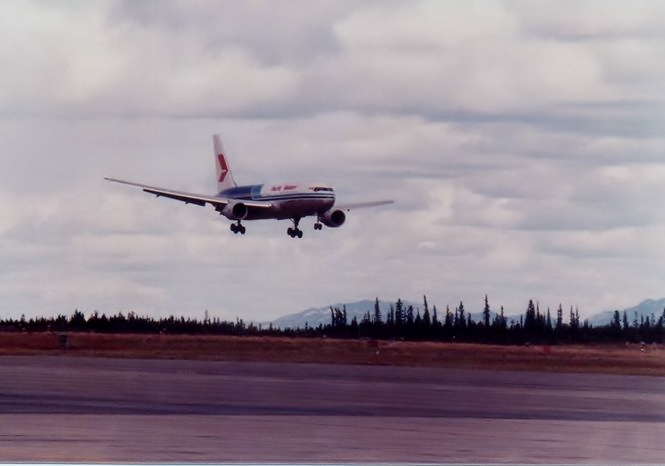
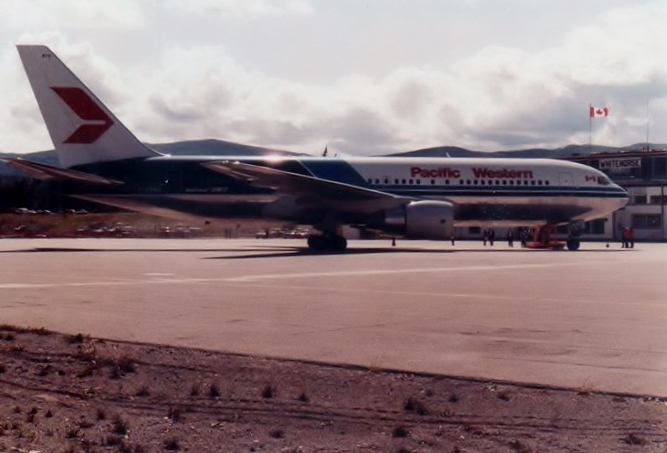
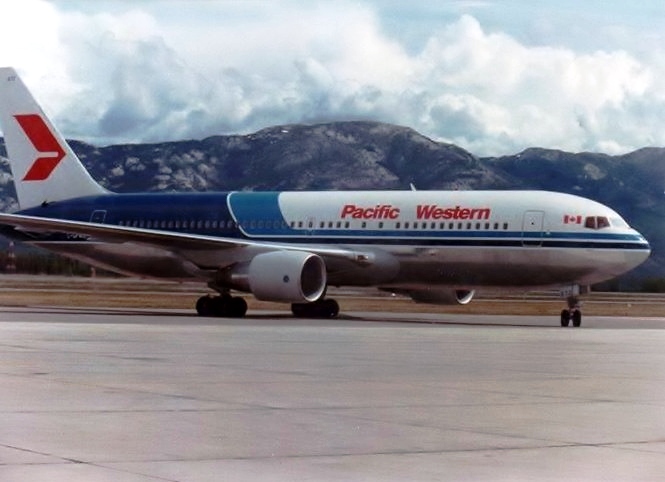
March 25, 2020 Boeing 767-275 - Whitehorse
Our 767-275 operating charter flights for passengers routed to / from cruise
ships for their onward transfer. Photo: Credit: B Wright
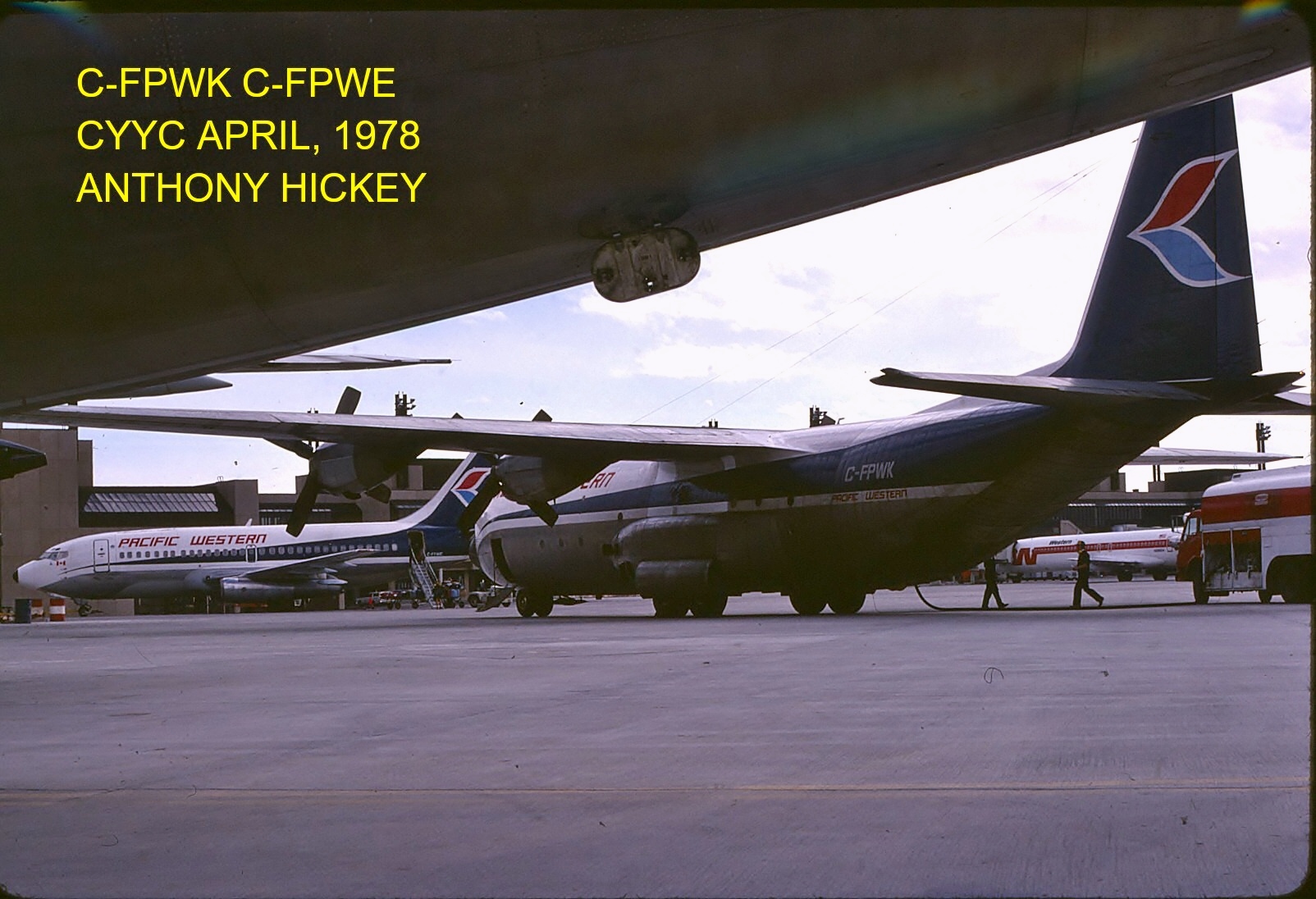
March 9, 2020 L-100 Hercules CF-PWK and CF-PWE (a/c 732) Calgary
Credit A. Hickey Aviation Photographer
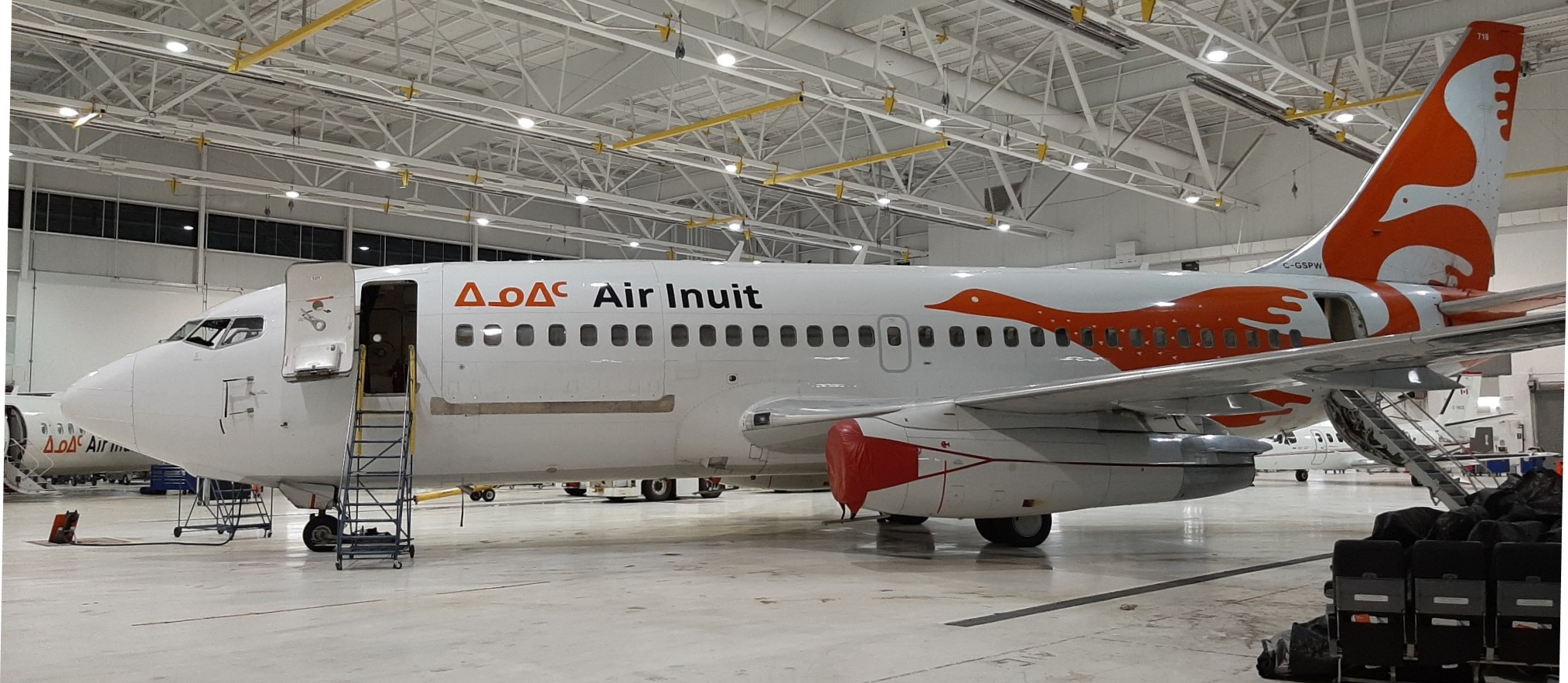
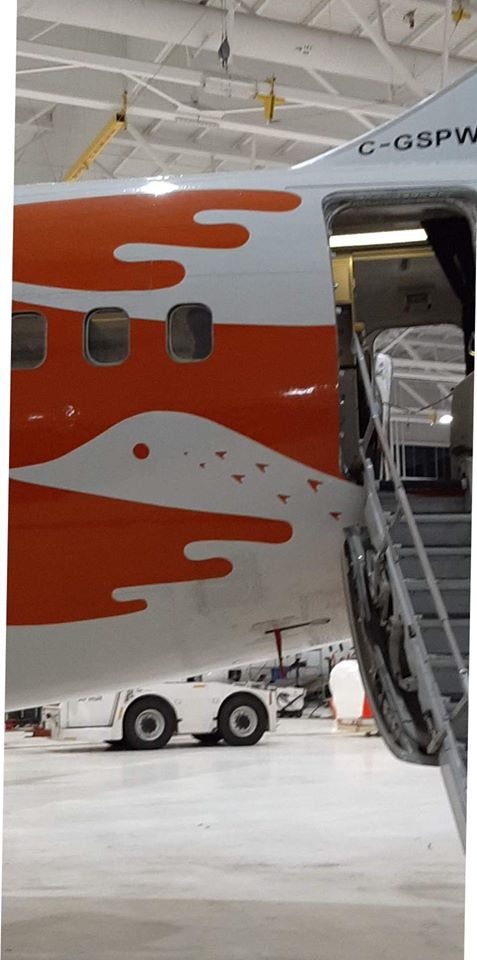
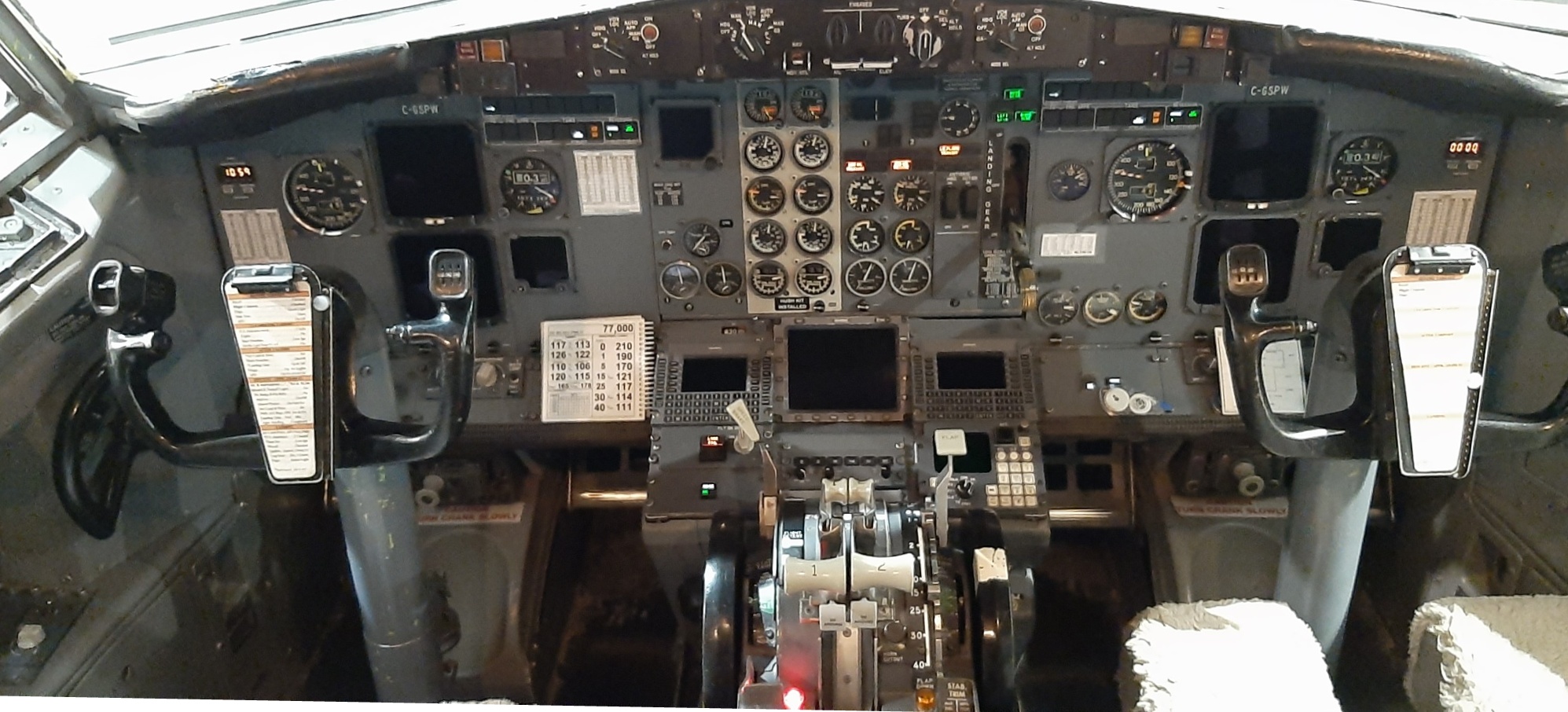
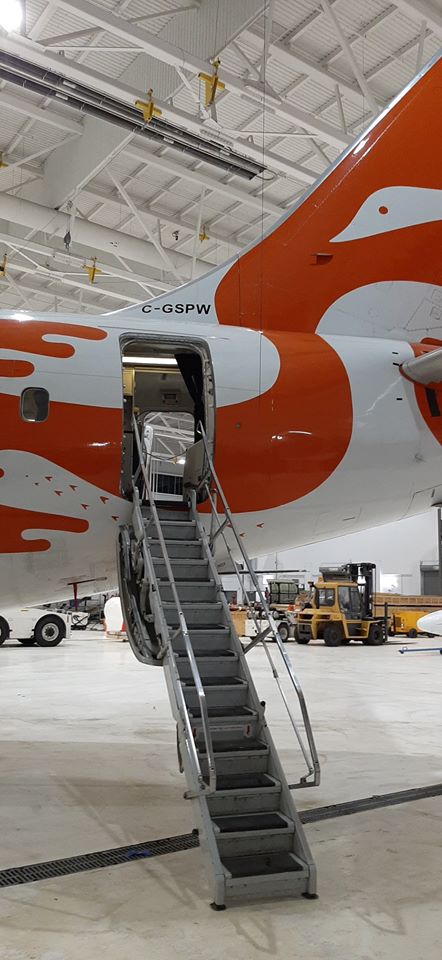
February 29, 2020 C-GSPW a/c 783 Still Flying for Air Inuit
This is our B737-275C C-GSPW a/c783 now owned by Air Inuit. Submitted by
Hasse Marthinsen. This airplane is still flying in Canada under the same
registry for Air Inuit. These pictures were taken the other day in YUL. It is
the pride of the fleet. Please pass these pictures on as I have all my working
friends in PWA. It still flies in a combi configuration. It has been fitted with
an EFIS system upgrade. Just great to see. I worked in YXD in 1967 for 2 years
and the rest in YVR as a learner , mechanic, crew chief and supervisor in
maintenance.
February 25, 2020 - A 70's era Boeing 737
Model for sale.
Choose carefully before buying.
https://www.kijiji.ca/v-art-collectibles/calgary/vintage-pwa-pacific-western-airlines-model-airplane/1487941347
February 9, 2020
Some of the fleet from various sources including R.
Corrin - Vickers Vanguard/Vickers Viscount/TCA/Air Canada/American/British
Airliners. The picture of a/c 671 is a new to me but all were taken on a nice
sunny afternoon on a busy day of Pacific Western operations.
February 25, 2020 - Memorabilia from A.
Giolma
January 26, 2020 - Boeing 707-351C Model of
CF-PWJ
This in from Anthony Hickey, a Calgary Aviation
Enthusiast and Photographer who completed this model of our Boeing 707-351C:
CF-PWJ. It is an amazing piece of art. It sits next to a solid aluminum Lockheed
Electra that Anthony had completed earlier.
"After 10 months I have finally completed the restoration of this large model.
It is a very heavy solid aluminum casting and it required a lot of work. It was
previously in German Cargo colours and condition was poor."
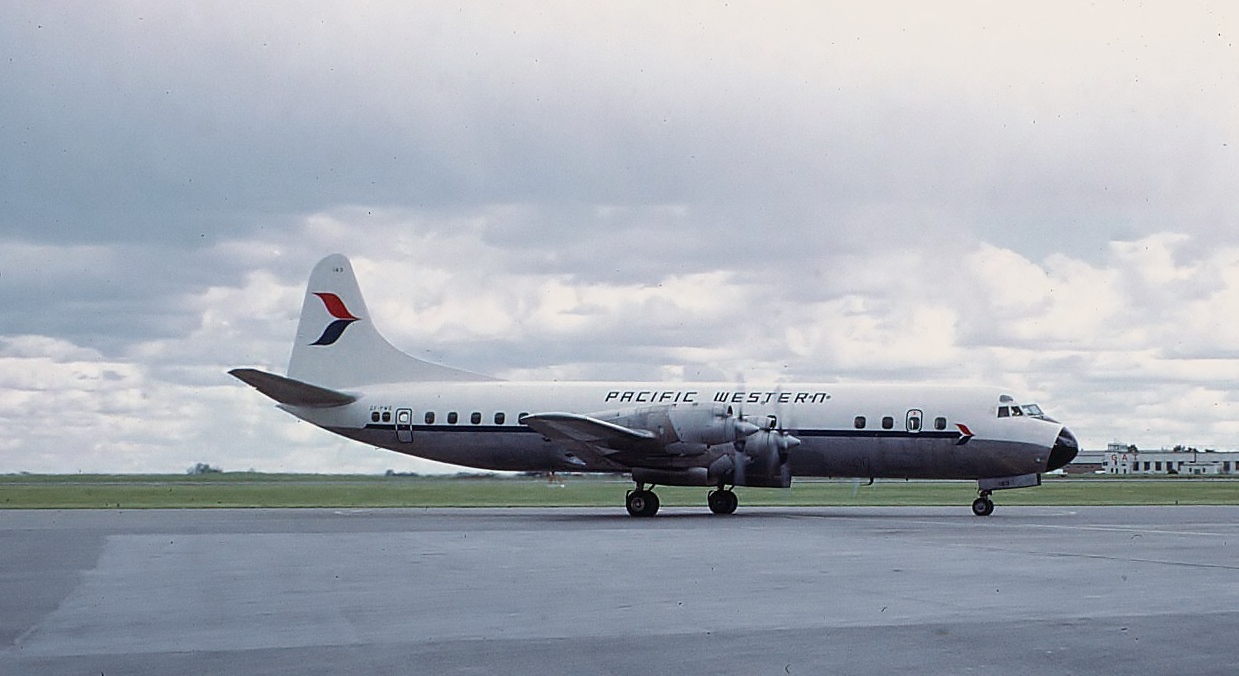
January 20, 2020 CF-PWG In YMM
This picture of CF-PWG was taken in Fort McMurray in 1965. The sender P.
Lawrence said that in the photo is his brother who was flying Edmonton to Fort
Smith via YMM. CF-PWG was sold to Gateway Aviation and then went on to work for
Northward. Note the former Canadian Flag with the Union Jack on the terminal
building.
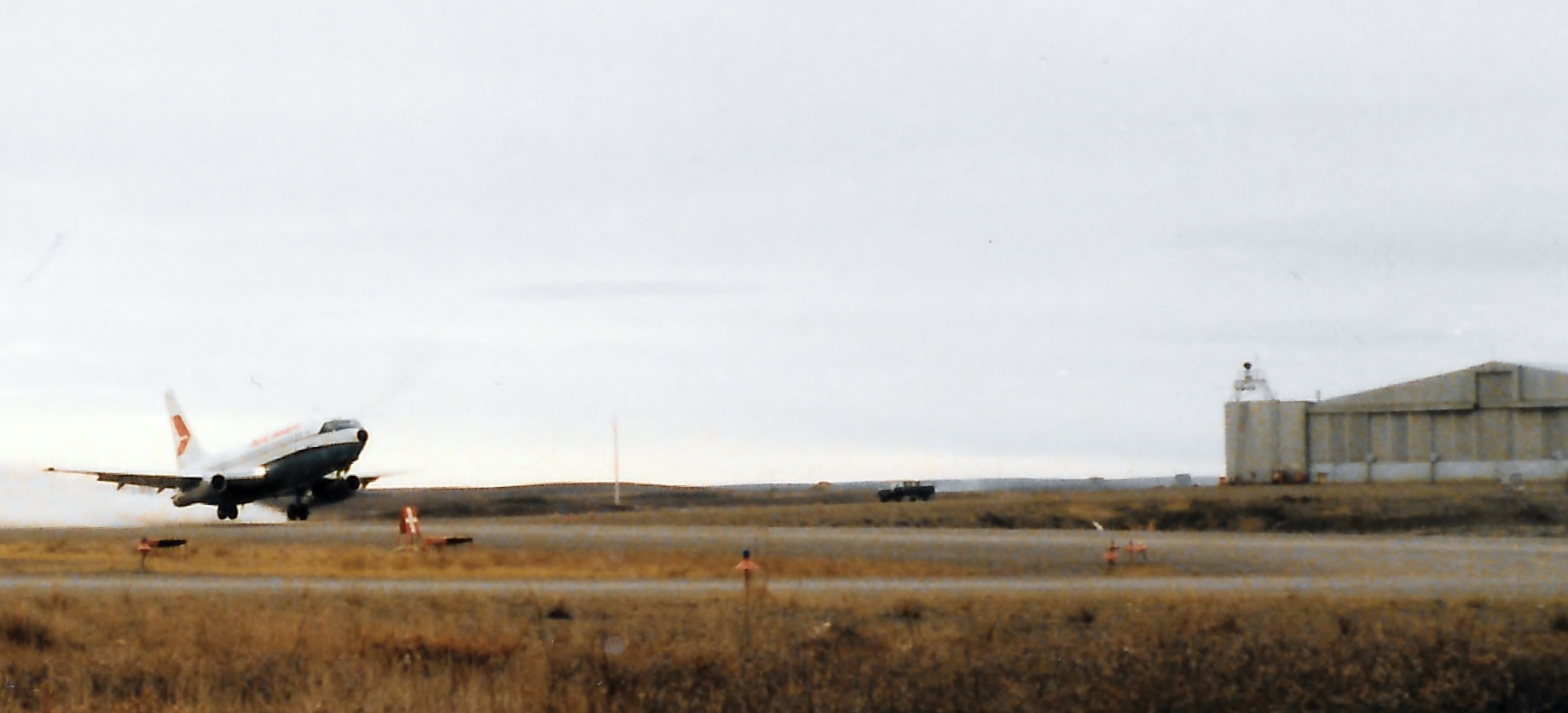
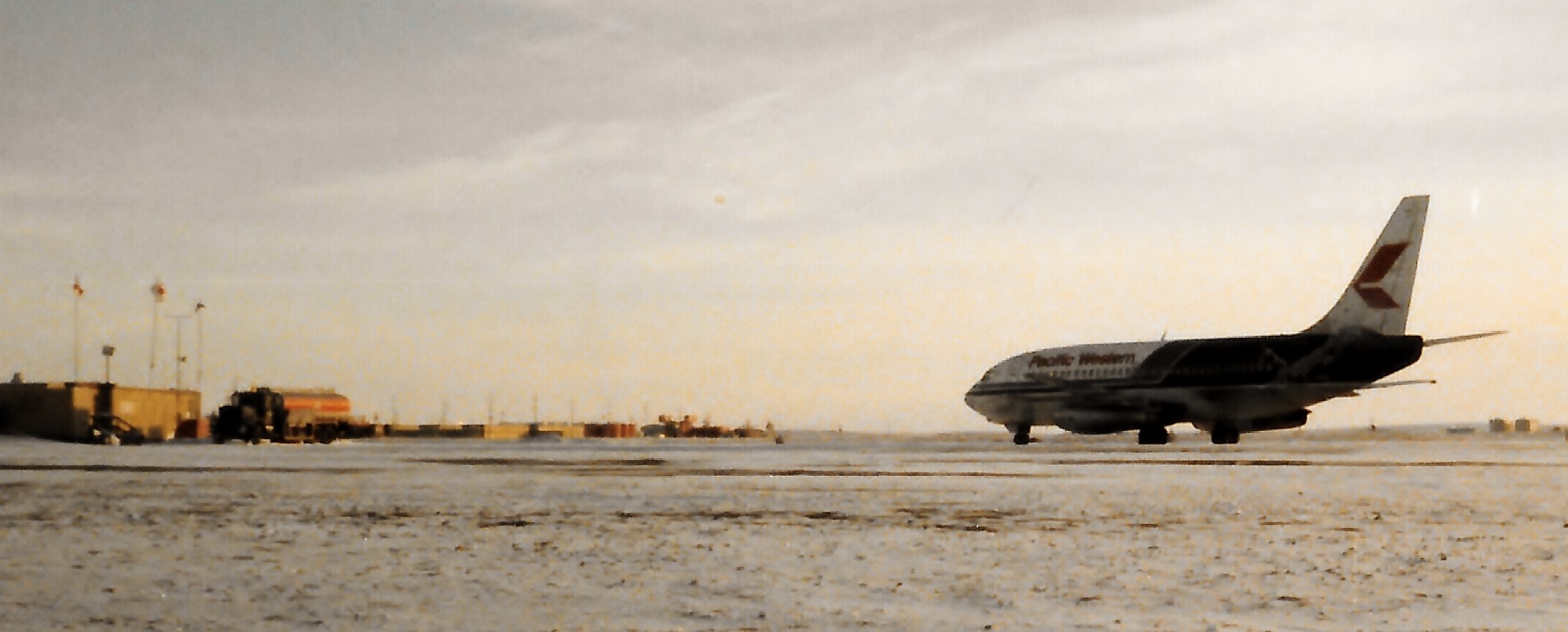
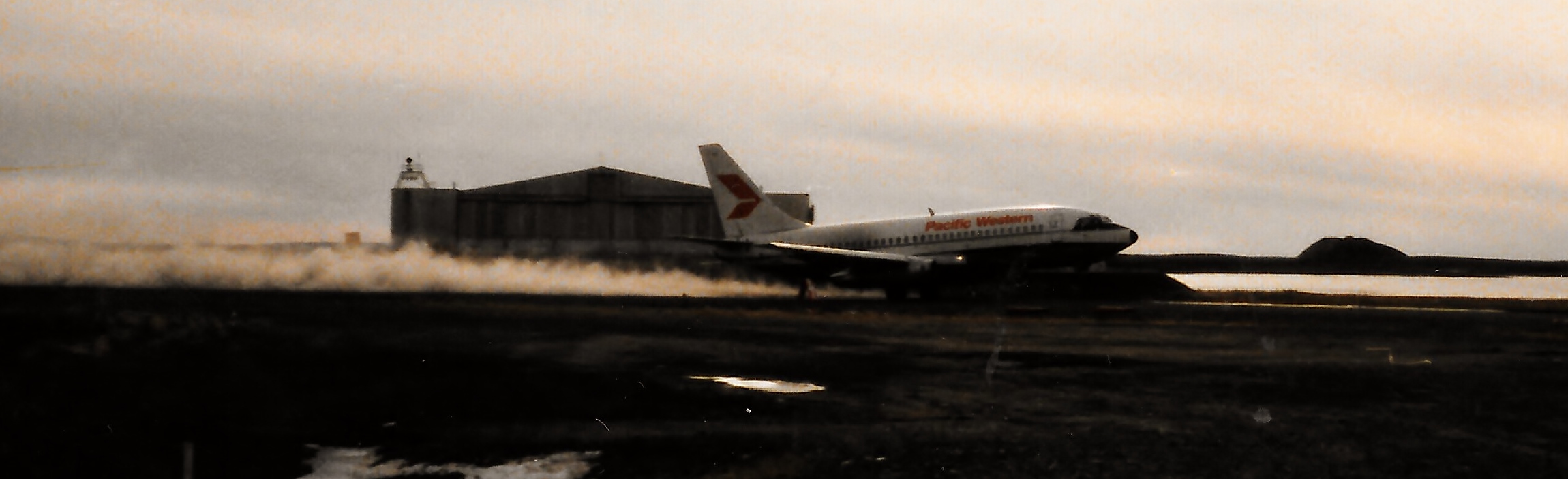
Pictures from
the arctic. CYUB Tuktoyaktuk, had 5000 foot east /west runway composed mostly of
gravel. Depending on the wind conditions at the time, aircraft could neither
land or depart after the b737 departed because of the zero visibility in dust.
Fortunately this only lasted for a few minutes. As you can see by the third
photo the aircraft used just about all of the 5000ft. Hope you enjoy the pics.
credit R. Orr
1. GDPA
Departing runway 27 at CYUB, Dewline hangar in background.
2. B737 taxing into DOME apron Tuktoyaktuk
3. B737 rotating runway 27 Pingos in background
January 9. 2020 Douglas DC-4 (C-54)
CF-PWJ operated for the airline from 1959 to 1972. Picture by R. Orr
January 7, 2020
A couple C-130 Hercules pictures of CF-PWO. Location thought to be
YCB and c1967.
Note the extra fuel tanks. More on Long Range Tanks Stu Russell - The Herc
could hold 48,000 lbs of fuel in the wings and an extra 18,000 pounds in the
pylons. It burned 5000 lbs per hour and opt 300 stat miles / hour.
The tanks weighed 1600 lbs so increased the EOW and reduced the payload by that
amount but the tanks were critical for overseas flights.
In the early years when they were tramping around the globe they stayed on -
each new airplane came with a set - when they started moving rigs in the arctic
they came off - short hauls heavy loads short runways - but were installed for
specific overseas operations when required. This aircraft was
lost in 1969 without fatalities. Submitted by R. Orr
December 24, 2019 Merry Christmas
Our Christmas Wishes to all of the special people of Pacific Western Airlines.
We made this airline great! As we enjoy this festive season, we must also pause
and remember the incredible people who are no longer with us; never forgotten.
To all of you a very Merry Christmas and a Happy and Prosperous 2020 New Year.
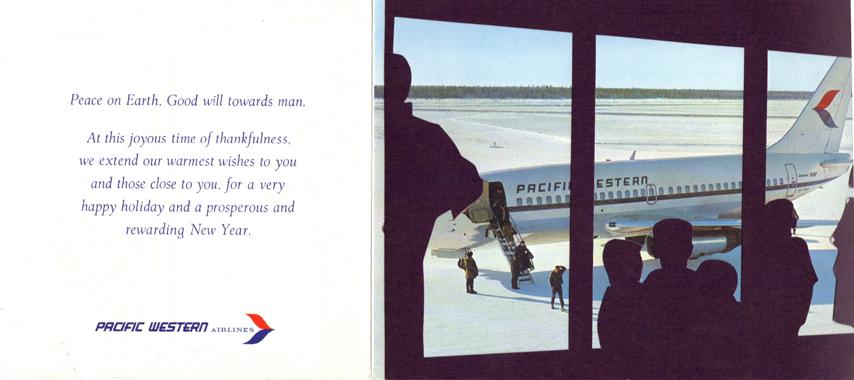
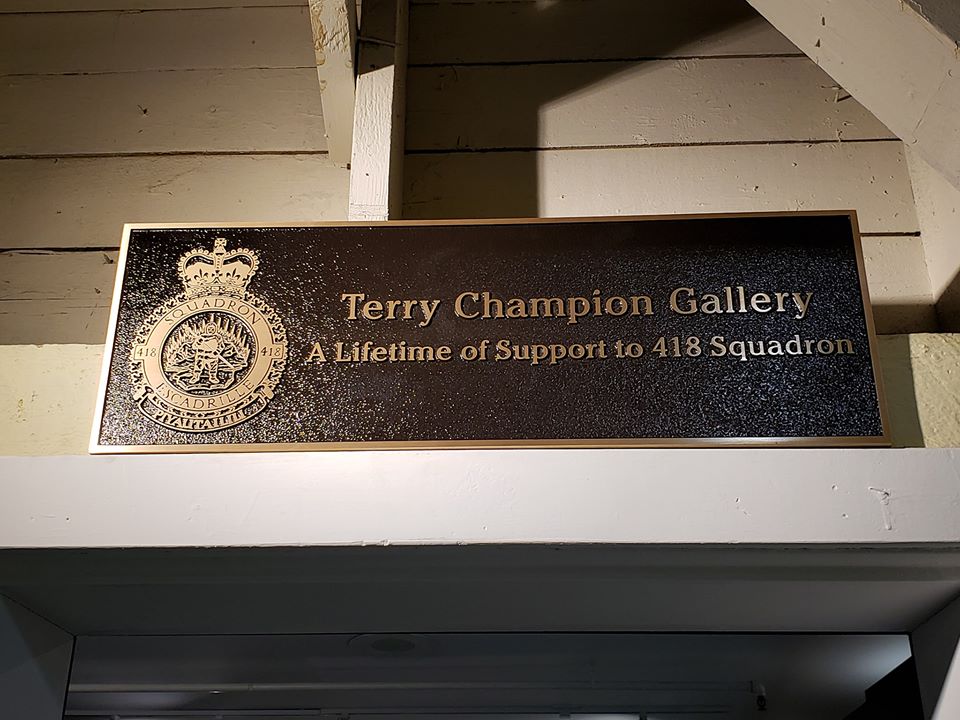
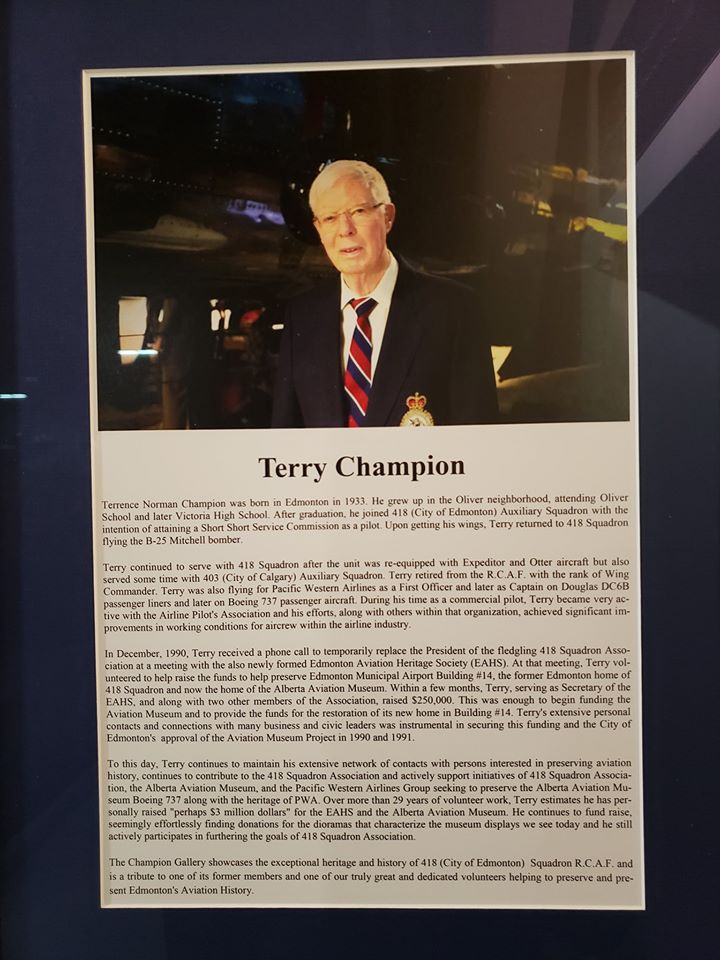
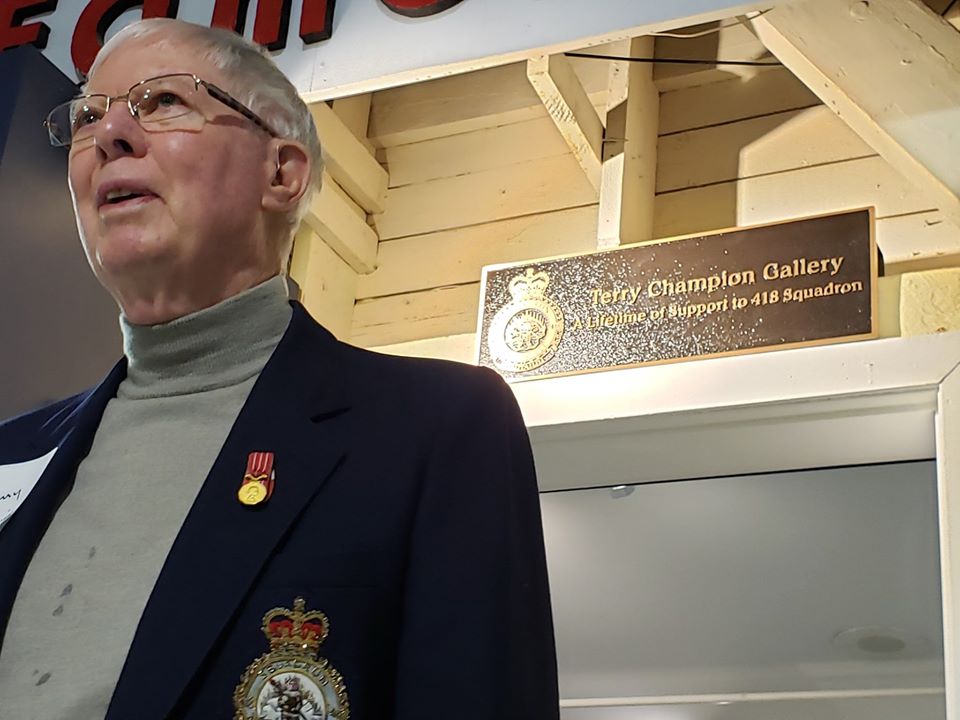
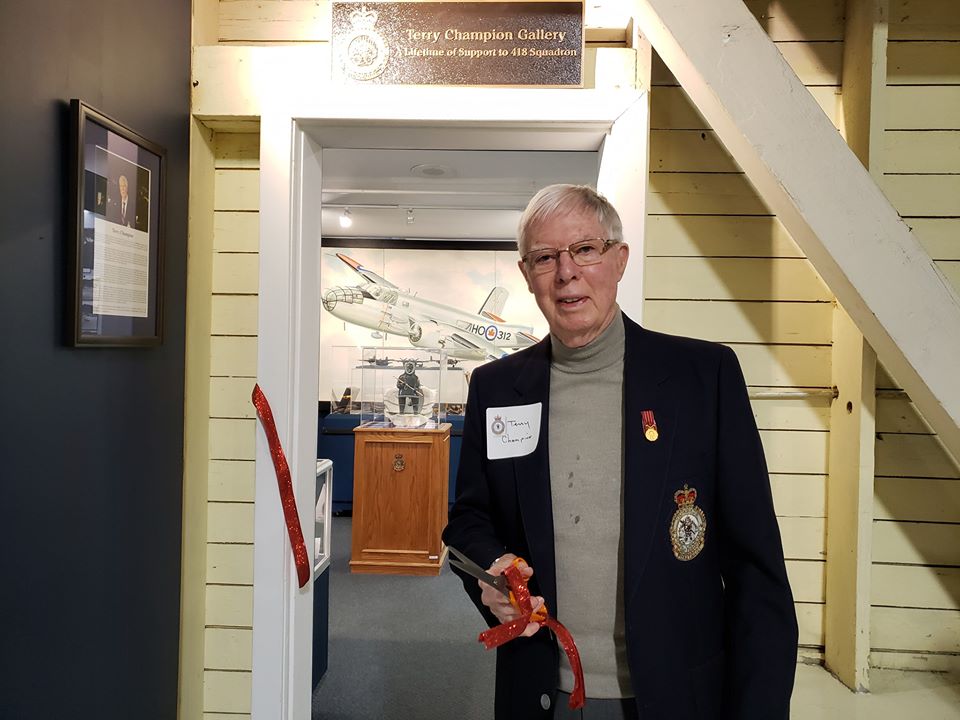
December 7, 2019 Terry Champion Honoured at the Alberta Aviation Museum (from
AAM - Facebook)
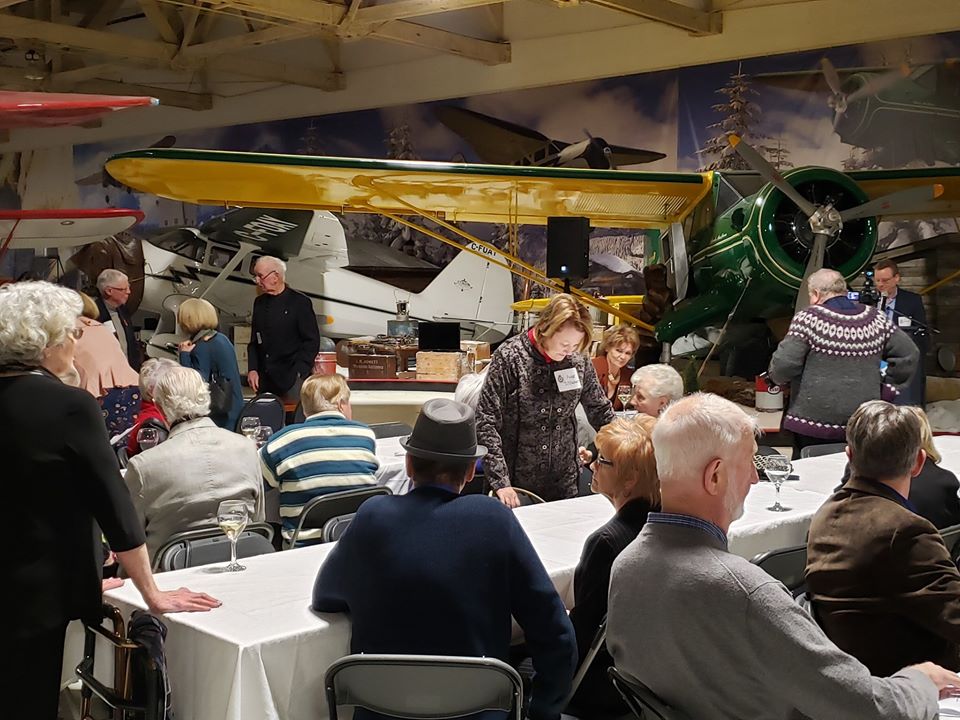
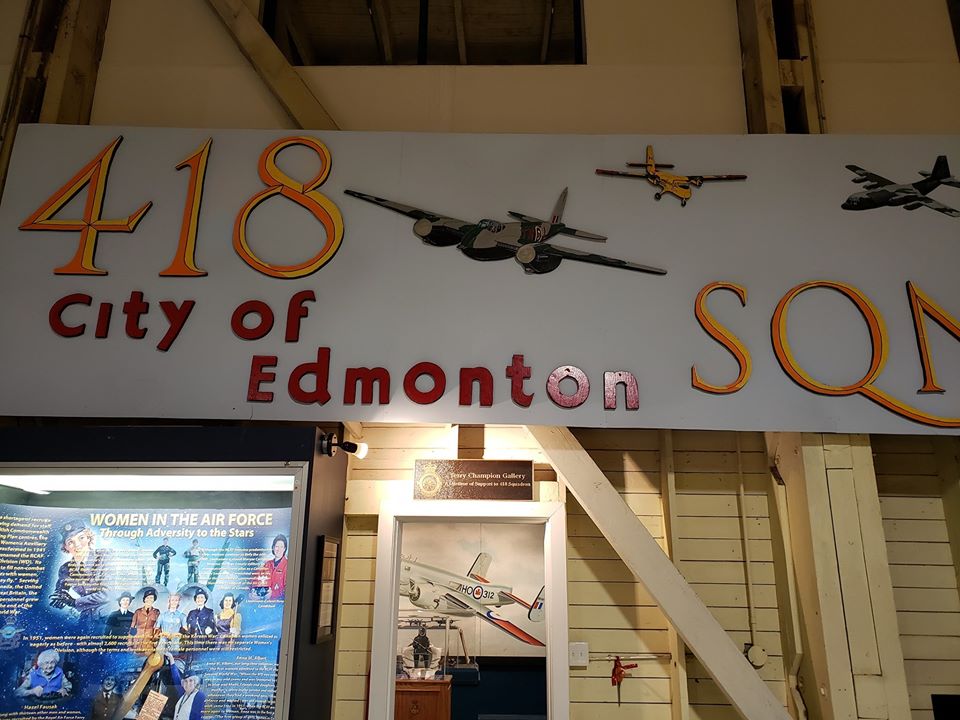
Today, the 418 Squadron and Alberta Aviation Museum honoured one of our most
dedicated volunteers, Terry Champion. His name now christens the 418 Squadron
Gallery to commemorate the years of tireless fundraising and community
initiatives that made the museum what it is today! Thank you Terry for
your continued service!
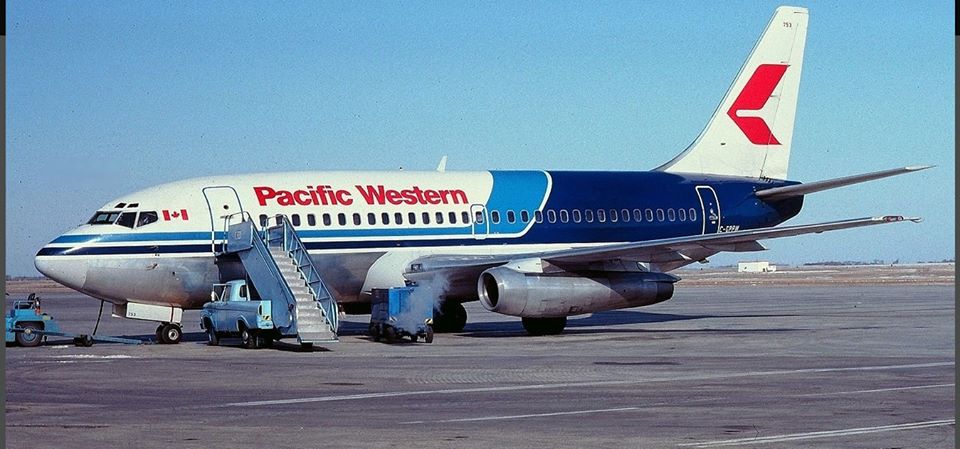
November 24, 2019 C-GPPW Boeing 737-200
This photo posted in Flickr @timmartin - Caption reads: "C-GPPW@Winnipeg
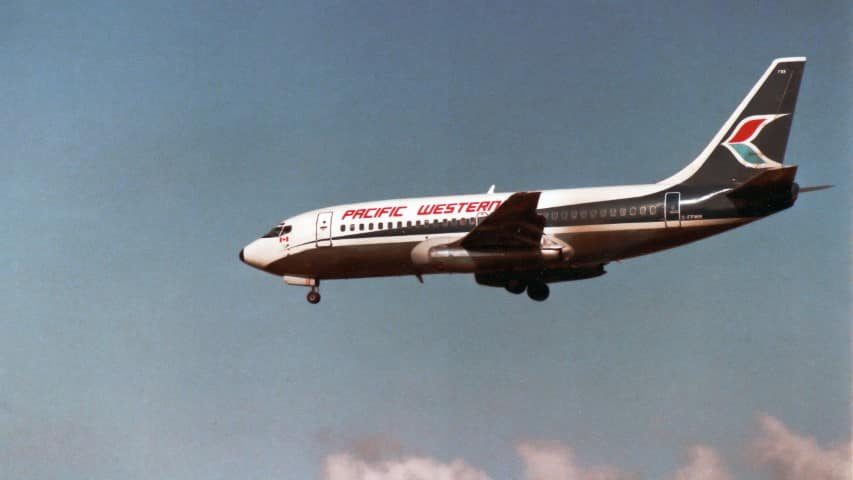
11Mar84. Like most of PWA's B737 fleet, 'PPW was handed over to Canadian
Airlines then Air Canada through mergers before export to the US in 2003".
Oct 10, 2019 - B707 Dedication at YEG
From the desk of Cynthia Kent (Jung)
Today, as I was randomly searching for some information about my father, Arthur
Jung, I came across the PWA Employee Alumni website and the entry about the
Leduc Memorial Park. To this day, I have mixed emotions about the crash but am
very moved to know that there is now a memorial to the lost crew.
Unfortunately, I wasn’t aware the efforts to establish the memorial and regret
that I wasn’t present at the dedication. However, I will be sure to plan a visit
to the park sometime in the near future, and if possible, would like to arrange
to meet and thank those responsible in person.
I would appreciate if you could please pass on to all how touched and grateful
we are to learn of the Leduc memorial park.
Kind regards, Cynthia Kent (nee Jung)
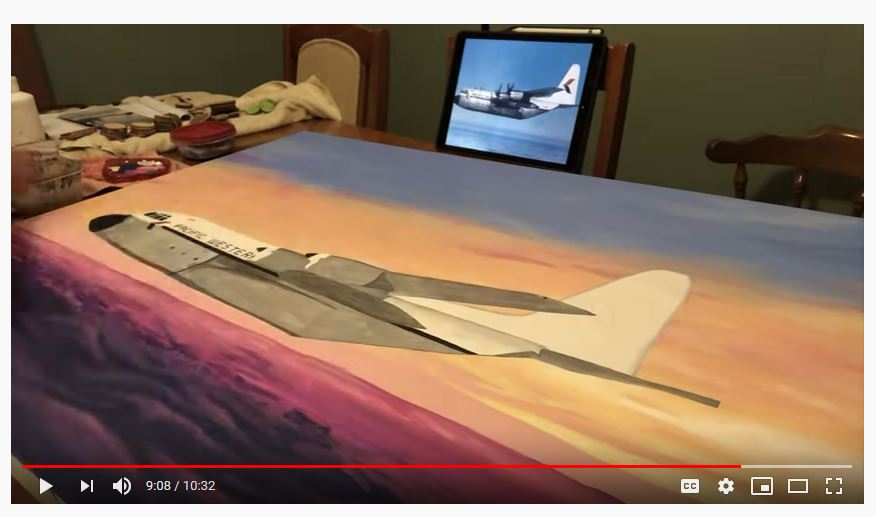
Sep 26, 2019 - An artist upscales a PWA
Hercules.
An alumni requested a painting of CF-PWO based on a poster. This was how she did
it and the results
https://youtu.be/-P3e9PqSAbw
credits R. Ward & Lana Larouche
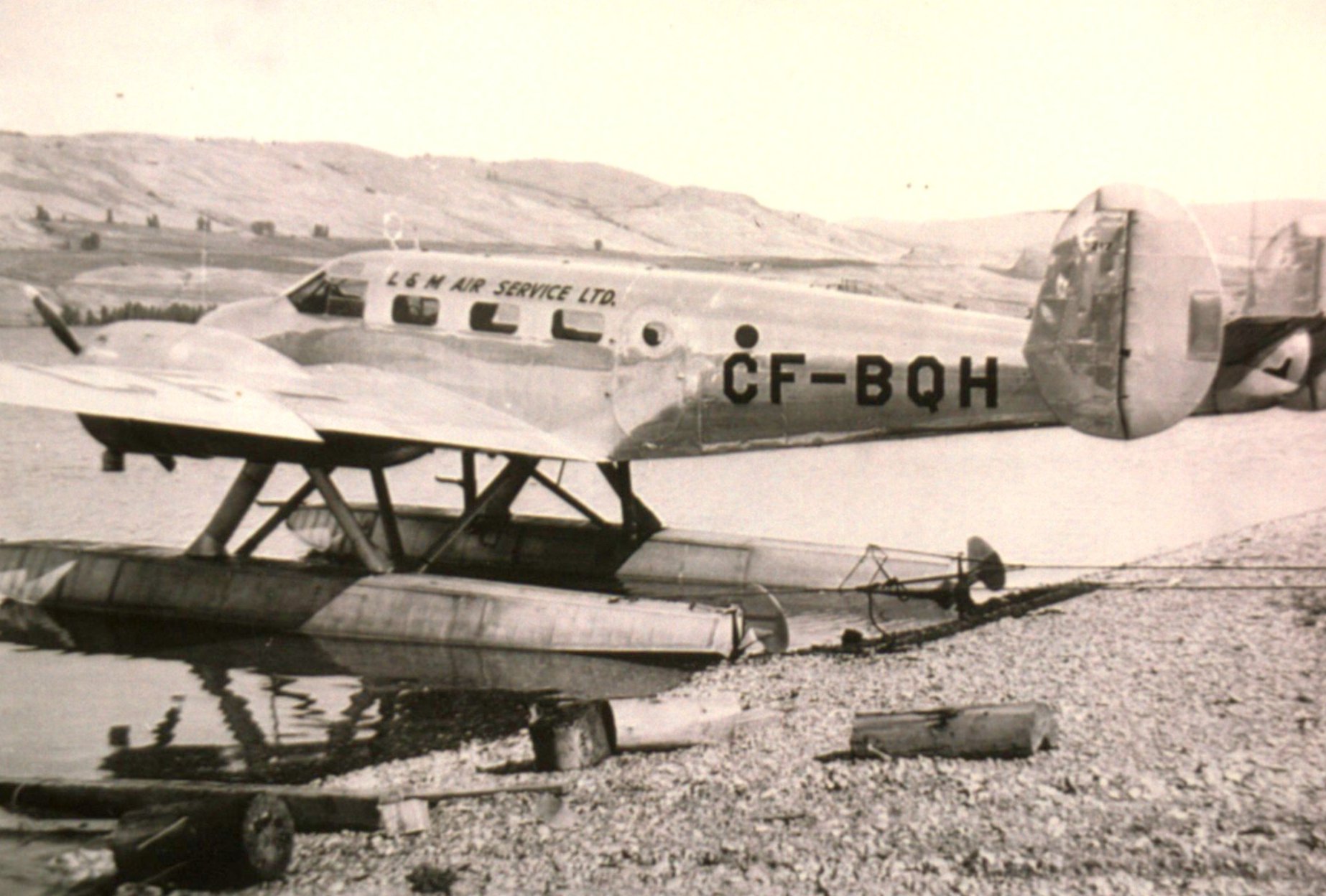
Sep 17, 2019: History of CF-BQH Beechcraft 18A
& the Story of L and M Air Service from the desk of N. Burton Resident
Historian.
CF-BQH registrations: CF-BQH –
photo courtesy of E. Eppler.
1940 – manufactured by Beechcraft
1940 – May 08 – Canadian Airways Ltd, Winnipeg, Manitoba.
1942 - by name change – Canadian Pacific Air Lines, Montreal, Quebec.
1948 – June 29 – H. R. McConachie, Fort St. James, B.C. (Harry Russell
McConachie believed to be Grant McConachie’s uncle).
1949 – July 04 – L&M Air Service Ltd, Vernon, B.C.
1949 – December 12 – H.A. (Hugh) Mann, Vernon, B.C.
1953 – August 21 – Pacific Western Airlines Ltd, Vancouver, B.C.
1958 – September 24 – R.H. Laidman, North Vancouver, B.C.
1961 – September 29 – Aircraft destroyed by fire – forced landing after take-off
due fire in cabin.
Source: Canadian Civil Aircraft Register (1929-45) compiled by John R. Ellis,
published by the Canadian Aviation Historical Society.
Part of a brief history of the Okanagan Valley service of L and M Air Service
Ltd..
On 26 October 1948, L and M Air Service Ltd officials gave evidence toward an
application for service at an Air Transport Board hearing at the Court House, in
Vernon, B.C.
A service was being proposed to connect the cities of Kamloops, Vernon, Kelowna
and Penticton, for a link to the east-west operations of Canadian Pacific Air
Lines, at Penticton. Presenting evidence for the company were: R.H. “Dick”
Laidman, president, Peter Dyck, secretary-treasurer, and Dan McIvor, accountant.
Kamloops city council received notice, in March 1949, that L and M Air Service’s
application was approved. By early July, Dan McIvor met with an alderman to
discuss the temporary float for Riverside Park that would be needed.
A couple of pre-inaugural flights took place, one, Monday - 19 September 1949,
carried newspaper reporters of the 4 cities, while the second, Friday – 23
September, carried Kamloops Mayor W.J. Moffatt and the mayors of Vernon, Kelowna
and Penticton.
Piloting the 6-passenger twin-engine Beechcraft was Dan McIvor, the company’s
operations manager, while Hugh Mann, a managing director, was co-pilot. Peter
Dyck was the company’s spare pilot.
On the first scheduled flight, 26 September, Mrs. R. Heron, a Kamloops travel
agent, was a passenger and returned to Kamloops on the return flight. Mr.
Charles J. Dowell, of Vernon, was the first passenger, from the Okanagan, to
arrive in Kamloops, that first day.
Air service was daily (except Sunday), leaving Kamloops at 07:00 hrs. and
arriving at Penticton at 08:55 hrs. Northbound, the aircraft left Penticton at
12:05 hrs. with arrival at Kamloops’ Riverside Park, at 14:15 hrs. Landings were
made at Vernon, at the pier near the “Sutherland Arms”, at Okanagan Landing, at
Kelowna’s “City Park”, and at the Yacht Club at Penticton.
During the winter land aircraft would be used, possibly an Anson twin.
By the beginning of November 1949, it was reported by Kamloops alderman George
Greer that L and m Air Service was using Fulton Field Airport (Kamloops) for
winter operation to the Okanagan.
Due to interruptions of mail service by railway (Fraser Canyon slides) municipal
councils were joining together to request the Post Office to give L and M Air
Service a contract to fly mail, in December 1949.
How long L and M Air Service operated this Okanagan Valley service is unknown,
but Canadian Pacific Air Lines began air service from Vancouver to Kamloops and
the Cariboo and Prince George in April 1950.
Source: Vernon News and Kamloops Sentinel.
R.H. “Dick” Laidman, Dan McIvor and Hugh Mann all spent part of their flying
careers with Central British Columbia Airways and Pacific Western Airlines.
Research: Neil Burton – 16 September 2019.
Sep 6, 2019 A 2017 News Article about a
B707 and YEG
Click here for the article:
https://www.edmontonprimetimes.com/article/remnants-of-aviation-tragedy-uncovered-20171228
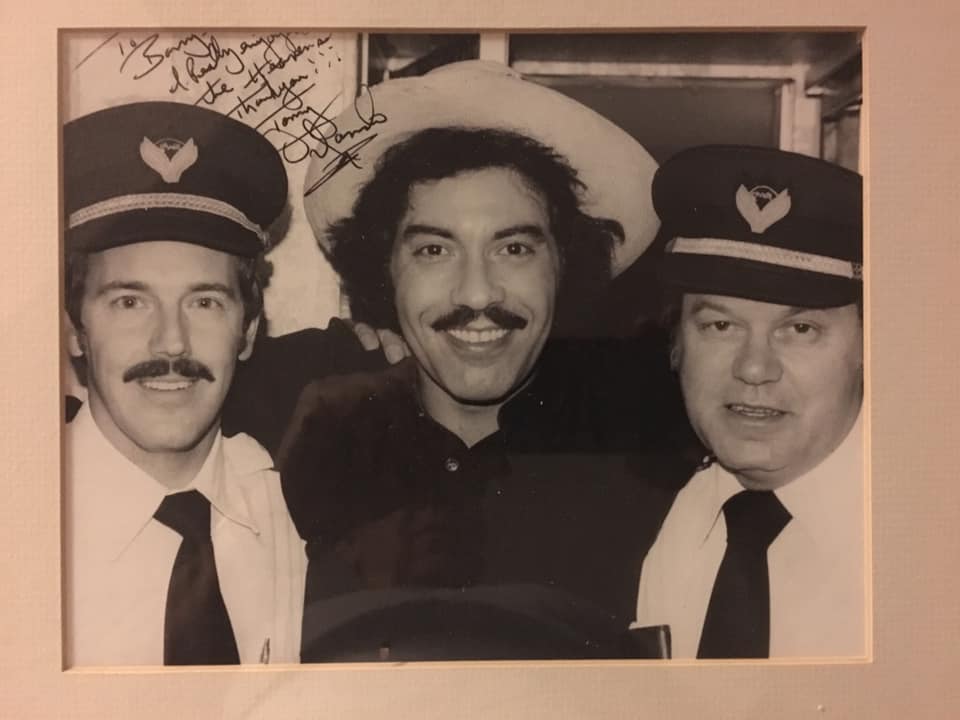
Sep 5, 2019 PWA B737 Charter Flight to
Calgary
Captain Fred Traupe and F/O Barrett Thornton picked up the singer Tony Orlando
and Dawn ~Sep 1978 on a charter — Eugene, Oregon to Calgary.
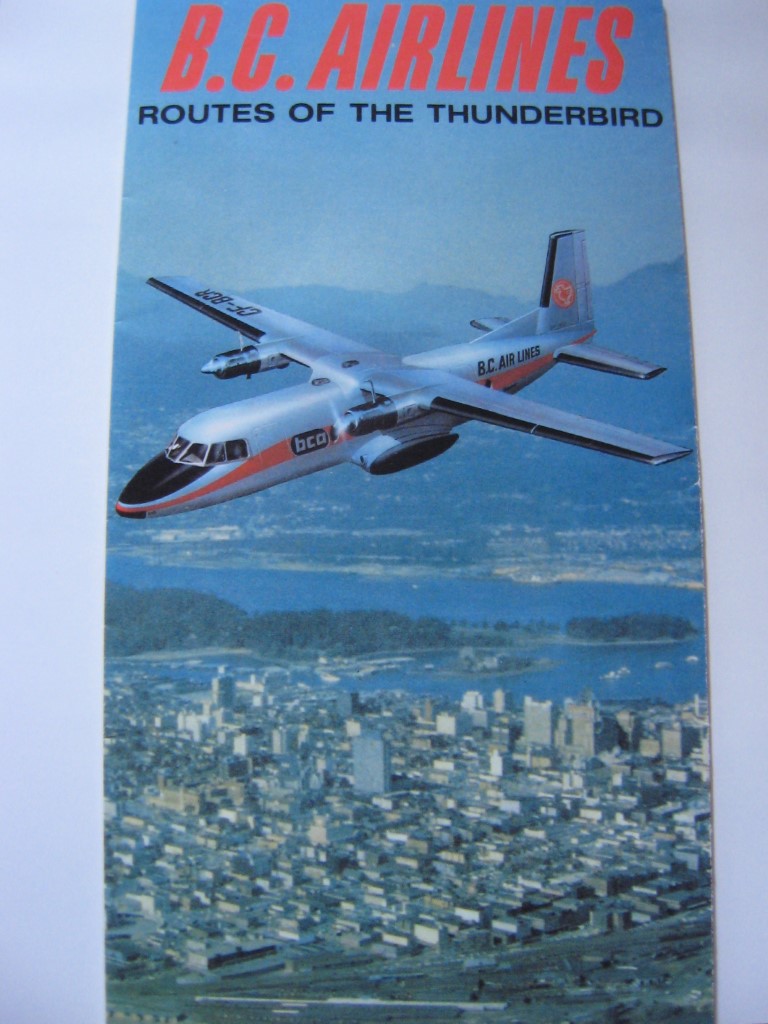
July 15, 2019 50 Years ago - BC Airlines- 1969
B.C. Air Lines, a division of C.A.E. Industries was the largest airline
operating entirely within B.C. Its marketing zone was: “Pacific Thunderbird” --
and added routes of -- “Okanagan Thunderbird” – Vancouver, Penticton, Kelowna,
Kamloops; “Kootenay Thunderbird” – Vancouver, Penticton or Kelowna, Castlegar,
Cranbrook; “Cariboo Thunderbird” – Kamloops, Williams Lake, Quesnel, Prince
George; and “Skeena Thunderbird” – Terrace, Smithers, Prince George.
Air service was with the Nord 262 Vistaliner.
From advertising, it appears service was to begin April 30, 1969.
Northwest Industries Limited, of Edmonton, Alberta, of which B.C. Airlines was a
subsidiary, was purchased by CAE in 1962.
Pacific Western Airlines negotiated the purchase of B.C. Airlines in July 1970,
with expected closure of the deal in mid-August.
President of Pacific Western Airlines was R.H. “Dick” Laidman.
Schedules for P.W.A., including the equipment of B.C. Airlines, were expected to
become effective September 15th.
Neil Burton/15 July 2019.
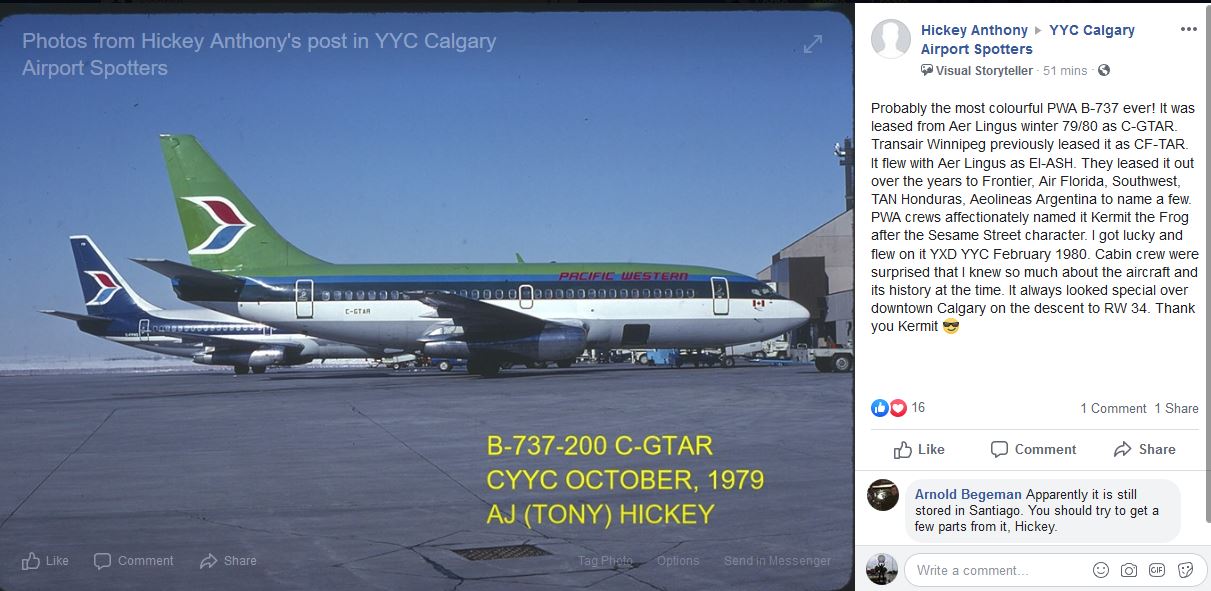
July 7, 2019 C-GTAR Aer Lingus 737
(Photo Credit Anthony Hickey)
July 7, 2019 Hercules ReUnion YXD - 2019
Edition.
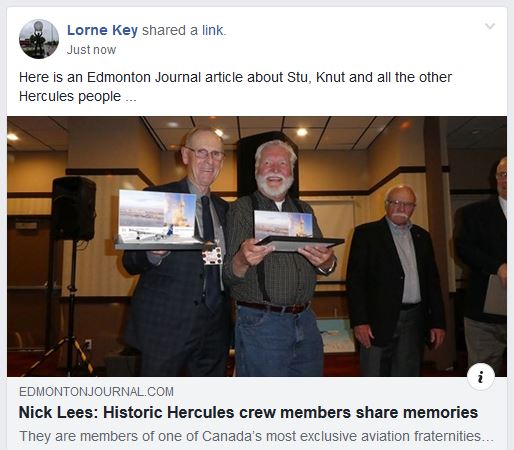
Click here for the news article.
July 4, 2019 Avro Anson
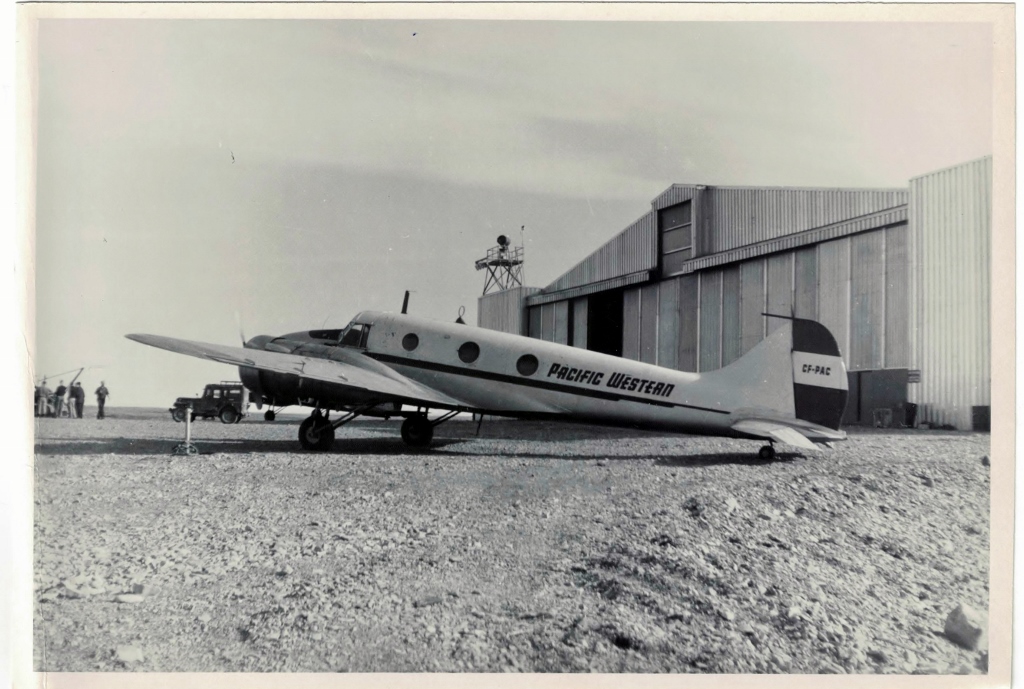
Rose Fleet submitted this picture of a rare PWA Avro Anson reg CF-PAC. The
details of this aircraft were submitted by Robbie Stewart: The Avro
Anson was a re-purposed ex-WW 2 Aircraft that was in plentiful supply post war
and many found airline applications for a reasonable cost.
My Father, Captain Kees Fransbergen flew the Anson during the war, and did the
training when the aircraft joined the Associated Airways and later PWA fleet. A
good family friend and ex-Pilot for PWA ( Capt. Hank Fransen , later Martinair
Holland) had a remarkable incident flying the Anson onto a small northern strip
where the wingtip on one side was sheared off... the airframe mechanics flew up
there and simply cut off the wingtip on the other side and the plane was flown
back to Edmonton like that!
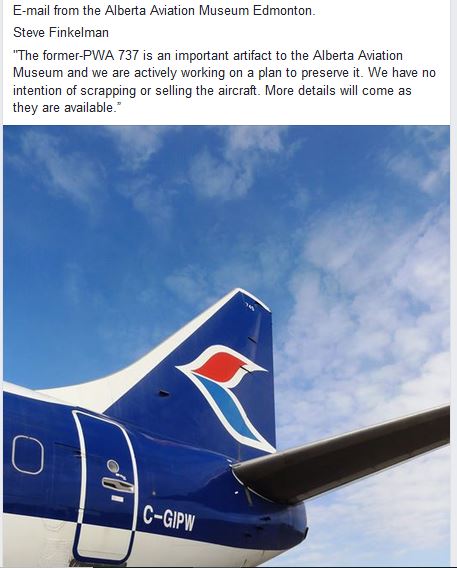
June 7, 2019 - Alberta Aviation Museum Update
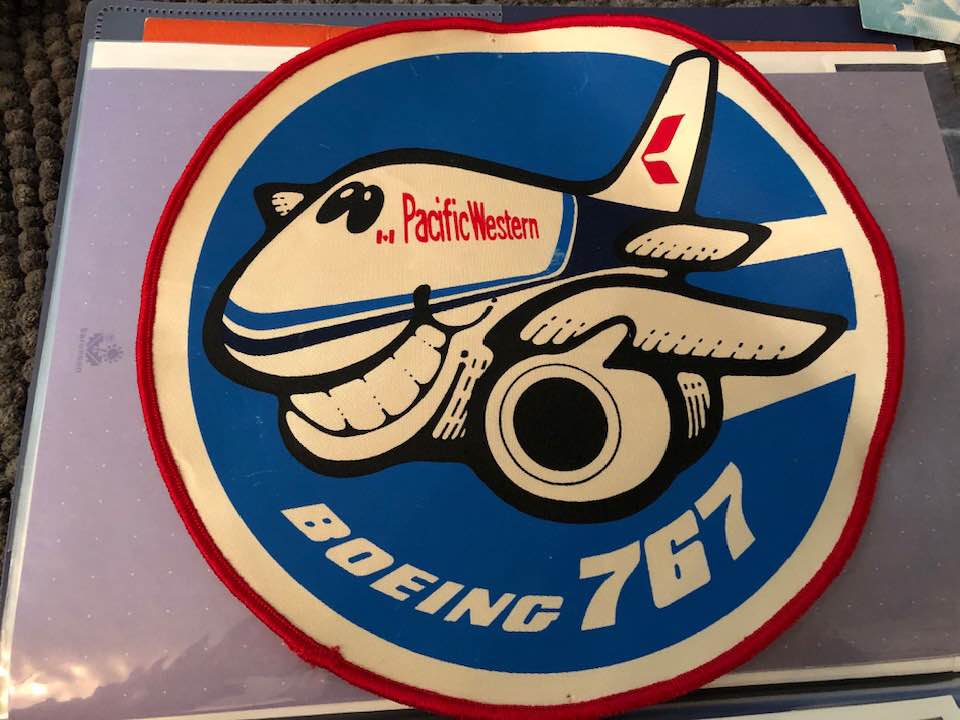
June 5, 2019 - Boeing 767 Sticker (sent by M.
Armstrong)
June 5, 2019
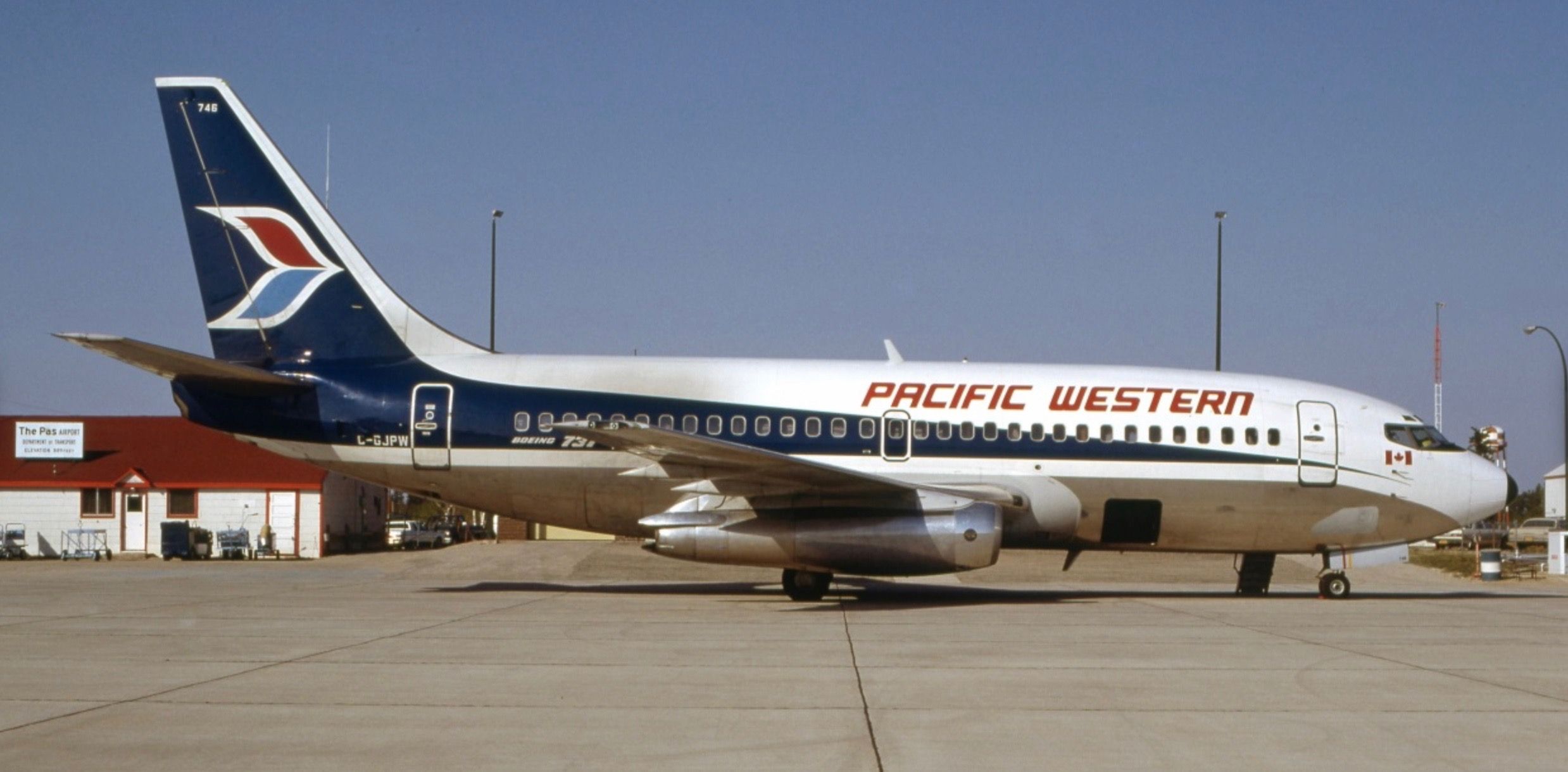
Boeing 737-275 A/C 746 C-GJPW
Turn Around at The Pas Manitoba. Acquired 05/09/1979
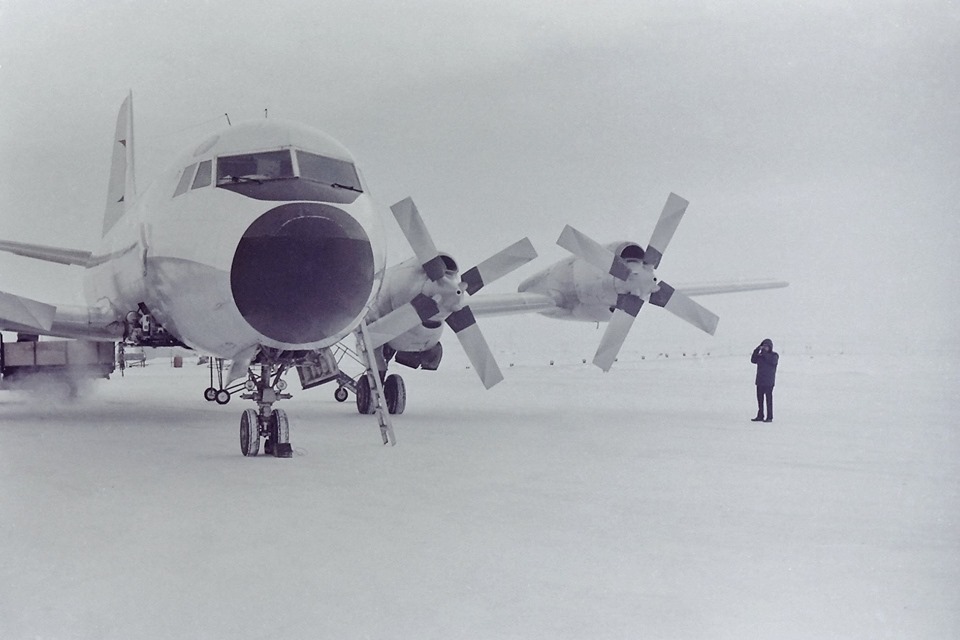
May 12, 2019
Capt. Arnie Young taking the photo of our
Electra at Cambridge Bay winter ´74 .. temperature I remember was -51c
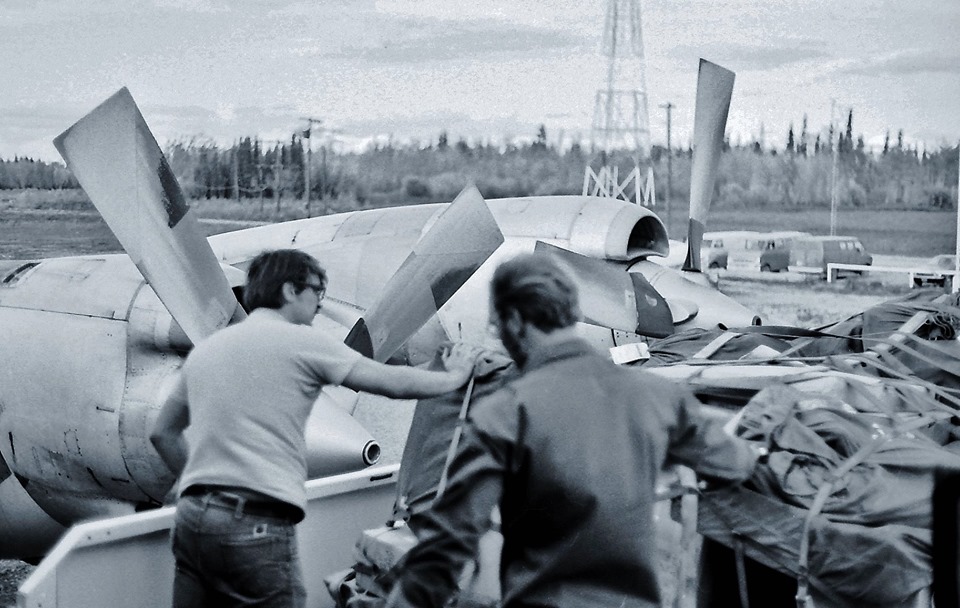
(photo credit B. Thornton)
1973 Electra
L-188 Onload Fort Simpson, NWT (Photo Credit B. Thornton)
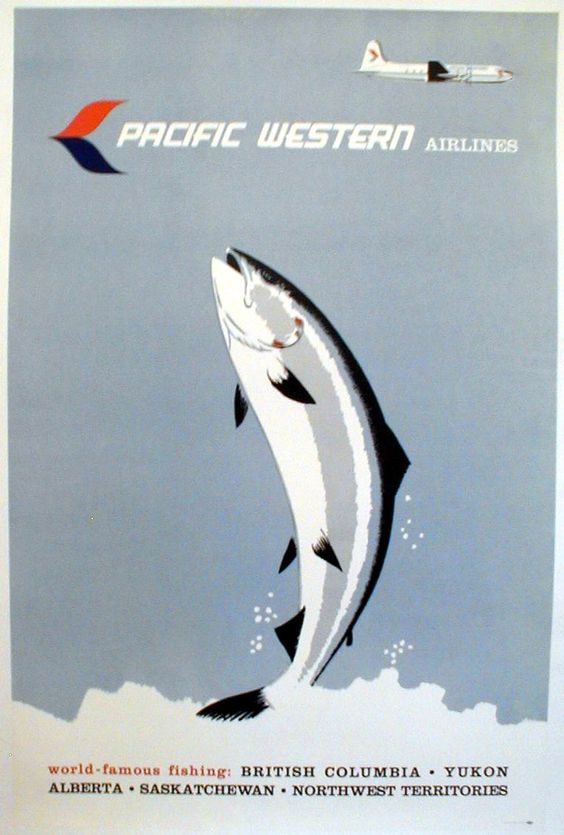
April 24, 2019 - Canadian Fishing Charter
Vacations
April 3, 2019 From Airlines of the Past
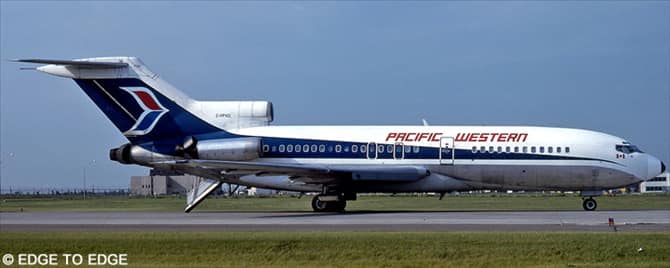
Route Map c1985 |
Boeing 727-100 |
B737-200 |
March 29, 2019 - Wally Sutherland - Resolute
In Sep 1972, Wally Sutherland, a mainline employee based in YRB
suffered a fatal stroke. It was a sad time for the airline. Several staff
shuffles ensued. That fall, new staff including Jim Wyse, Jim Dobell, Martin
Wilkins, and myself were sent to work the mainline scheduled service.
Today, I received a request from Wes Sutherland, Wally's son, who would like any
info or pictures of his Dad. Wes was 7 Years old at that time.
From Wes: Hello. After years of looking, I finally found my late father’s name
in the PWA employees memorial directory.
Would love to chat with anyone who may have worked with him.
Is there a central point of access for information that you can be direct me to
or someone who may know?
Many thanks.
Sincerely, Wes Sutherland skeena@shaw.ca or
the Webmaste
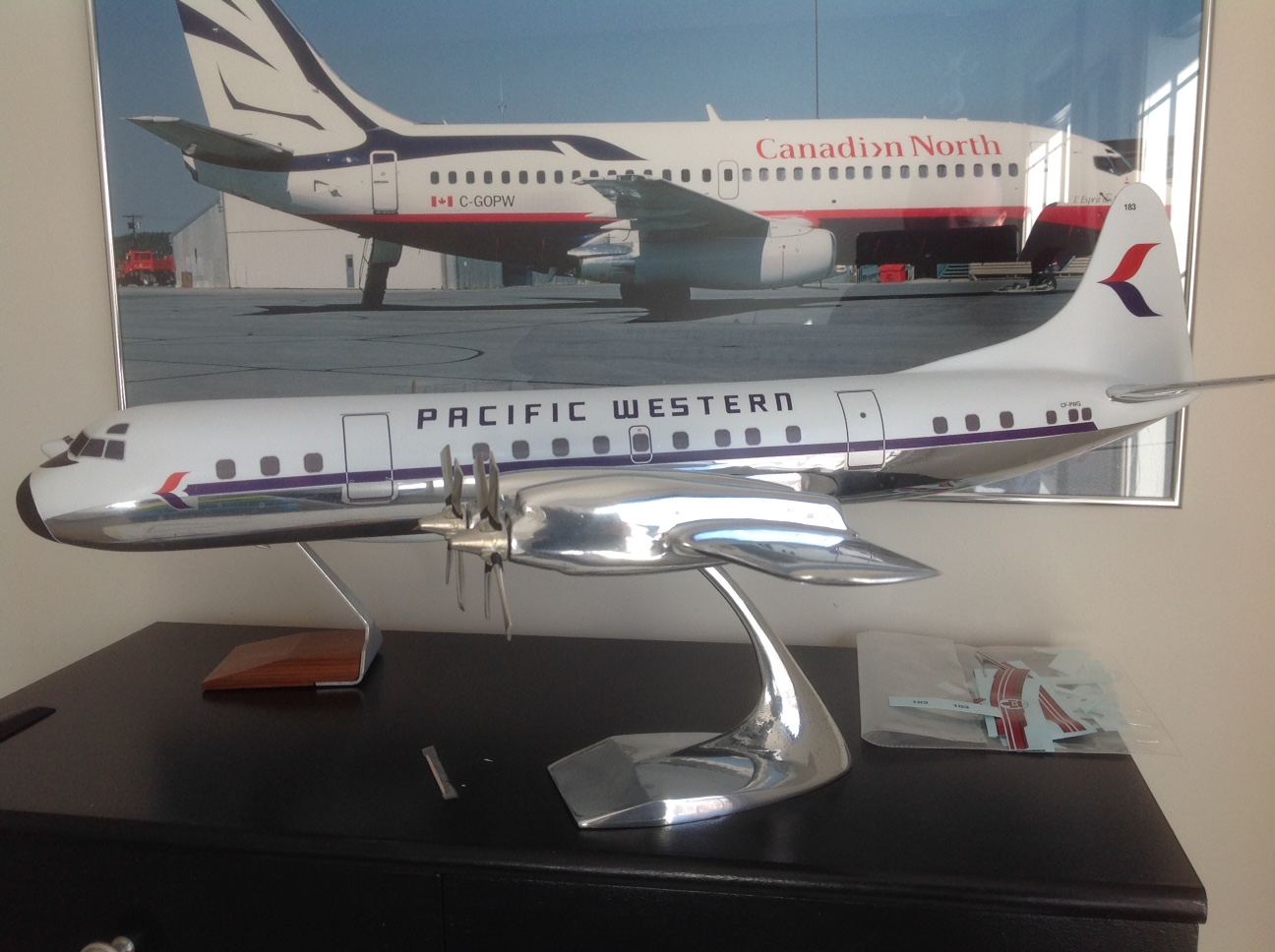
March 25, 2019 Aluminum model of PWA Lockheed
L-188 Electra.
Anthony Hickey is an aviation enthusiast, expert photographer and a long time
employee at Calgary Airport. He has obtained an aluminum cast model of a custom
made L-188. Anthony then polished and hand painted the aircraft in a/c 183
livery. It weighs 18 pounds, length is 28 inches and wing span 26 inches. It has
been a labour of love and work in progress for approx 1 year. Also a/c 183 taken
at YXD by Anthony Hickey. He is very proud to share this with you.
Feb 3, 2019 - Hercules Reunion - June 7, 8, 9
- 2019
From the desk of Stu Russell - Please mark the dates
June 7, 8, and 9th on your calendars for the PWA Hercules Reunion. This 3-day
fun packed event will take place at the Edmonton Inn XDI. If you are interested
in more info, please email Stu at
russellsf@shaw.ca.
“ The Herc Rats welcome anyone from the PWA / CDN family who was involved in the
northern airports, resupply operations with the L188 Electra, B737C, B727C and
the overseas operations of the 707-320C. Come join the gang at the 8th reunion
and share the tall tales and cool refreshments” .
Jan 31, 2019 Why does the B737-200 still fly
in Canada?
This video has clips of some of the former PWA B737-200 fleet.
https://youtu.be/7O5WHFBmuKs
Jan 21, 2019 Boeing 737-200 Gravel Kit
This is Boeing testing the B737-200C gravel kit on the Hope, BC runway circa
1972. This mod was a recent addition to the 737. I believe there is a tie-in to
the a/c 732. PWA took delivery of 732 in 1969.
https://www.facebook.com/pilotscafe/videos/329647897586301/
Jan 21, 2019 A/C 746 at The Pas, MB
A newly posted B737 a/c 746 by EricG at airliners.net
https://imgproc.airliners.net/…/airliners/7/8/6/5357687.jpg …
Dec 28,
2018 - From the desk of Capt. Terry
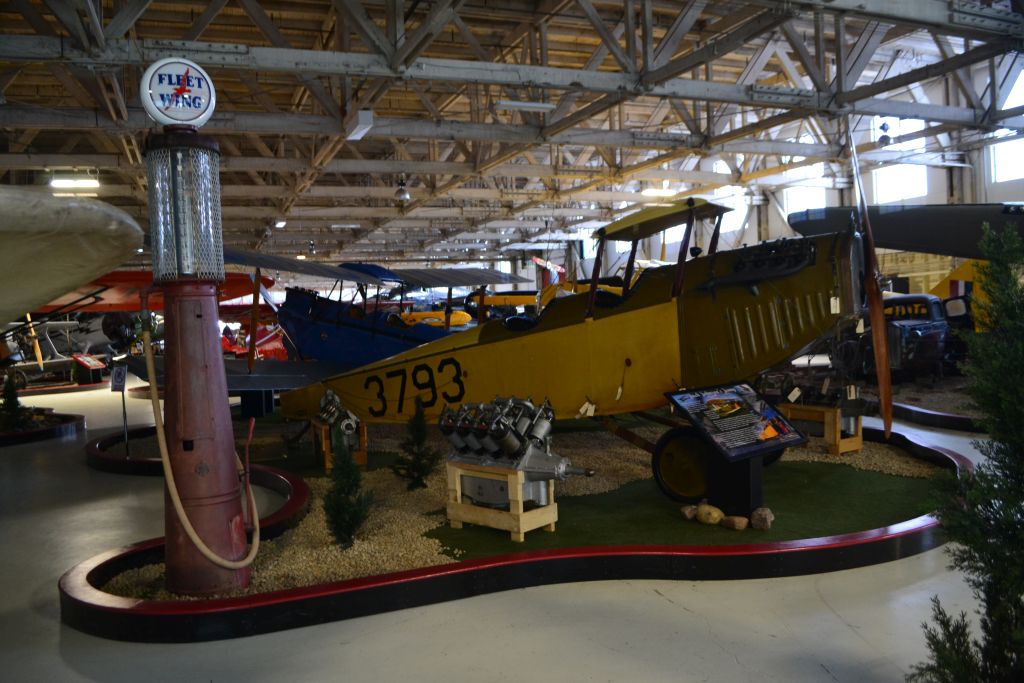
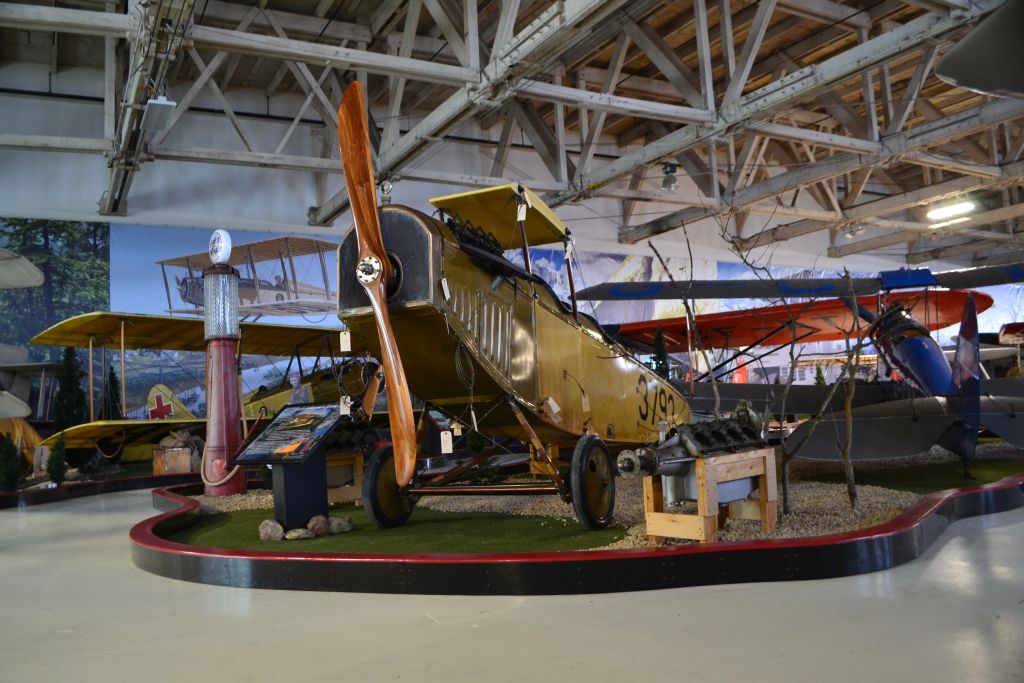
Champion (Ret'd) - RE: Capt Jack Johnson's Jenny
The plan for the placement the Curtis Jenny at the Museum is to move an airplane
or two away, to open up a wide enough and create a prominent location. This will
be done early in January when the wings will be attached and the display built.
The alternative platform will not be needed so the funding target has been
reduced accordingly. Including the acquisition cost and installation of the
display the target is
revised to $8,000.
The total donations received so far have reached $7500.00 (Dec 28/18) with a few
firm pledges still to come. I am extremely happy with the progress and the
results and want to offer a heartfelt thanks and gratitude to the alumni of PWA
for their support. With Kind Regards, Terry Champion
(see below for display funding campaign)
Dec 2, 2018 - Boeing 737 Operations at Fulton Field - Kamloops Airport
A
historical document created by our Neil Burton on B737 operations at YKA
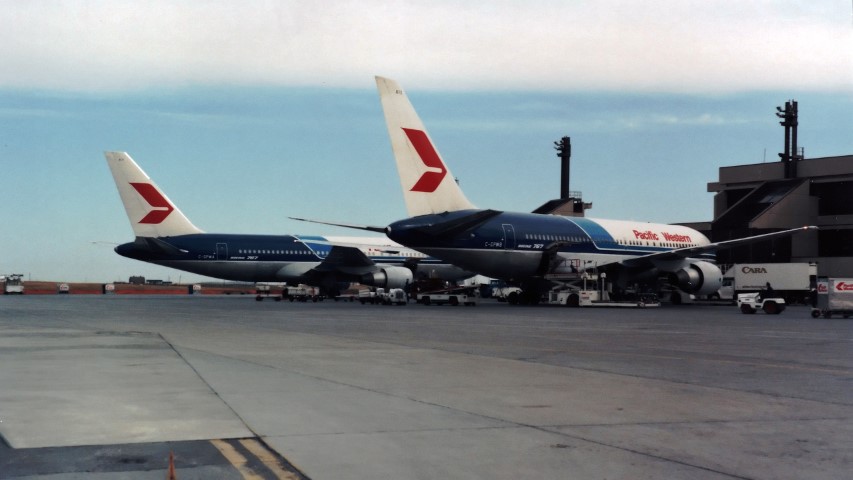
Nov 5, 2018 - Boeing 767-200 Aircraft and Boeing 737. (credit Chris E.)
A unique and rare photo of both Boeing 767-200's at
the gate in Vancouver, plus a Boeing 767 in Calgary and a 737 on final. Great
pictures.
See the
Archives Page for older articles















.jpg)
.jpg)
.jpg)
.jpg)
.jpg)
.jpg)
.jpg)
.jpg)
.jpg)
.jpg)
.jpg)
.jpg)
.jpg)
.JPG)
.JPG)
.JPG)
.jpeg)